

|
|
Sunday, May 29. 2011Wood Shop Update - May 28, 2011It always seems to generate a lot of interest when a project is active and you can see work being done. Case in point is the Cleveland PCC, CTS 4223, which has taken enormous steps forward with the painting of the exterior. 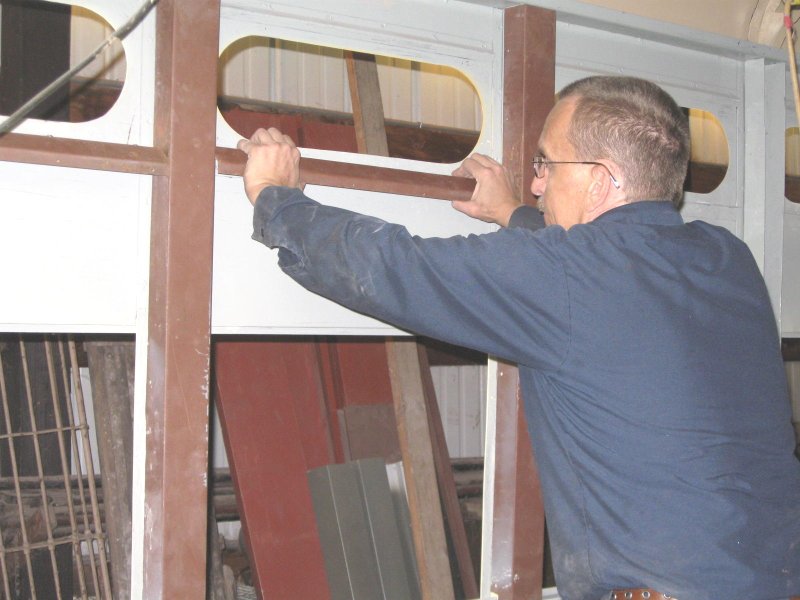 Interior Trim The car is now back in Barn 4 and Eric Lorenz is fitting interior sheet metal moldings under each of the standee windows. Part of the plan is to soon start installing glass in the many openings in the car body. 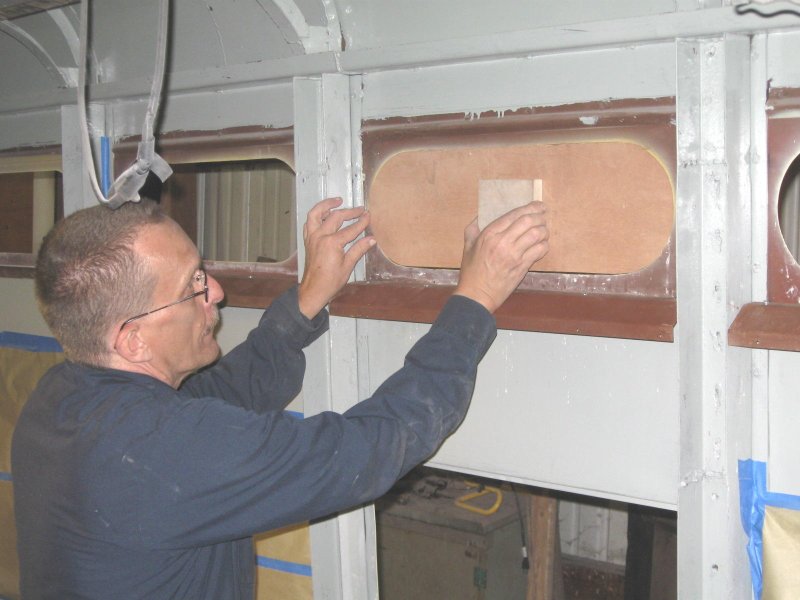 Will it Fit Here is the tie in to the wood shop. A plywood template was made and Eric checks each opening so we can assure that when new glass is cut, it will fit the openings. 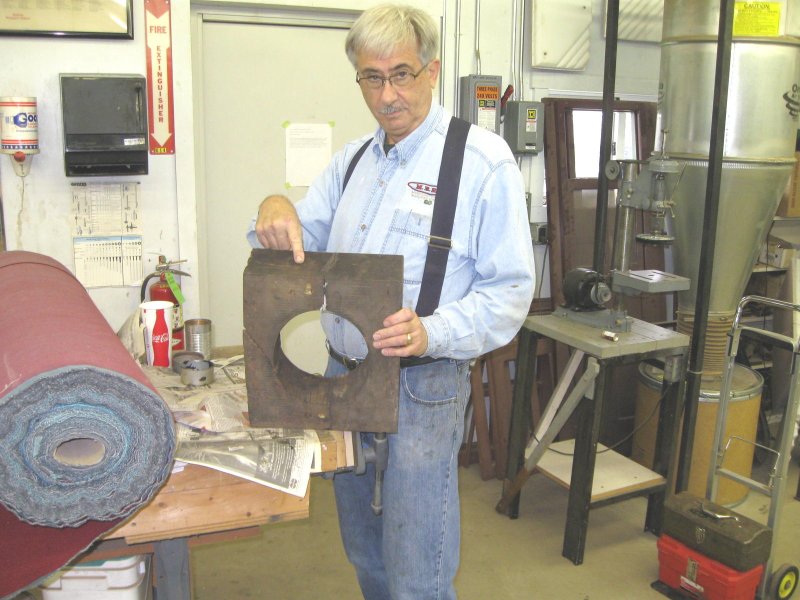 Jack Block Yes that is an odd caption. For Michigan Electric 28, Jeff Brady is repairing a large block of wood to be installed in the roof framing where a smoke jack will go through. 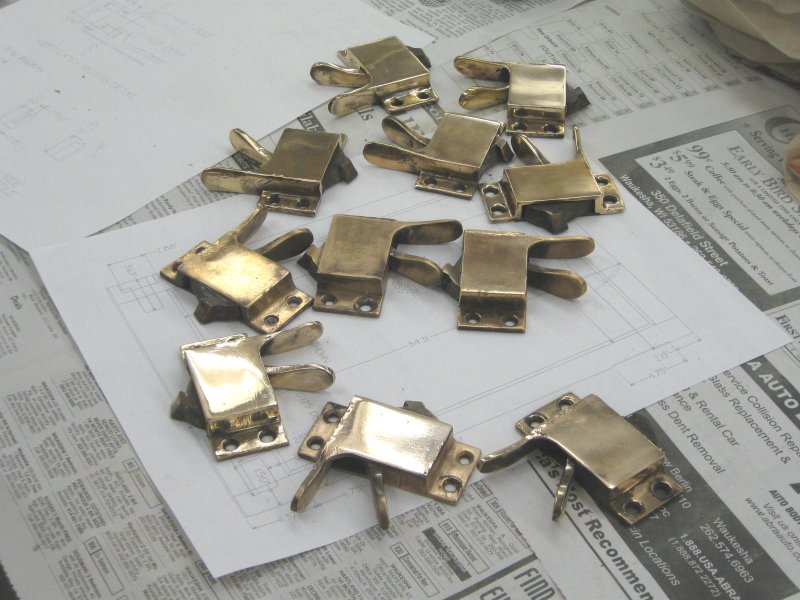 Brass We continue to clean and polish brass window lifts for the Sand Springs 68 as a sort of fill in task. They sure do shine, but it takes a fair amount of time to get this far. Once clean they receive a coat of clear lacquer, and then we will start to install them. 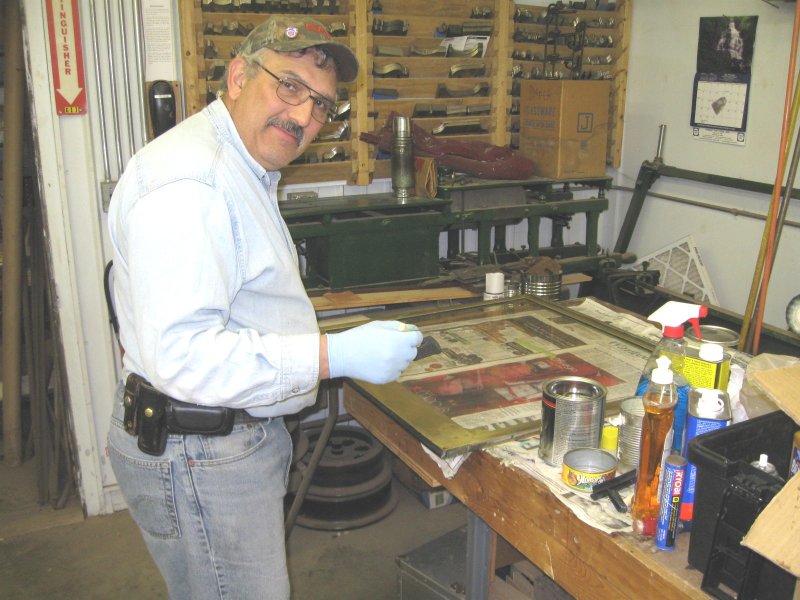 More Brass John Fenlaciki continues the seemingly endless task of restoring windows for CA&E 451. These are brass sash which must be cleaned and then clear coated, latches made to work, and new rubber weatherstripping installed at the bottom. In spite of doing all 'his' work he showed me some of his magic, by cleaning up the worst crud off of three of the SS 68 latches. Thank you, Jon. 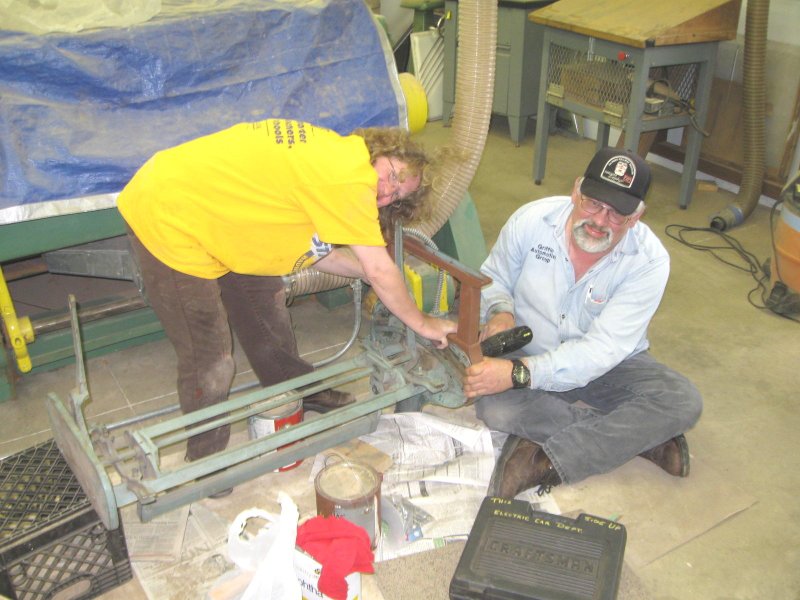 Passenger Car Shelly Van Der Schagen and Mike Baksic were in the wood shop, working on the latest seat frame for the Santa Fe heavyweight car. Thursday, May 26. 2011Wood Shop Update - May 25, 2011For a change of pace I will shake up the order in which I usually report things this time. 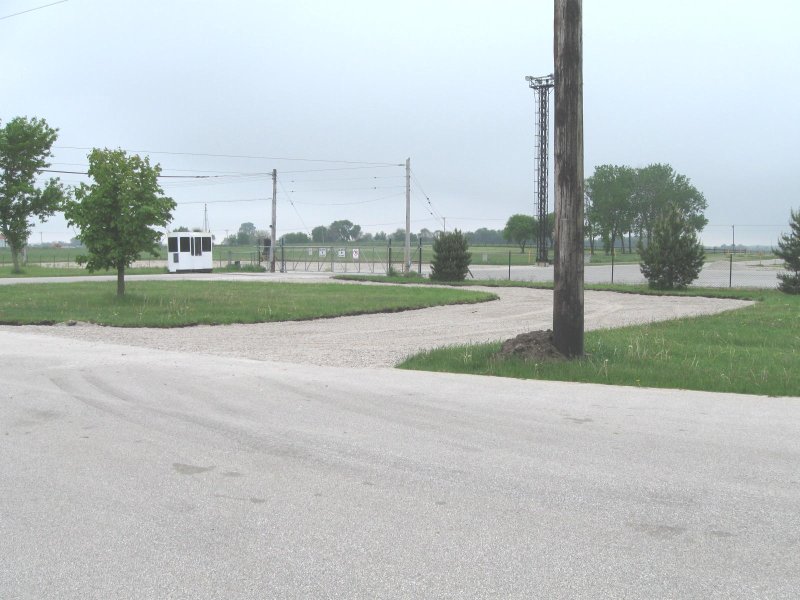 Fast Work Last Saturday I mentioned about an upcoming project to extend the north (west) end of our Electric Trolley Bus line. Less than a week later the grass and topsoil has been removed, and new crushed limestone sub grade spread and leveled. The Thomas Event entry area will certainly look different this year. 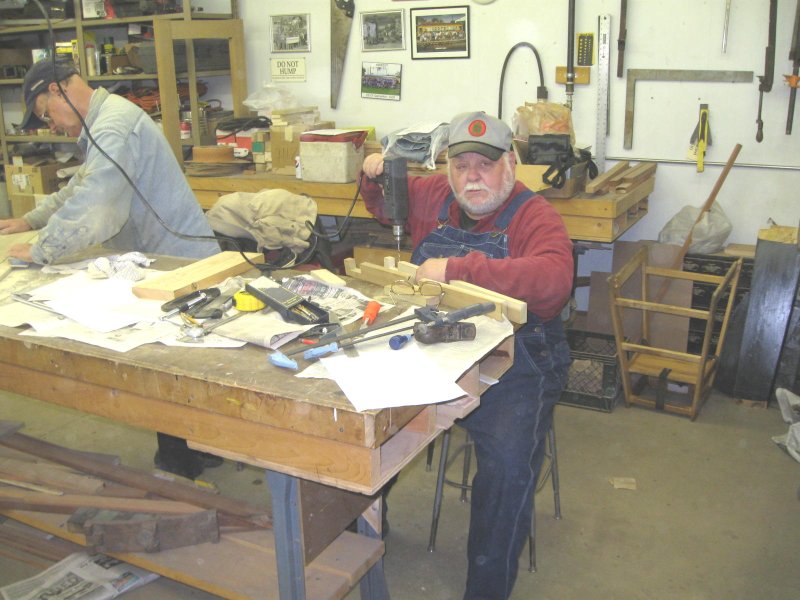 All about Wood Rich Witt is constructing a new fixture to be used on the Glen Springs windows and behind him Victor Humphreys is sanding panels for the new station door. These are a bit tricky to be fit absolutely the best way we can. 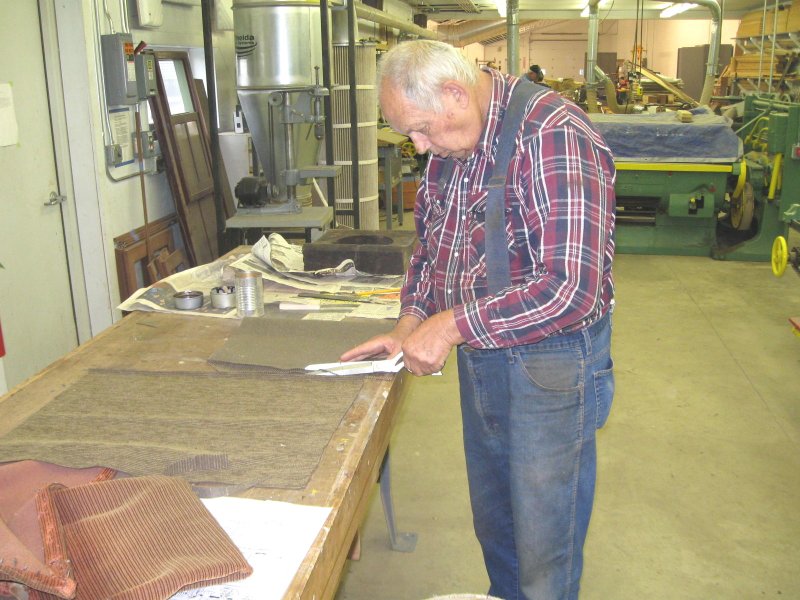 Passenger Department John Mc Kelvey has been doing a lot of work all related to his particular expertise in upholstering. This week he has repaired and reupholstered a chair back for the INGLEHOME. Seen here, he is cutting the new fabric. 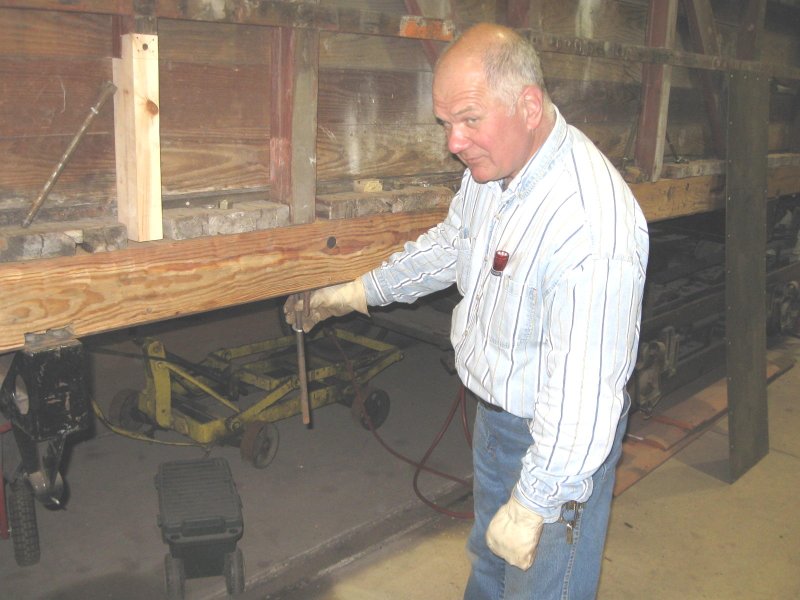 Welding Mysteries Gerry Dettloff is helping out on the Lake Shore Electric 810. Much of the structural woodwork has been repaired on the north side. Now he is pulling down the tie rods within the side framing, one at a time, and welding threaded extensions on them. The existing ends were so corroded and rust thinned as to be useless. Hmm, he seems skeptical of my new camera. Sunday, May 22. 20112011 Mainline Tie Project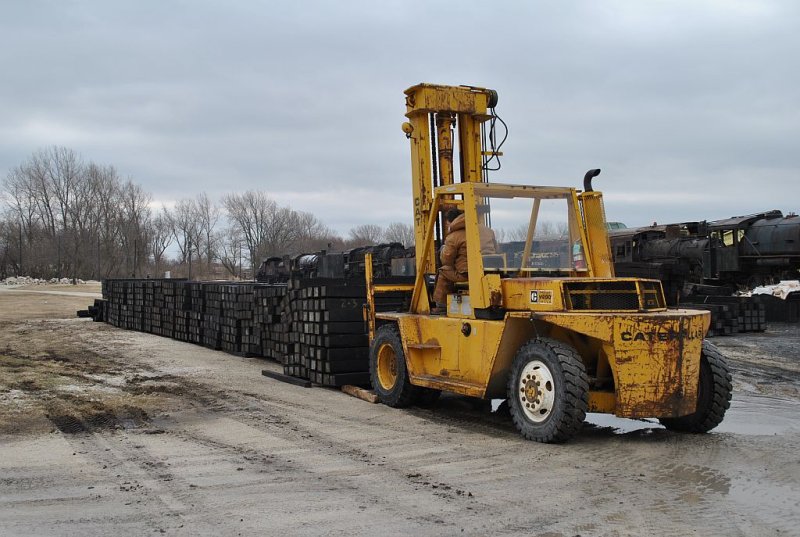 Patrick Loading Tie
Bundles onto the Flatcar. March 11 So what does it take to get the job done? This process began last year with the purchase of the 750 brand new ties to be installed. All of which were delivered by truck and unloaded on the property. 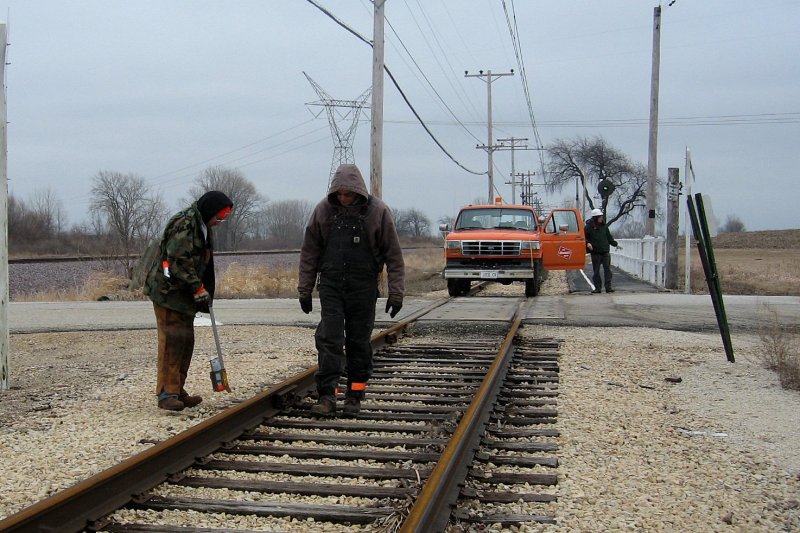 Inspecting Track and Marking Bad Ties. March
11 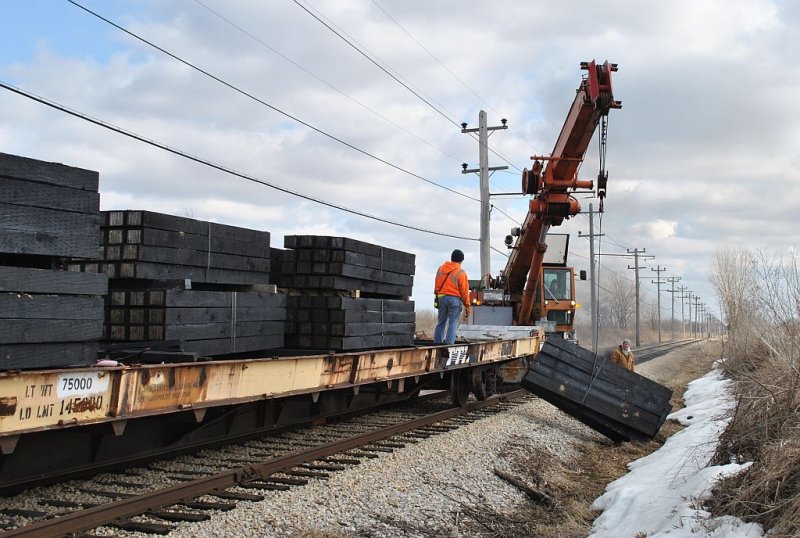 Unloading Tie Bundles on the Mainline with the Burro. March
11 Needless to say there was plenty of ice and snow on the ground to make the job difficult. With the ties all on the ground, the lengthy process of placing each tie in the exact location where it was to be installed began. Mostly, this involved the tie crane and an operator working eight or nine hour days over the weekends. 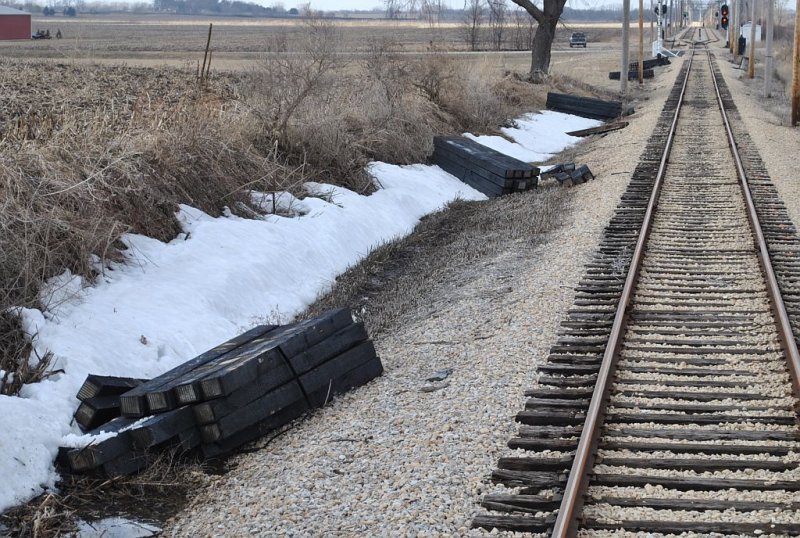 New Tie Bundles Set Along the Mainline. March
11 With only our small core group of volunteers, and without the necessary equipment to do the actual replacement ourselves, we hired a railroad contractor to truck in their own equipment and swap the bad ties for the new ones. This took a solid week for the contractor to finish the job and then the cleanup of all the material was left to us. 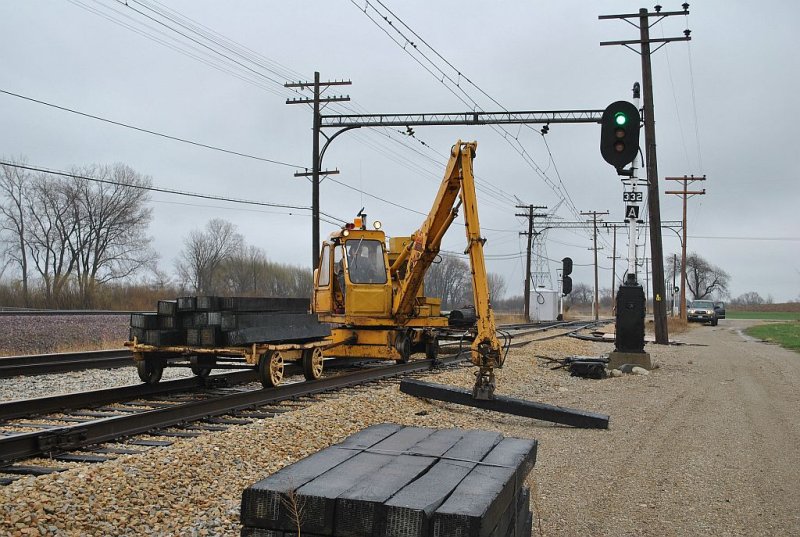 Tom setting out new ties at Johnson Siding. April
11 At this point the race was on to clean up the railroad before the operating season gets into full swing. During this time all of the old ties were collected with the tie crane and placed in one large pile near Johnson Siding where they will eventually be picked up taken away by another railroad contractor. 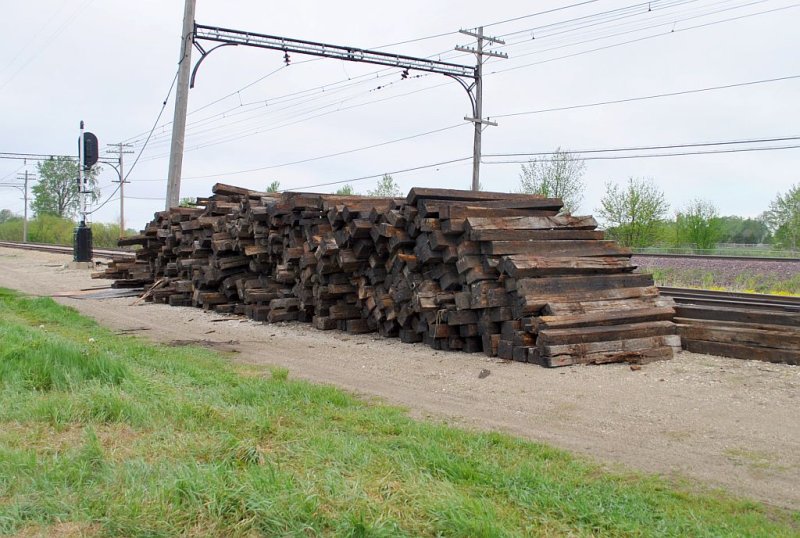 Old Tie Pile at Johnson Siding. May 11 With the wood picked up we focused on gathering all of the steel scrap which took the form of 2,800 spikes from the tie job, hundreds of old tie plates and other track material left on the line from years past. This could only have been done quickly and efficiently with our Burro crane and its electromagnet. 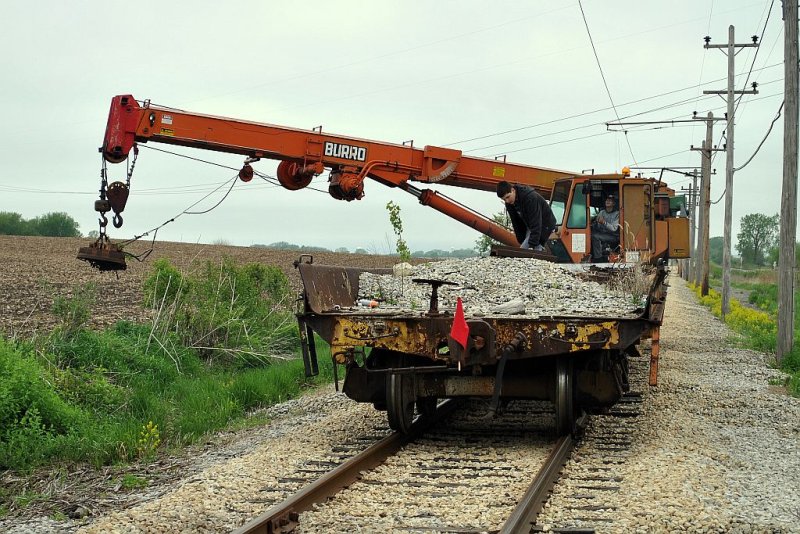 Picking up Scrap with the Burro Crane. May
11 That brings us to today. The next steps will be to get rid of our huge tie pile at Johnson Siding, and surface the railroad. Surfacing the railroad will be done in house using our ex Amtrak production tamper purchased a few years ago. Contracting an operation such as this would cost the museum another $40,000 and that does not include regulating the railroad afterward to finish the project! All of the work done in house by the Track Dept. easily cuts the total cost of the project in half and in this season alone has already saved the museum roughly $50,000. The alternative to any of what we do in house involves renting and trucking in equivalent machinery and paying contract wages. Work will continue throughout the season to tamp and dress the line working between operations and special events. Follow up maintenance on all of our machines and sorting materials from the line will take many more weekends of work. 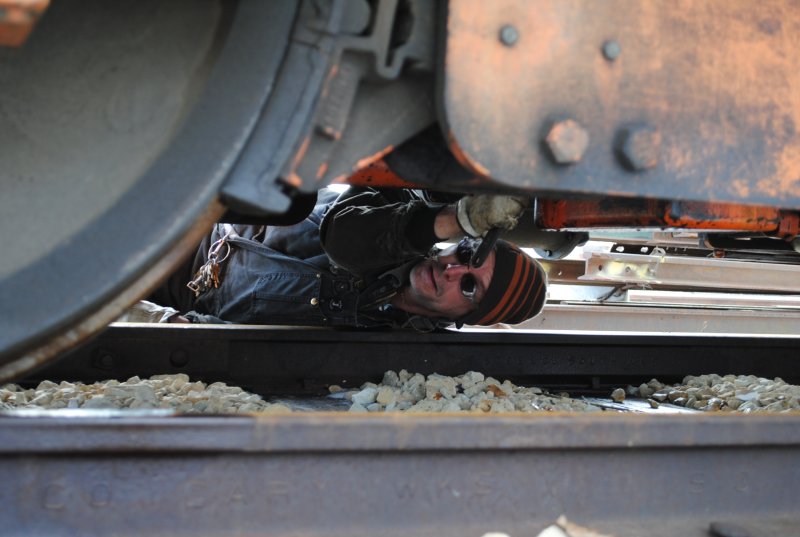 Tom H. working on
the Burro Crane in January 10 None of this could be done without the dedication of our Track Department working odd hours in all sorts of conditions. Thanks to all who have helped on this project including Frank DeVries, Tom Hunter, Bill Lygiros, Patrick Shea, Jeron Glander, Mitch O'Brien, Bob Olson and Adam Robillard. Also we must thank everyone who supported the work including, but not limited to, the Operating Department granting us track time, Dave Diamond in the Buildings & Grounds Department, and anyone I may have missed. 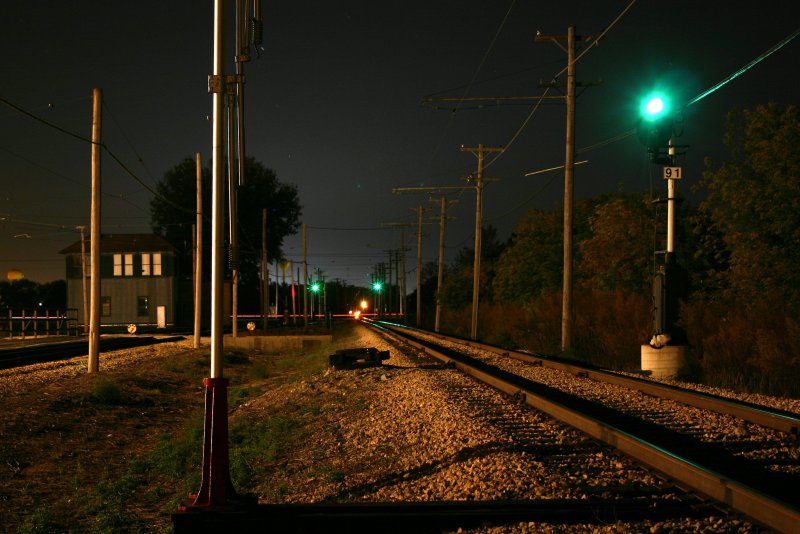 Mainline at Night
08 More Track Dept. photos from Frank Devries and Adam Robillard can be found in the Member's Photo Site here- http://www.irm.org/gallery/Members-Photos |
Blog AdministrationCalendarQuicksearchArchivesSyndicate This Blog |


Comments
Fri, 03-29-2024 21:26
We're slackers and spend more time working on the equipment in the shop than keeping all you readers updated. We'll work on it, but I'm sure updates [...]
Thu, 03-14-2024 08:02
What happened to the Department Blog? It's been over 2 years and I still regularly check for updates, but nothing comes...
Mon, 12-27-2021 16:28
Happy New Year to all the Departments at the Illinois railway Museum! Thanks for all the good work you do in railroad preservation. Ted Miles, [...]
Wed, 10-13-2021 13:33
Was the CB&Q 1309 every transported to IRM?I’ve been reading old issues of Rail&Wire and the car was mentioned several times.
Mon, 06-07-2021 22:40
I was wondering if in the model layout display what scale would you guys be using and would you be displaying model train history as well? Just [...]
Wed, 06-02-2021 17:27
Nice to see 428's cab back on. Looking forward to when it is operable!
Tue, 06-01-2021 16:47
I hope the work will continue on the UP #428. Now that they are the museum's connection to the national railroad network; she would be very [...]
Sat, 04-17-2021 23:07
What is the status of 126, the Milwaukee Buffet car that is in S. Dakota? Any guess on when or if it will get to IRM?
Wed, 04-14-2021 21:09
Perhaps it is time to scrap the remains of the c, B & Q 7128 to make room for the Villa Real. Ted miles, IRM member
Wed, 04-14-2021 15:26
Hi IRM my name is Jason and I was wonder If you guys would be willing to save a CN Dash8-40cm they are currently being retired by CN and being [...]
Fri, 04-09-2021 19:56
Bear in mind that the Nebraska Zephyr is an articulated train set, so cars cannot be inserted at will. Although cars and/or a second engine could be [...]
Wed, 03-31-2021 11:37
I believe Silver Pony is currently on the back burner, and has been put into storage in one of the barns. The car needs a lot of work done to it's [...]