| BLOG | DIRECTIONS | SCHEDULE | STORE | |
Sunday, January 15. 2012Steam Department Update 1-14-2012A good day of progress on a number of fronts. On 1630 · Success at last on the swager. Tom spent much of last Sunday honing the damaged bores in the dies. We spent most of the morning carefully refitting and aligning them in the machine but it looks like we have success. Several old tubes were successfully swaged and the machine operated smoothly throughout. Now we are ready to go into production. Having gone thru the set up the objective will be to do the tubes for both 1630 and the Shay so between 400 and 500 tubes in total. The current major problem is that all the tubes are in the boxcars and the diesel guys were not able to switch these before the snow arrived. So we are now dependent upon a break in the weather to allow the boxcars to be switched to a position where we can move the large bunches of tubes to and from the shop. What does swaging achieve?. The tubes of a steam locomotive boiler are expanded by rollers into the tube sheets to make the seal. Commonly the tube diameter in the firebox tube sheet is smaller than the general diameter of the tube. This is a crafty piece of steam locomotive design. For efficiency you want as much tube area as you can achieve in contact with the water. The hottest, and therefore most stressed tube sheet, is the firebox end. So narrowing a couple of inches of the tube where it runs into this tube sheet allows more metal to remain in the tube sheet between the holes. So on 1630 (and the Shay) the tubes are 2 inch diameter but are shrunk by swaging to 1 7/8 at the firebox end. The objective of the whole process can now be seen in one of the test tubes.
The process is first to heat the end in a furnace
then hammer it between the dies, that we have had so much fun with, for about 15 seconds turning it as it is hammered so that you get a nice even 1 7/8 inch tube end. · The dome cover was successfully removed to allow lapping of the throttle valve which is one of the key repairs to be carried out. The fork lift made life a great deal easier as the cover could slid directly onto the forks and brought down to the ground. · It is now clear that we have 4 or 5 stays on the back head where the sleeves are sufficiently worn to need replacing so that will start soon. · Mike continued with grinding out the rivet and patch bolt holes to enable fitting of the firebox corner patch. On 428 an number of machining jobs were progressed · Bob and others continued honing the coupling rods to allow new bushes to be fitted; · Stu and Cameron continued with the packing glands; and · Tom and Cameron worked on the set up of a large piece for horizontal drilling. (Looked very impressive but I did not like to disturb the efforts by querying exactly what it was!). Around the shop Jeff continued the program to free up more working areas. · The space is now ready to safe end the super heater flues for 1630 which are coming back from sandblasting in the next week or so; · Some unused machines were moved out of the machine shop which will enable a really challenging move of a large turret lathe from the wheel lathe area to the machine shop. This will allow the turret lathe to be activated and enable wheels to be stored away from the door and overhead crane; · We also lifted the McCabe flanger so that it can be properly mounted on timbers that will allow it to be moved. This will free up space to handle large numbers of tubes that are to be swaged. So another productive weekend. Nigel Sunday, January 15. 2012
Model Railroad Public Display - ... Posted by Robert Kutella
in Model Railroad Display at
05:18
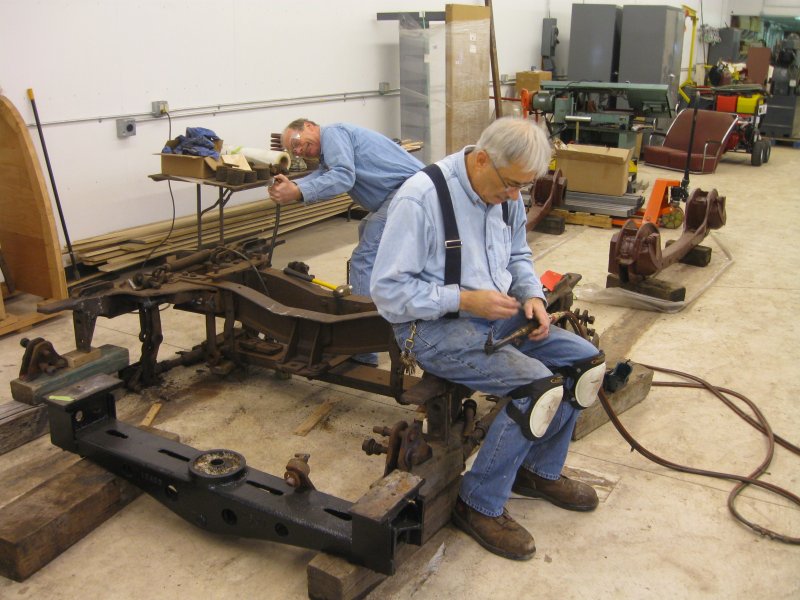
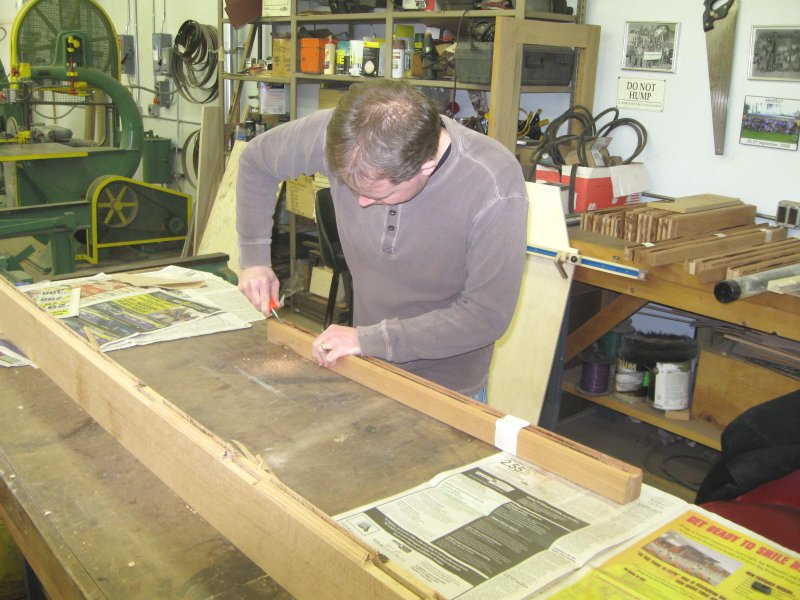
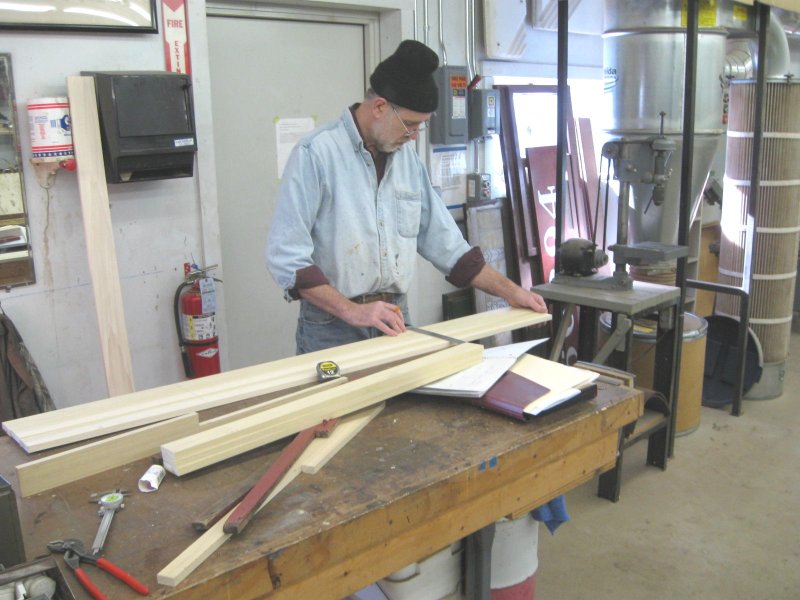
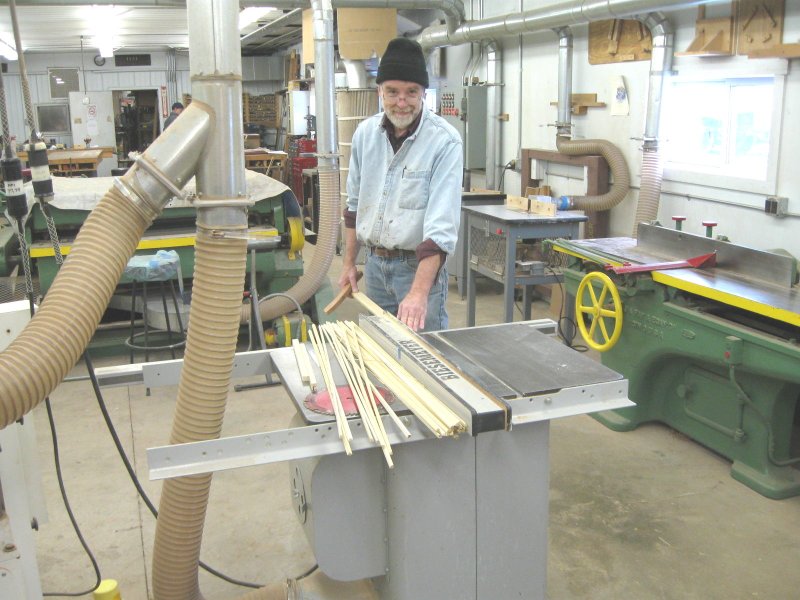
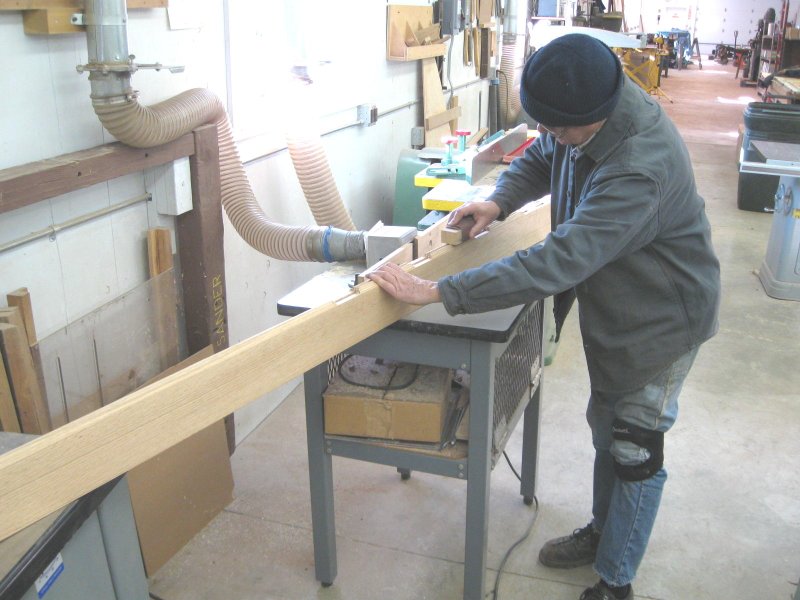
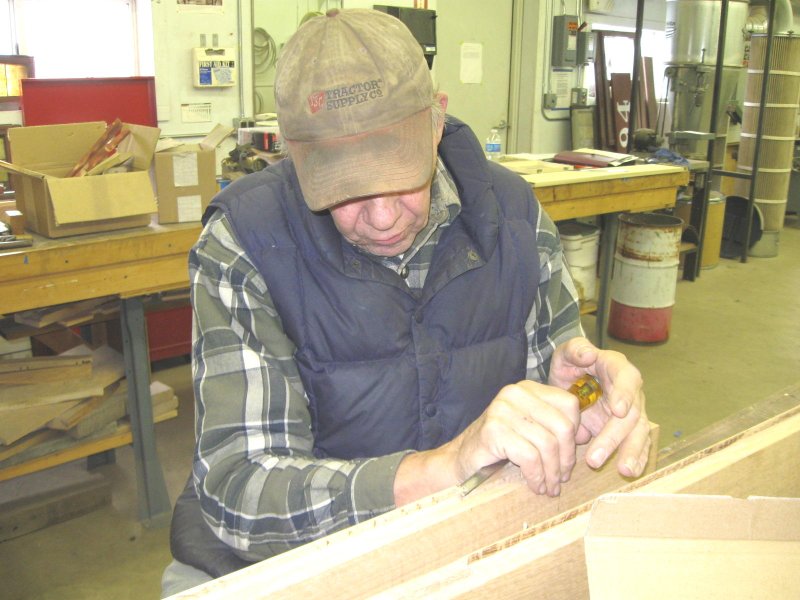
Comments (7) Model Railroad Public Display - January 14 , 2012Those of you who read these entries regularly have seen that IRM has acquired a large model railroad via donation. The concept is to construct a permanent steel framed building along the Main Street alignment and to re-assemble the major components of this layout and to have it open for public display. Model railroads on exhibit during the Thomas Event, for instance, have proved very popular with visitors, and this would serve to add a new and different dimension to any IRM visit. We have spent a lot of time and have developed many CONCEPT sketches and proposals. Here is an example of what the front facade of the new building MIGHT look like. It is pleasing to my eye, but then it would be since I drew it. I would say it is a long shot that the final product would more than resemble this view, but you should quickly get the idea of the potential. I have been informed that at the January 14 meeting, the Board of Directors approved going ahead to the next steps which include fundraising and more detailed plans. We will be getting cost estimates and setting a fundraising goal and we will be contacting potential donors or sponsors for this attraction. In the meantime, a new restricted fund has been set up RMRD to collect and grow the money for this project. Any help in the way of donations, or perhaps of sponsors wishing to participate, or contractors willing to donate at least part of their services IN KIND, please contact me. Together, we can make this happen. Thursday, January 12. 2012Wood Shop Update - Jamuary 11, 2011Henry Vincent is shown with a new shop jig we made. The last assembly steps required ALL HANDS with Henry, Tim Peters, and myself doing the dirty work. Yes, this is an all too common picture caption. Buzz Morrisette has been making fourteen new sash for caboose ATSF 1400. All of them are glued up and assembled in what seems an amazingly short time. Maybe he has Santa's elves working now that the Holiday rush is over, or he just works that much faster than I am able to. Chicago Rapid Transit 1797 has been the subject of several recent switch moves to rearrange cars in Barn 4. With clear skies and maybe 55 F it came out in the sum for steam cleaning of the underbody by Tim Peters and Frank Kehoe. The vapor cloud can be seen under the car at the right. Hard to believe but now, 24 hours later, the first snow of the season is piling up outside my window here at home. Yes, windows again. Lorne tweed worked to apply clear finish to several of the completed sash for Cleveland Transit 4223, and Simon Harrison also contributed his labor to the cause through the day. In other work seen in the shop, Henry Vincent made some more progress restoring a large very old vintage photo mural of a PRR steam locomotive. Roger Kramer and I worked on mortising windows for IC 3996, and Victor Humphreys helped me milling stiles on the table saw as well as a hunting trip to our material yard to locate potential replacement trucks for ATSF 1400. Perhaps one of the biggest news items concerns Chicago Surface Lines 3142, a true workhorse of our summer Museum operations. Since its initial restoration that car puts on a lot of miles and we were well aware of the impending shortage of replacement cast iron brake shoes. For two years this has been in the process, with many hundreds of hours invested in the shop and by members at home. Remember that brake shoes are CONSUMED in operations and this is not normally covered by restoration funds. In this case the tab could well run to $8,000, or we face the possibility of the car not operating this entire season. Our efforts to date have come to several dead ends for a variety of reasons, not the least of which is the disappearance of small foundries suited to make these specialty castings in small quantities. But we made a lot of progress this week. Lorne Tweed has taught himself to use AUTOCAD and created a file for the brakeshoe pattern. This was converted to a stereo lithography file and a plastic prototype was created using a 3D printing process in nearby Crystal Lake. With this tangible sample in hand it was fitted to the car, and needed adjustments were defined. The next steps will be to furnish this prototype to a foundry who will use modern laser tracing to mill a new pattern for the shoes and get them cast. HERE'S HOPING - - - Monday, January 9. 2012Wood Shop Update - Jamuary 7-8, 2012We found Bill Wulfert working in the shop area known as TIM PETER"S RAPID TRANSIT department, and caught him off guard looking between some CRT 1797 doors that have been restored and look about ready to go back on the car. Of course, windows seem to be a perennial topic or theme of ongoing work. Jon Fenlaciki worked on additional windows he is restoring for Chicago Aurora & Elgin 451. He has done MANY, MANY of these and the end is in sight! You guessed it! More window work as Ray Schmid works on another coat of clear varnish for two restored sash to be installed in Michigan Electric 28. Jeff Brady has been working on the truck rebuilding for one of our TMS project cars, Milwaukee Electric 972. More disassembly work in almost infinite detail reveals that pins and bushings need to be renewed. These are hardened sleeves and - er - pins that join things like levers and castings which need to move freely in the completed truck assembly. Brake rigging is an example. Monday, January 9. 2012
New Observation Car...MILW Lake City Posted by Roger Kramer
in Passenger Car Department at
11:25
Comments (2) New Observation Car...MILW Lake CityThere has been a question about pics in the Passenger Car Gallery concerning a MILW parlor car. Here's the information. Yes, IRM has acquired by donation a 1915 Observation 6-section sleeper. It was rebuilt and restored by a gentleman in Wisconsin. More information will be forthcoming in a future article in Rail and Wire. Donations are needed to move this BEAUTY. Make you check out to the "Lake City." This obs is, indeed, worth your consideration. Roger Monday, January 9. 2012
CTS 4223 Update - January 7, 2012 Posted by Robert Kutella
in Cleveland Transit System 4223 at
11:03
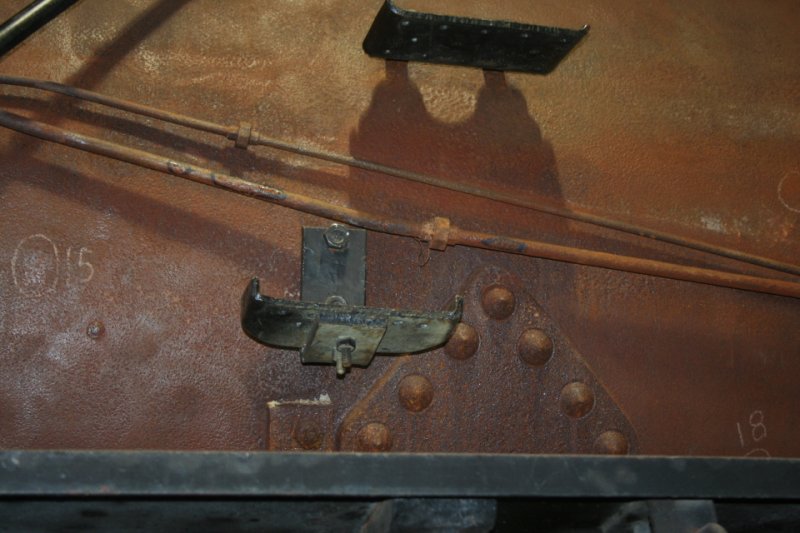
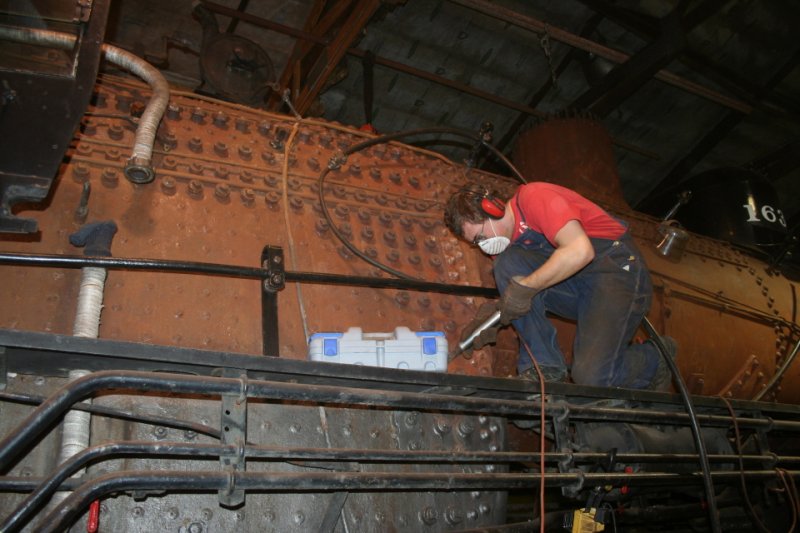
Comments (0) CTS 4223 Update - January 7, 2012A lot got done on Saturday, things which have seen a lot of prep work and give great results. Alex Randow is cleaning the aluminum frames of side windows for the car, assisted by Nancy Ring. This work is tedious but gives a great sense of accomplishment when viewing the transformation. After cleaning, Alex applied some clear coat finish to help prolong their clean appearance over time. Eric Lorenz worked on cleaning and rewiring the three bulb housings for the dash lights, to be mounted on the front of the car. Alex Randow worked in front of the car, positioning and adjusting the headlight. And at this same time - - - Eric Lorenz was inside the car lodged under the front dash, reaching in yet another convenient spot. He is then locking the light in the position which Alex is holding from the outside. I guess labor was cheap since many seemingly simple tasks require at least four hands to accomplish. And by days end here is one of the completed dash light assemblies mounted on the car. This is one of those small items that really improves the look. Before Thanksgiving we had thirty or so items for painting which we hoped to install on the car over the winter. These intrepid volunteers have less than a handful remaining to be done. Sunday, January 8. 2012Steam Department Update 1-7-2012There was a good turnout today at the Steam Department which allowed a lot to be done. Unfortunately, as is the way with a major inspection, some of it leads to the identification of more work than we had previously hoped. On 1630 · Collin and Eric made good progress on clearing the tell tale holes in the firebox stays. These small holes, drilled along the length of the stay, are so named as they cause water / steam to leak out if the stay cracks. As part of the inspection we must ensure that all of these holes (which tend to become obstructed with ash and other debris in service) are clear to the required depth. This is done with rods, air jets and, in extreme, drills. As 1630 was not in service much since this was last done progress was good and no significant issues detected so far. This view shows the different types of stay on the firebox side with an area of rigid stays at the lower right and area of flexible stay caps above and left. · Less positively, inspection of the caps covering the heads of flexible stays in the firebox back head showed that some are heavily corroded. We will need to assess these in more detail but it looks as if we will need to replace a number of these stays. · Matt worked on methods for cleaning the inner surface of the boiler barrel. This has a deposit that seems to be primarily iron from the water on top of the special "paint" applied at the last overhaul. We had hoped to be able to remove the deposit and avoid recoating the boiler. Having tried both chemical and physical methods it is clear that this will not be practical so the whole boiler interior will need to be sand blasted. The first picture below shows the interior of the boiler looking forward. Wire brushing has removed some deposit from the bottom of the boiler. The second picture shows the firebox crown sheet and the stays that support it. This clearly shows the most critical area that we must sand blast and inspect. The curved seam at the front of the crown sheet is a high risk area for cracking and must be thoroughly cleaned and inspected. · Jeff set up and tested the sand blaster. Over the next couple of weeks we will assess the cost of getting what is now a lot more sand blasting done by a contractor versus the time of doing it in house. · Work continued on the swager. Getting the dies to move smoothly and reliably is proving a frustrating exercise. We reinstalled them and largely swaged a test tube - but then they seized again. This shows the dies on the bench. They should (and did) bounce freely on the springs but Ralph is here having to forced them apart with a bolt. Glenn and Phil completed the set up and testing of the air and power steering on the Bay City crane. Amazing. When it was moved into the current position (pushed by the fork lift) it required huge effort to turn the steering wheel at all. Now it turns when stationary with one hand!. With this is done it will probably wait until Spring before we actually move it and address issues such as adjusting the brakes so that they release correctly. On 428 work progressed on several areas: · Bruce and others worked on the detail layout for rebuilding the axle boxes. The steel for this is now in-house and, once the layout is complete, the rebuilding can begin. Bruce and Tom with one of the axle boxes and the material to be used to rebuild it. · Stu and Bob continued rebuilding the air pump. · Tom and Jeff worked on setting up the shaper for the shows and wedges. · Machining continued on the new packing glands. In other areas: · Dave continued cleaning the Shay truck · Rick built the panels that will separate the steel fabrication area from the machining area; and · Bob, Eric and others worked on options for set up of the wheel lathe. Nigel |
Blog AdministrationFind us on FacebookCategory TreeCalendarQuicksearchArchivesSyndicate This Blog |
Powered by s9y.
Comments
Sun, 05-19-2013 22:13
Hello again. I had an idea that was (somewhat rudely, mid-sentence) dismissed in talking to a museum volunteer a few years back, but here it goes [...]
Thu, 05-16-2013 21:52
Looking good Bob! I hope to come out soon once I'm done with school.
Wed, 05-15-2013 21:28
I was not around at the time. General discussion suggests that it was "pretty marginal" in a number of areas. Nigel
Mon, 05-13-2013 11:08
"THUMBS UP!"
Fri, 05-10-2013 02:15
No, it will not be necessary to hold any of the work waiting for the plow to be turned, end for end. Weather will be the major factor, but there will [...]
Thu, 05-09-2013 19:54
The CGW X-38 plow is really coming to life. Bob Kutella and Vic and crew need to be very proud of your collective efforts. I am very appreciative of [...]
Thu, 05-09-2013 15:20
The snowplow looks great! Are you going to apply the door and upper windows befor it is turned to continue work?
Thu, 05-09-2013 09:09
Max, Is there any progress to report yet, in regards to the installation of the poles and overhead wires? Have a good day, sir.
Wed, 05-08-2013 18:40
Thanks for the update! I still don't understand why Commonwealth #5 was removed from service. Do you know why?
Tue, 05-07-2013 09:28
Mr. Kolanowski.....I was just wondering if the Spaulding webcam will be up and running soon for us stay-at-homes. Thanks!2FP
Mon, 05-06-2013 23:04
Max, Has work begun yet on the construction phase of erecting the poles and putting up the wire? Wish I could be there to watch it happen.
Mon, 05-06-2013 23:02
Keep up the good work, Bob. Wish I could be there to help!!!!!!!