| BLOG | DIRECTIONS | SCHEDULE | STORE | |
Sunday, October 21. 2012
Steam Department Update 10-20-2012 Posted by Nigel Bennett
in Steam Department at
21:19
Comments (0) Steam Department Update 10-20-2012This was a productive day in the steam shop but may sound rather dull from the blog perspective. In essence successful progress toward having 1630 running next year will depend upon doing the same repetitive tasks for much of the next month or two. The question is often asked - will 1630 be running next year?. The answer is that we sure hope that it will and are doing our best to ensure that it does. One thing that will have a major effect is funding. While we have the major materials in hand, we are now pretty much out of funds on both 1630 and 428. There will be steps where we can save time by having some work done by specialists but we currently do not have that option. So .................. please consider donations to the 1630 or 428 funds. The next major milestone is to have the boiler water tight again. To do this we must refit about 180 fire tubes plus 16 super heater flues and fit the patch in the firebox. Once the boiler is proved water tight we can move on the last leg which is to refit super heater elements, accessories and lagging before carrying out the hydrostatic and steam tests that will prove fitness to run. Fitting each tube has several steps · the tube is first swaged, which means reducing the diameter of the 2 inch tube to 1 7/8th at the end which will be fitted into the rear tube sheet. This is done by heating and then hammering in the dies of the swaging machine. · the tube is then cut accurately to a length that will allow 1/4 inch projection at the rear tube sheet and 1/4 to 3/8th at the front. Since there is a variation of close to 1/2 inch between the longest and shortest tune, this requires matching of tubes to specific locations. · copper ferrules are then expanded into the holes in the rear tube sheet to make a better seal between the tube and the tube sheet. · tubes are then placed into position and the process of fitting can begin. The fitting is itself a multistage process consisting of: o expanding the tube, using a set of rollers, so that it is a tight fit into the tube sheet; o rolling over the projecting end of all the tubes in the fire box and some in the smoke box o further expanding the tube just behind the tube sheet to provide a second level of sealing. Each step will not be completed for all tubes in sequence as, for example, we do not have sufficient space to have 180 17 foot tubes in the shop. So some will need to be located in the boiler before we can swage more. Thanks to Eric Olson for the photographs below, which show the swaging operation. Shots of this operation were hard to come by as I am busy playing with a red hot tube rather than a camera!!. Step 1 - the end of the tube is heated in the oil fired furnace: Step 2 - a wire brush is used to remove mill scale from the surface of the tube which the hammer might drive into the metal causing surface damage: Step 3 - the tube is briefly re-heated, then the end is placed into the swaging hammer. The tube must be turned steadily while the hammer is working to get a smooth surface and even reduction in diameter. One of the learnings is that, while I have loaded the tube and am operating the swager, Jeff is turning the tube. The tube is so darned hot where I am that you cannot grip it to turn smoothly even with heat resisting gloves. Step 4 - The tube then joins the stack of swaged tubes to cool while we move on to the next one: This week, within this overall process: · we completed marking the tube sheets so that we can now clearly see which length of tube is required for each hole and into which hole in the rear tube sheet the tube must run from each hole in the front tube sheet. · after encountering a few problems with the swaging machine, we established a good "production" process and swaged a further 20 tubes so we are now up to about 45 swaged. · calculated the length of tube required to correspond to the measured lengths between tube sheets and cut the first of the standard lengths. The game plan will be to ensure thru test fitting that a standard tube of each length correctly fits a sample of the holes in the tube sheets for that length and then use these as a pattern from which to start "mass producing" tubes of each required length. · in addition to the work on the tubes, the patch for the firebox was bent on the McCabe and, when I left, there were some fairly positive mutterings coming from inside the firebox where Mike was offering it up to its location. Having the patch accurately formed to the mud ring will be a big step forward on that activity. This provided an interesting demonstration of the power of the McCabe flanger. This is 1/2 inch thick steel boiler plate. The flat section of plate is clamped into the jaws: As air is applied to the main cylinder the jaws move down and bend the plate. The startling thing when operating the machine is that there is no noticeable change in tone or speed of movement as it contacts the plate. You have to watch carefully to see when you start the bend as the machine shows no load at all when bending this thick plate. ... and in very little time you have the full right angle bend. In other areas: · Ed and Bob further cleaned the valve block for the planer after a week in the cleaning tank. The flow of "black goo" now seems to have ceased and the internal passages look pretty clean. So hopefully that is now getting close to the point where it can be reassembled and refitted. · The "new" air reservoir was moved to the South end of the shop to set up for hydro testing. This raised some interesting questions about what sort of air filter was in place when it was used by the Milwaukee Road. Jerry removed the most incredible amount of debris from the bottom of the tank which seemed to consist of general dirt and dust held into substantial blocks by compressor oil !. So a productive weekend in the steam shop. Nigel Friday, October 19. 2012
CGW X 38 Update - October 17, 2012 Posted by Robert Kutella
in Chicago Great Western X 38 Russell Snow Plow at
08:26
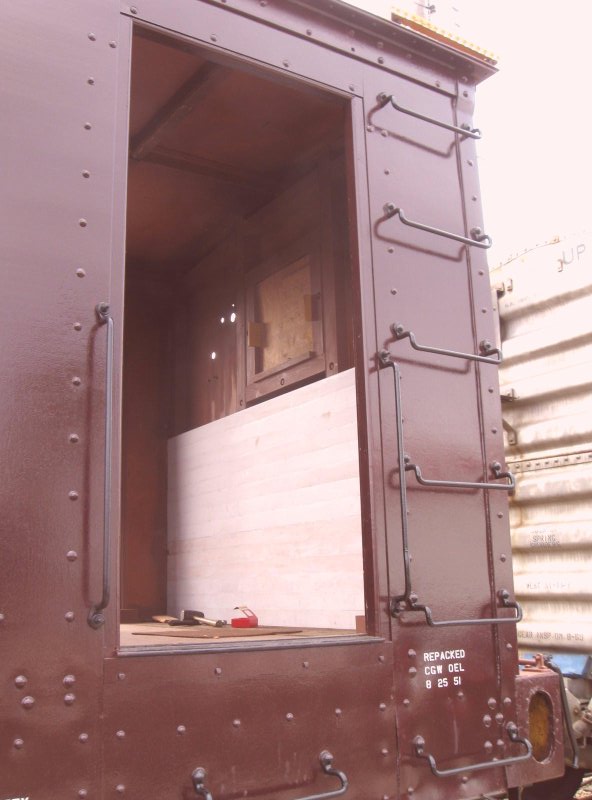
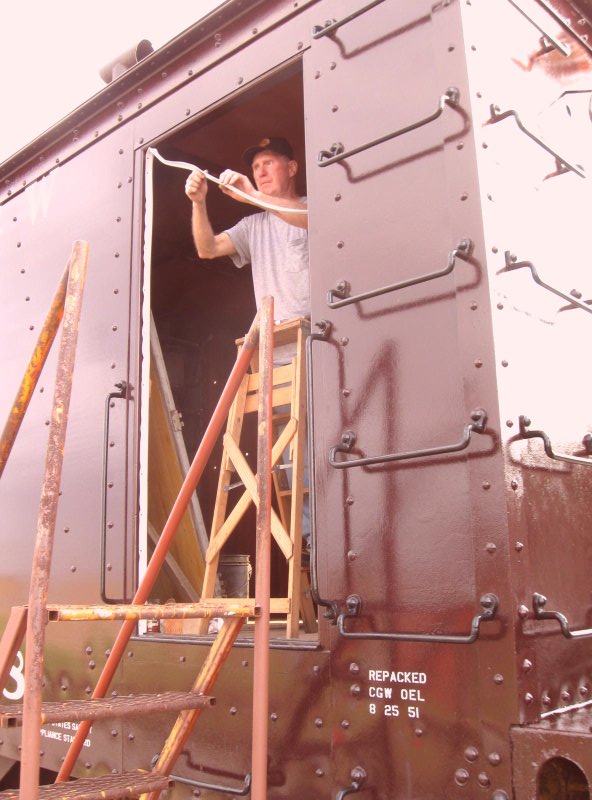
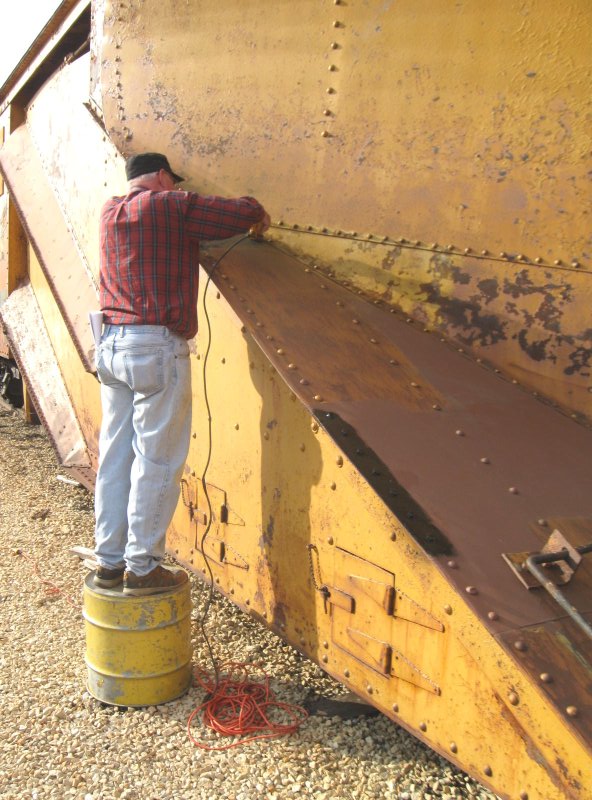
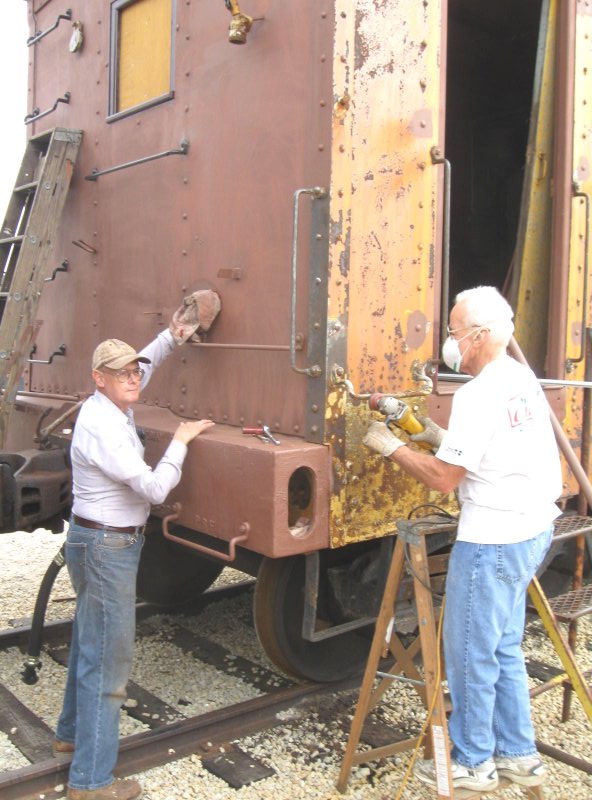
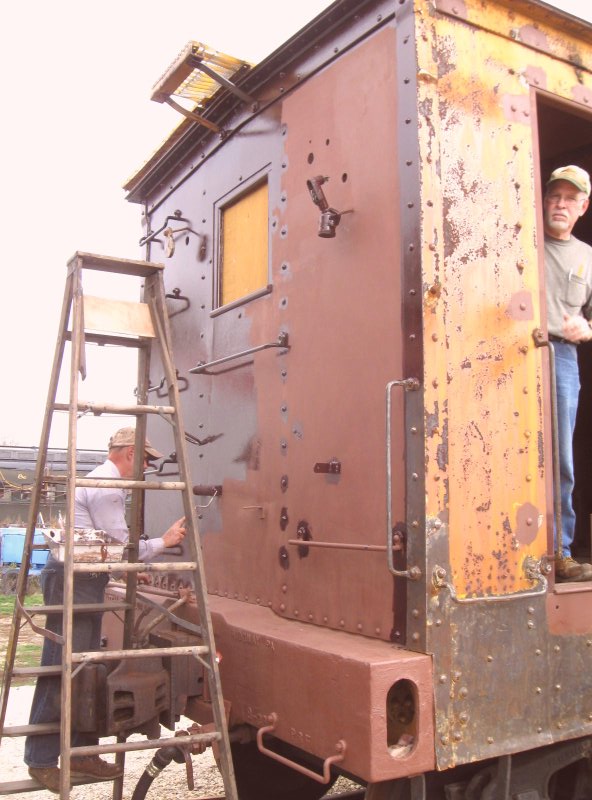
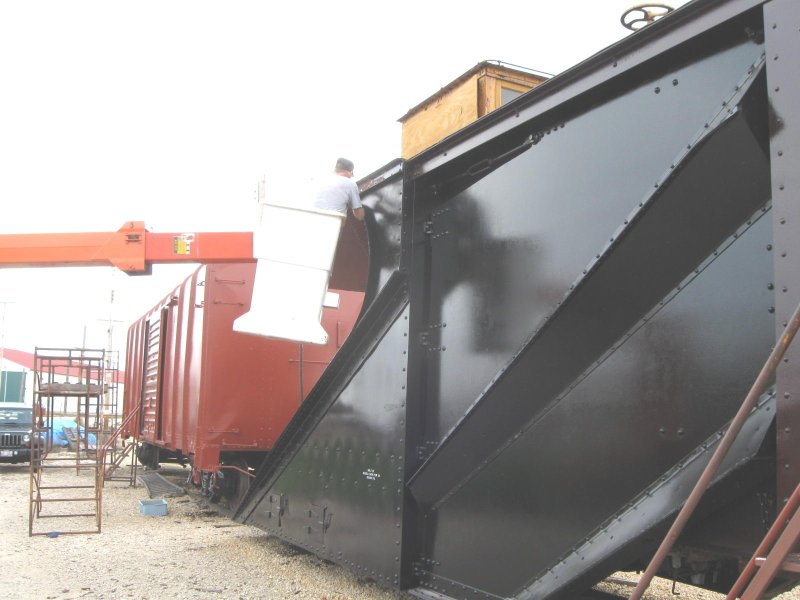
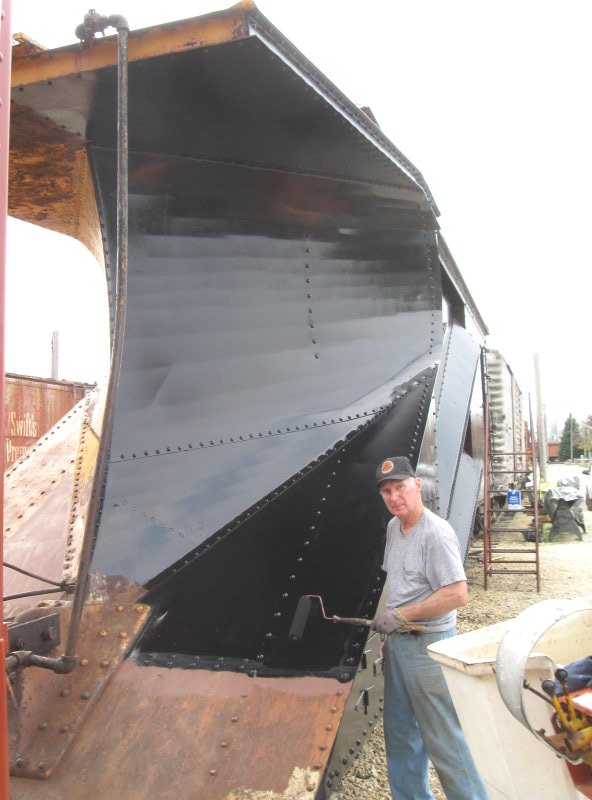
Comments (0) CGW X 38 Update - October 17, 2012Once again we are following the pattern with most of the volunteers for this project attending on Wednesdays, and, weather permitting, a large dose of 'progress' can be seen every week. In the previous BLOG ENTRY we mentioned that Victor Humphreys continues on the B&O wagon top boxcar. Arriving refreshed (exhausted?) from a recent trip, Victor is also the go to guy for much of the body work on the plow. Here he is touching up some of the weld areas, where scrappers had once provided us with a torched out large opening. Fred Ash provide some much needed help in an area not very easy to get to. All the work had to be done from a ladder much taller than I am. But here he is, wirebrushing the last untreated steel on the rear wall. It got primed later in the day ahead of the rain which was predicted, and which materialized. Dave Rogan used the bucket truck on loan from Dave Diamond to provide some measure of safety and comfort getting up to and an top of the plow roof. He has removed the remains of the old headlight - not necessarily a simple job with well rusted nuts and bolts. Jim Leonard is in the shop here with the old headlight base in yellow, and the new donated base in red, much of the old red has now been removed. The major work scheduled and hoped for on Wednesday was to beat the rain and apply the first finish coat of black to the nose areas previously in primer. Dave Rogan and Jim Leonard are starting the process here, aided by use of the bucket truck for areas not accessible by ladder or scaffold. Here is the nose in its new black paint. Quick to type it in here, but a substantial job of several hours for Dave and Jim, just finishing up here. It makes a milestone leap of progress evident. While the painting and other tasks were ongoing, I snuck in some time to apply more lettering to the plow. Here is new art work done just this Tuesday at the home computer, and applied to the side of the plow near the front. Anyone who had done modeling on any car quickly realizes there was a lot more lettering used on any car than its simple reporting marks, and this becomes really evident when restoring a full sized rail car. Here is the SAFETY APPLIANCES block of lettering and a REPACK block applied to the north side of the plow. All researched, sized, and placed to historical photos. Jim Leonard was inside the box fitting some more framing timbers and I had just finished the big CGW reporting mark on the side. Yes, there is still a lot more lettering to painted on, but this gives a much better view of what to expect. Friday, October 19. 2012
News and Views - October 17, 2012 Posted by Robert Kutella
in Freight Car Department at
08:17
Comments (0) News and Views - October 17, 2012Here are two quick views I managed to grab, not enough for a full story on either project. This is the north side of our B&O 374065 wagon top boxcar. We have not shown much on the north side, but Victor Humphreys continues the work and six of the major side panel are now painted, and the seventh has been cleaned and sanded down to ready it for primer. We were all working industriously on the cars on Track 40 and we do not expect much traffic on the adjacent Track 41. But as on any real railroad, you should plan for any car to move on any track at any time. Our friend Shaker Heights Rapid Transit 63 (ex Minneapolis) was being shoved west to occupy the pit area inside Barn 4. Sunday, October 14. 2012
Steam Department Update 10-13-2012 Posted by Nigel Bennett
in Steam Department at
14:48
Comments (5) Steam Department Update 10-13-2012It was a satisfying day at the steam shop as we generally achieved what we planned for the day. Before getting down to the main tasks we had a small job for the track department. One of our less obvious roles for the museum as a whole is as "removers of unwanted bends from large lumps of metal". Our large antique press will bend (or break !!) almost any piece of metal. In this case it was parts of the switch mechanism from Johnson's siding that had suffered during a switching mishap. This was very satisfying as both pieces straightened well without breaking. The track team took them back to refit and knew we had the best of the deal as they headed back into the pouring rain and we worked on indoors. Well done guys !. On 1630, the key tasks were measuring the tubes for refitting and producing ferrules. · For the tube measuring we had two pairs of "inside" workers, Collin and Jeff in the morning with Eric and Jason in the afternoon with Rick marking in the smoke box. This shows the technique. The wooden beam is moved from one tube position to the next by the two guys inside the boiler, pulled tight against the hooked end in the firebox, and the colored ring shows how long the tube needs to be. The hole is then marked with the color of the first ring that projects beyond the sheet. Tubes will be cut to 4 lengths matching the colors and fitted to the appropriately colored holes. The other marking (A1 etc.) is identifying how the tube will be fitted between front and rear tube sheets. The guy in the boiler marks the rear tube sheet with the same number so that we can thread the tubes into the matching holes. This would not normally be necessary as front and rear tube sheets would have the same patterns so you could simply count across and down to match. Somehow, when the rear sheet was replaced 70 years ago, 1630 received a rear tube sheet in which the pattern does not fully match the front. You can see more evidence of this at the bottom center of the picture where there is a plug where once there was a tube. The rear sheet was set up for less tubes than were originally fitted so a number of holes in the front sheet were plugged. The complexity of matching from front to back caused some delay but, by end of day, the entire fireman's side and the area below the super heater flues was complete. So we should be able to finish this exercise quickly next Saturday. · Richard did great work on the tedious job of cutting ferrules. He worked at this all day so that we now have all that we need cut and many cleaned up on the wire brush ready to fit. The ones in the box are ready for use and the ones on the right await wire brushing. · Glenn and Jerry made improvements to the swaging area. This involved setting up rigid holders to keep the tube square to the machine while swaging. At the first run, it was difficult to ensure that the tube was at right angles to the hammer jaws so this should give us better accuracy. · We were also relieved to find, when we arrived, that the welding contractor had completed the safe ending of the flues. With this done we can go ahead and pressure test them before the weather gets too cold. In other areas: · Stu, Ed and Bob continued the rebuild of the planer. The hydraulic pump is now complete .... .............. and the now for the valve block. This shows it in position before removal. This critical component takes the output from the pump and feeds it to the planer to move the huge table to and fro against the cutting heads. The initial results of removing it and soaking in the degreasing tank were disappointing. There is a lot of muck and sludge in the valve block so they had to remove all the plugs and a good deal more soaking and cleaning will be required to bring this into a workable condition. · Bruce started on measuring up the axle boxes for 428 to plan the machining that must be done to create the new bearing faces. · Terry worked with Tom and Stu to plan the water supply changes. Hopefully we can borrow some flow measuring equipment before the weather turns so that we can design the means to inject water treatment chemicals into the flow as we fill the locomotive. · We set up the B&G water tank on the department truck ready for pressure testing next weekend. Weather permitting we will aim to test the flues and new air tank next week. So overall good progress. Nigel Friday, October 12. 2012
CGW X 38 Update - October 10, 2012 Posted by Robert Kutella
in Chicago Great Western X 38 Russell Snow Plow at
10:21
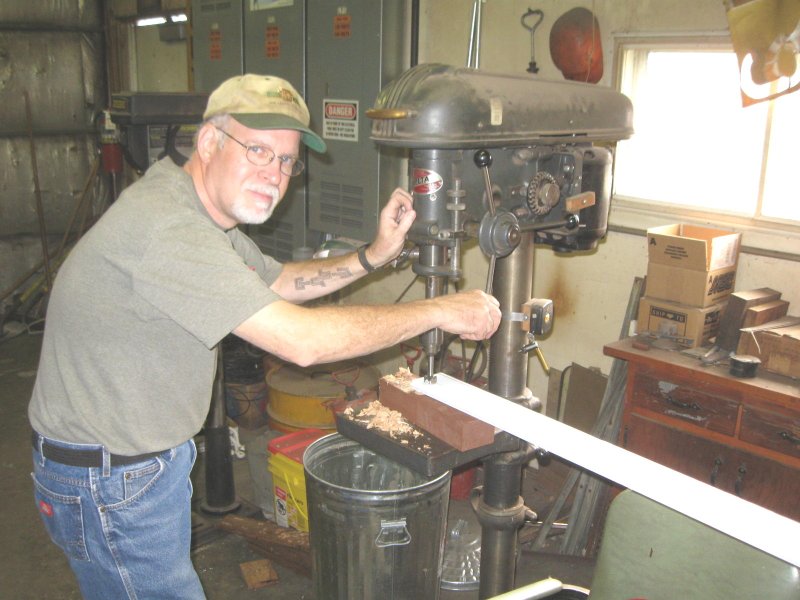
Comments (0) CGW X 38 Update - October 10, 2012This is going to turn out to be a very long report - a lot of work was done on many aspects of the project. But for a teaser here is an off topic pic grabbed early in the morning, John Nelligan and Pete Galayda were poring over old drawings as they planned the day's work on Charles City Western 300. This view simply does not belong here, but not another heading to add for just one pic. Rich Witt was applying primer to parts in the shop, earlier two stop blocks, and here two new timbers for the corners inside the plow. Later, Rich switched to some gray primer for three of the new boards destined for the interior lining of the plow. Last week most of the back wall needlechipping removed the heavy layers of paint. Now, Dick Cubbage bent to the task of using the wire wheel to get it ready for paint. Yes, there are a lot of steps to the finished product but all on the team are committed to taking no shortcuts. By the end of the day primer had been applied - doesn't that look better? Dave Rogan and Jim Leonard made short work of adding the three stop jambs to the south door framing. That area is complete for now, ready for the temporary door before winter. Dave Rogan is fitting a new timber to the interior of the south wall. This is the last major member we need to replace. And once the timber was marked, Dave was on the bandsaw making notches and later he used the drill press to bore holes and reliefs for rivet heads. Then it was off to be primed and was was drying at the end of the day. As an aside, by this time, Dave had already installed the plow's original pressure gauge having acquired a new pipe nipple to make it work. Jim Leonard is walking past the north window. Earlier he and Dave had completed all the trim work, and cut down some plywood to serve as a blank for the opening. No, we did not repaint plow wing. What you are seeing is the reflection of the orange body on the bucket truck. By far the largest task of the day was work to clean and prime the north half of the plow nose and wedge. Eric Zabelny joined us for the day and promptly climbed into the bucket truck basket to needle chip the underside of the front roof, and then went on to the pointy wedge. Here he climbed out of the bucket and is at work on the pointy nose. Thanks especially for his all day hard work, and to the B&G department for loan of the equipment. The sun is getting lower in the west and everyone pitched in to prime. Here Jim Leonard, Eric Zabelny, and Lorne Tweed are wiping down the surfaces and busy as beavers applying paint. Almost half of the nose is now done and in primer. This makes a big impact and involved a lot of areas just not accessible by ladder or otherwise. We received delivery of a new headlight for the plow. This made possible by the work and generosity of a member who found it, bought it, and donated it! By way of coming attractions, we hope to get more lettering applied to the plow, pending a warmup before winter, and hopefully a day without 25 mph winds. Here is a transfer pattern held up high on the north side. Not all the accomplishments happen out at Union. Here are two more patterns drawn on the computer at home, printed out, and then cut by hand to reproduce the look of the stencils used when the plow was in service. So yes, a very long report. I held the captions short intentionally to give you all a chance at the many pics. Hope you got this far and enjoyed it as much as the volunteers working on the team. Friday, October 12. 2012
Yard 10 Report - October 10, 2012 Posted by Robert Kutella
in Freight Car Department at
04:28
Comments (2) Yard 10 Report - October 10, 2012Buzz Morisette is one of those volunteer members who contributes to many varied projects, while somehow finding the time to move ahead on those favorites of his. Here are some pics and notes he submitted about recent work on two cabooses sitting outdoors in Yard 10. Dave Hybicki and Buzz are taking steps to stave off continued deterioration on caboose CNW 10494. As a stopgap they are covering the south side of the caboose with tarpaper held on by wood battens. This may look odd, but it will help this side, what is left of it, survive another winter. Switching to another caboose sitting outdoors in Yard 10, we find ATSF 1400. Buzz has worked long and hard on many restoration tasks and here we see that the caboose now has a complete floor again - lots of rotted wood replaced with new stock. And Buzz has managed to exercise some seldom used muscles to get the cast iron stove back in place. If you read these BLOGS on any regular basis you will remember entries a year ago of Buzz working in the wood shop making new windows. Here they are finished, glazed, painted, and installed on the caboose! Both of these cabooses (cabeese?) sit outdoors and are very subject to deterioration from the extremes of weather we have in the midwest. They are wood bodied cars 89-97 years old and deserve to be protected and saved. You may help with a restricted donation to the INDOOR STORAGE fund for the Freight Car Department. Another Barn is in the plans and would be started already with more funds on hand. A substantial amount of money has been raised, let's help push this over the top.
Thursday, October 11. 2012
Michigan Electric 28 Update - ... Posted by Ray Schmid
in Michigan Electric 28 at
13:15
Comments (3) Michigan Electric 28 Update - October 7, 2012Rear Roof Slat Installation Completed With the cooler Autumn temperatures comes greater progress in the carbarn. On Sunday, Jeff Brady fired up the roof slat steamer for bending and installing the final slats on the rear of the car. I took a few pictures of Jeff while he was completing this important milestone. The first picture shows Jeff on the rear scaffold holding the cap to the slat steamer pipe. Can you see the slat inside the pipe waiting to be heated by steam? When Jeff thinks the slat has “cooked” enough he quickly removes it and bends it to the correct curvature while nailing it in place. While bending the slat, Jeff hand tapers the bottom end before nailing it to the tack molding. At last the final slat was installed! Can you see Jeff’s finger pointing to the small wedge shaped slat that finished the job? Well done Jeff, the St. Louis Car Company would be proud! After a final sanding of the top layer of slats, Jeff will move on to tackle the front of the car next. I see a lot more slat bending and steaming in Jeff’s future. While Jeff was working on the roof of the car, I was fabricating the first of five window guards for installation in the rear vestibule. We do not have the original window guards as they were probably removed when the car was used as a cottage prior to 1971. We did obtain the correct match for what was there, except the tube lengths are wrong. Therefore, I have disassembled them and am now cutting new tubing to the correct length for reinstallation. The picture below shows the first window guard temporarily installed to check the size and look. I still need to install cold rivets to hold each of the four tubes in place. The window guard will be primed, and painted a finish coat of orange before installation. Interested in the 28 with time on your hands? We are always looking for volunteers to help us finish the car to it's former glory. To join the restoration team, please see us at work on Tuesdays and Sundays in Barn 4/Electric Car Shop. Monetary donations are always welcome. Donations buy the materials, we supply the labor. Mail funds to IRM designating the ME28 restricted fund. Thanks! All pictures taken by Ray Schmid. Additional ME28 pictures can be seen in the IRM Member Photo Gallery @ IRM.org. |
Blog AdministrationFind us on FacebookCategory TreeCalendarQuicksearchArchivesSyndicate This Blog |
Powered by s9y.
Comments
Thu, 05-16-2013 21:52
Looking good Bob! I hope to come out soon once I'm done with school.
Wed, 05-15-2013 21:28
I was not around at the time. General discussion suggests that it was "pretty marginal" in a number of areas. Nigel
Mon, 05-13-2013 11:08
"THUMBS UP!"
Fri, 05-10-2013 02:15
No, it will not be necessary to hold any of the work waiting for the plow to be turned, end for end. Weather will be the major factor, but there will [...]
Thu, 05-09-2013 19:54
The CGW X-38 plow is really coming to life. Bob Kutella and Vic and crew need to be very proud of your collective efforts. I am very appreciative of [...]
Thu, 05-09-2013 15:20
The snowplow looks great! Are you going to apply the door and upper windows befor it is turned to continue work?
Thu, 05-09-2013 09:09
Max, Is there any progress to report yet, in regards to the installation of the poles and overhead wires? Have a good day, sir.
Wed, 05-08-2013 18:40
Thanks for the update! I still don't understand why Commonwealth #5 was removed from service. Do you know why?
Tue, 05-07-2013 09:28
Mr. Kolanowski.....I was just wondering if the Spaulding webcam will be up and running soon for us stay-at-homes. Thanks!2FP
Mon, 05-06-2013 23:04
Max, Has work begun yet on the construction phase of erecting the poles and putting up the wire? Wish I could be there to watch it happen.
Mon, 05-06-2013 23:02
Keep up the good work, Bob. Wish I could be there to help!!!!!!!
Sun, 05-05-2013 18:53
Ah yes, I have made such Jibs myself. If it were me, I would add in each corner an angled piece from the base to the Jib to act as sway bracing. [...]