

|
|
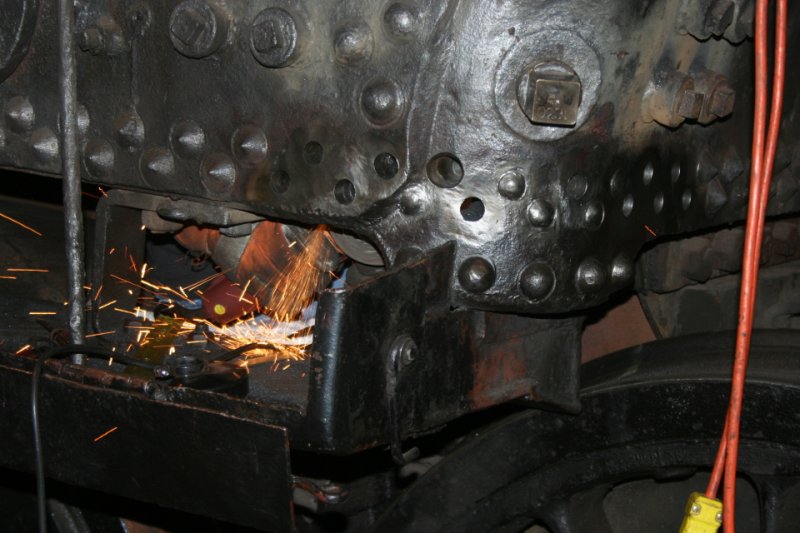
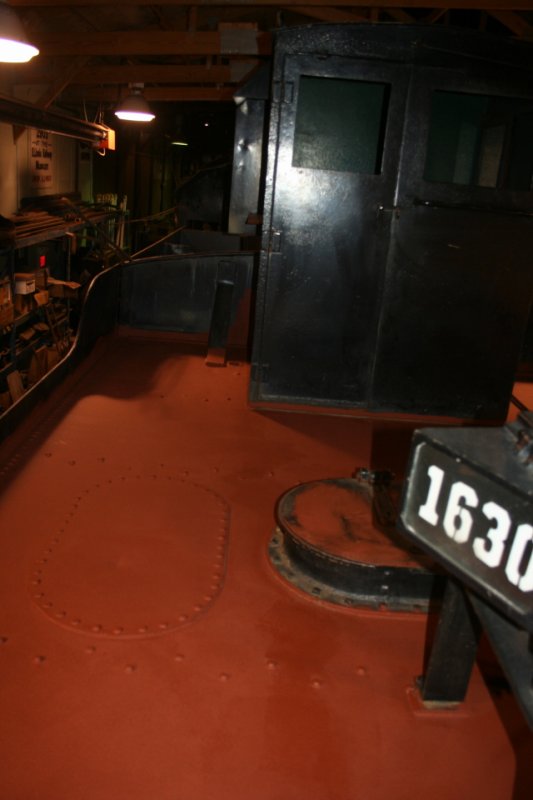
Sunday, July 22. 2012Steam Department Update 07-21-2012I guess we must be becoming more adapted to the heat. There is not much choice this summer !!. A lot was achieved in the steam shop this Saturday and we are now moving toward the key step of the FRA inspection of the interior of the boiler. We have a few more minor tasks to complete inside but are now close enough to schedule the appointment. This is critical to our ongoing schedule. If the inspector is satisfied with the boiler interior we will be able to progress to painting the interior and refitting tubes. If any additional work is required that impacts the timetable. A number of tasks were progressed on 1630 · Chris and George from Curtis Boiler Service came in to scope and quote for the specialized welding of the safe ends on the super heater flues. George has done this work on several of our other locomotives over many years. He will also do the work on the rear tube sheet. · Work progressed well on the super heater elements. After the initial shock last weekend, when the first one failed, we now have 9 that have proved sound at the full 1000 psi pressure, have been cleaned and prepped and are now back in the boxcar where they will stored ready for refitting. Another 9 are outside the shop to be cleaned and tested during the week and next weekend. That leaves 8 more to complete the total of 27. (How does 1630 have an odd number of elements?. Because decades ago one position on the header was damaged and plugged so at IRM she has always had one less super heater than she was built with.) The process of cleaning and testing the elements is quite complex so I have made some notes below. · Mike has recovered and was back at the shop. He is in process of grinding the mud ring to ensure a smooth fit for the patch.
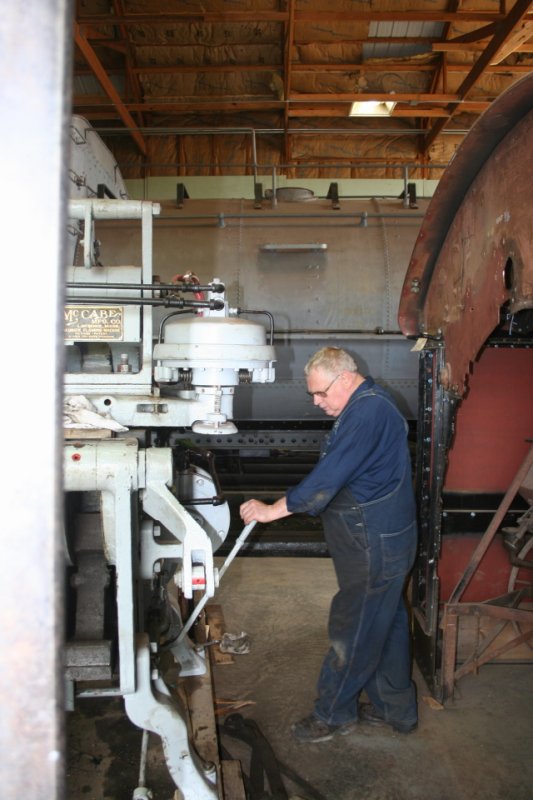
· Glenn finished the McCabe and we took the first steps toward getting comfortable with using it and setting up to produce a test sheet that we can use to prove we have the correct radius to accurately fit the mud ring before we bend the rather expensive boiler plate. It looks as if Ralph has some doubts about what that lever does !
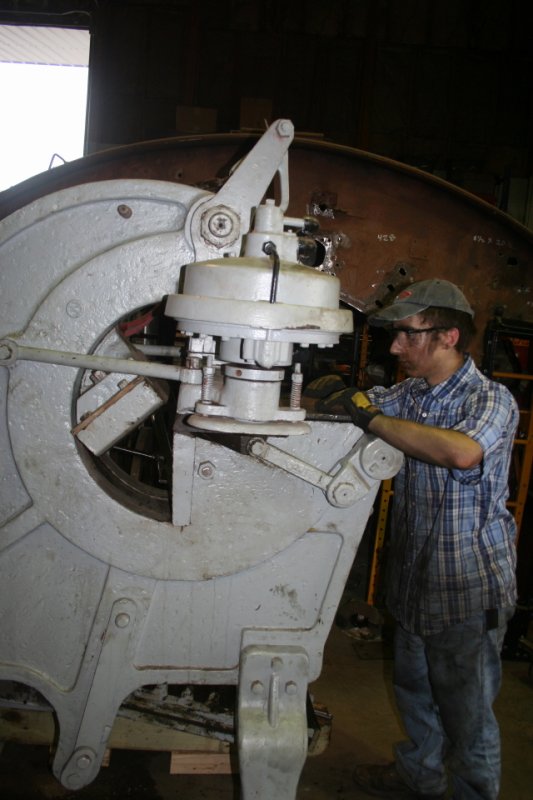
Phil working to set the test sheet in the jaws of the flanger. This provides a good view of the way in which the McCabe operates. The sheet slides between the flat surface on which Phil is setting it and the clamping head above it. It projects back toward the machine and extends over the curved die (the dark grey curved surface that can be seen below the light grey clamping head) into the space below the press head. The press head is at about 25 degrees to the horizontal in this view but would be drawn up to the horizontal to allow the sheet to be pushed into place. With the sheet clamped, the press head is driven down by stages bending the sheet to the radius of the curved die. The machine is hugely powerful, well able to bend 3/4 inch steel plate, and has few "fail safes". Only care by the operator ensures that it does not apply the force incorrectly and severely damage the machine itself.
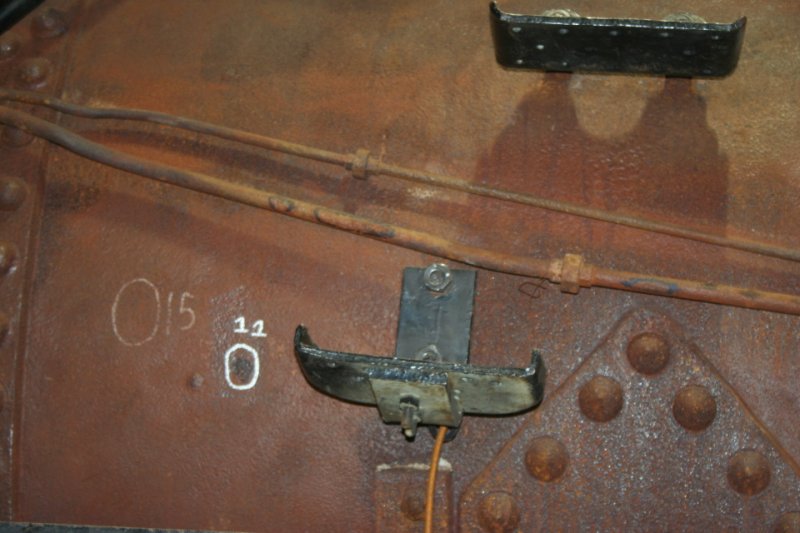
· Ed thoroughly brushed off the various small pipes that run along the boiler feeding the lubricators and accessories such as the bell. The object was to determine if they should be replaced and the conclusion was that we should do this. Based upon examples such as this it seems safer to replace the pipes now. None were actually leaking but the objective is wherever possible to aim for a long spell of incident free operation and these have the potential to be a real nuisance. Once the locomotive is complete, these will be buried under insulation and lagging sheets. If one failed then it would probably damage the insulation and a lot of sheet metal would need to be removed to get to it.
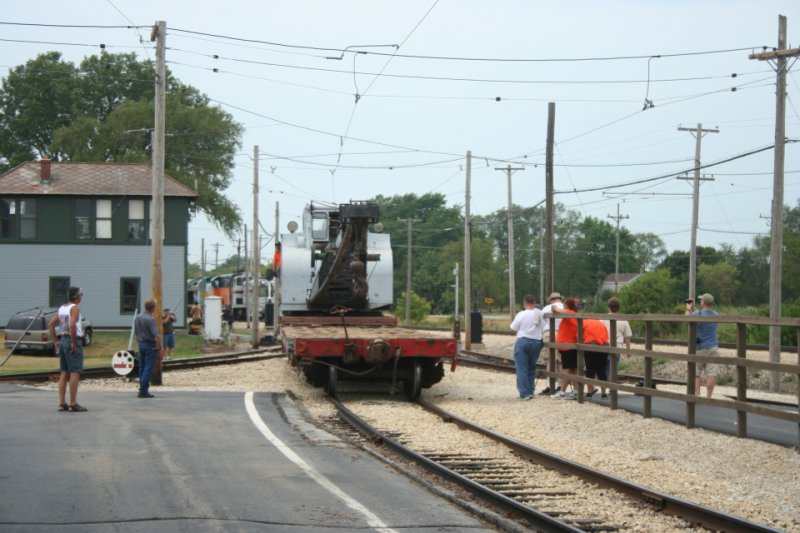
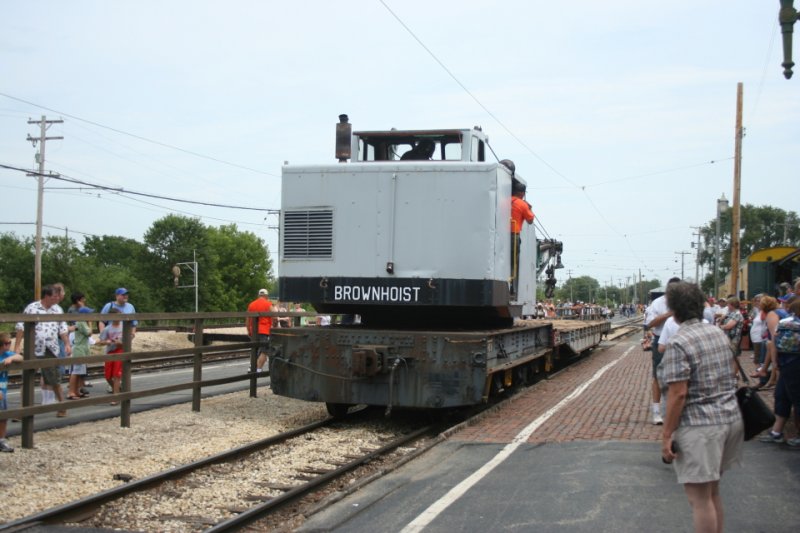
In other areas: · Tom has machined the spring retainers for the Shay so we can get those welded into place on the bolster fitted next time Dennis is in the shop. · Stu and Bob continued the assembly of the planer. Jeff had arranged for the department's BrownHoist crane to run in the Diesel Days parade and here it is running thru the depot road. and comes to rest in the depot to be described. It must be a long time since she has been out of the shop and barn area.
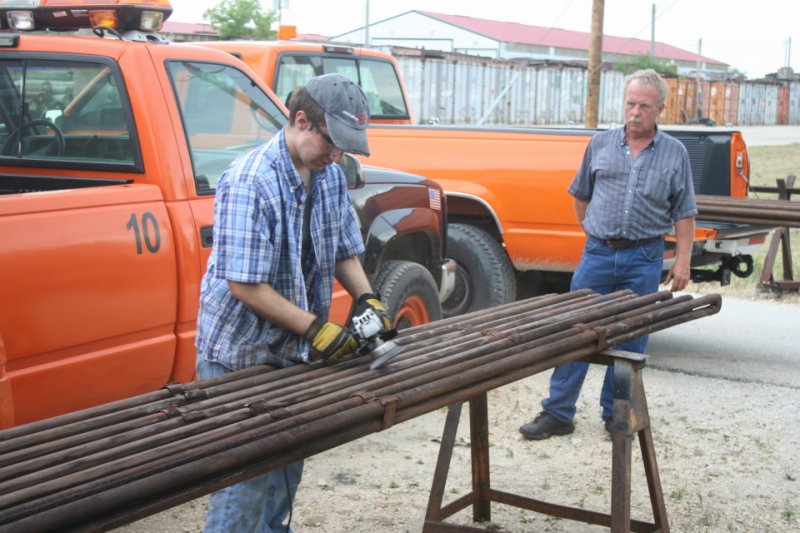
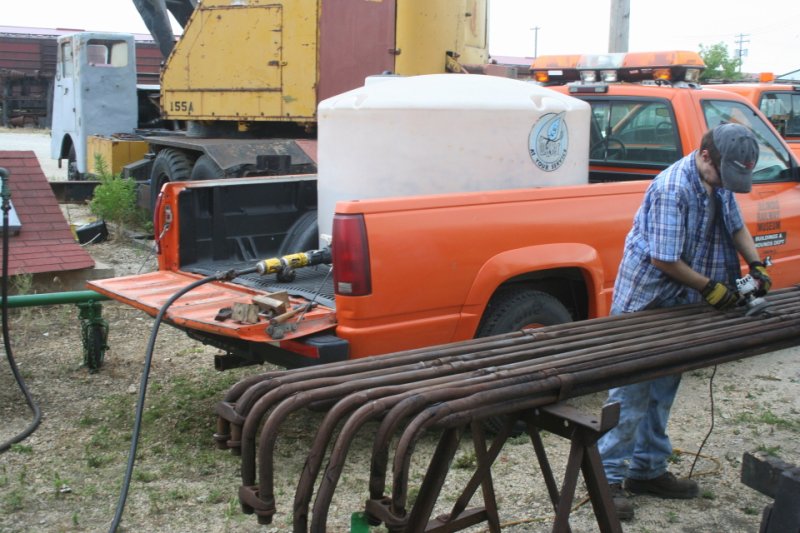
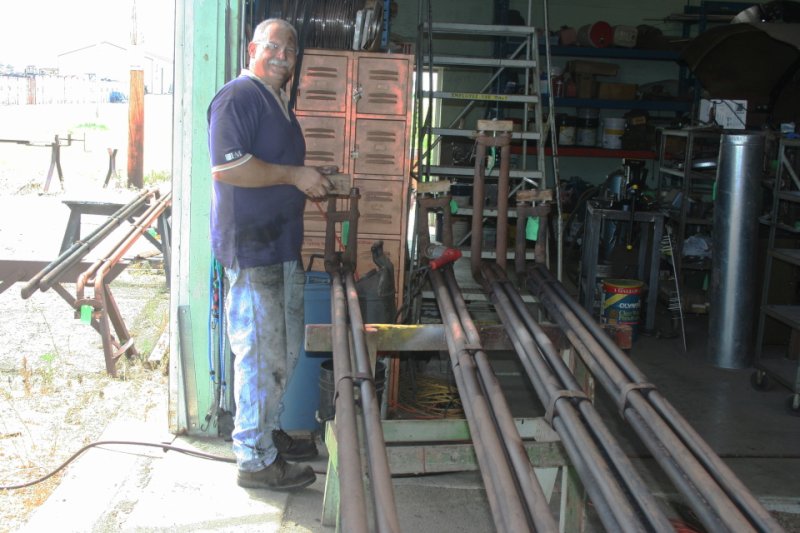
Cleaning and testing super heater elements Each element has been located in a flue thru which pass heat and debris from the fire. So they are thoroughly covered in soot and rust that must be removed before it can be inspected and tested. What Phil is doing here can be referred to as cleaning but most of us who have done it see it rather more as transferring the dusty muck from the tube to the operator !!
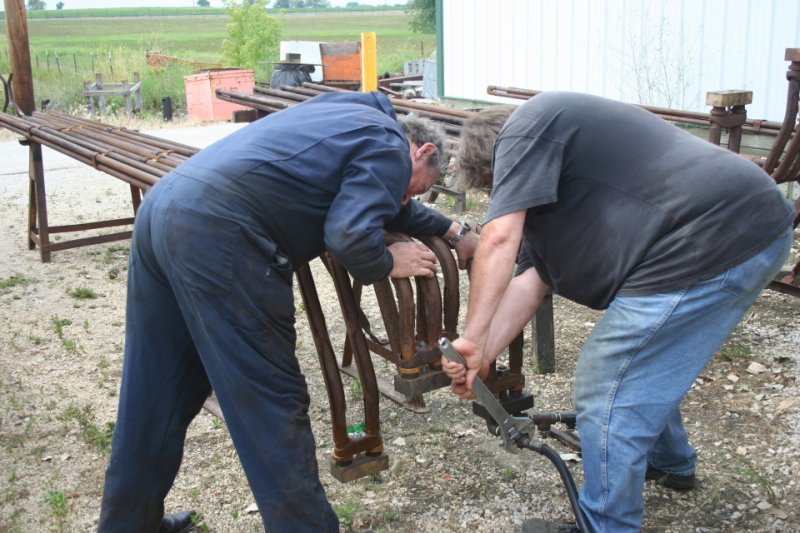
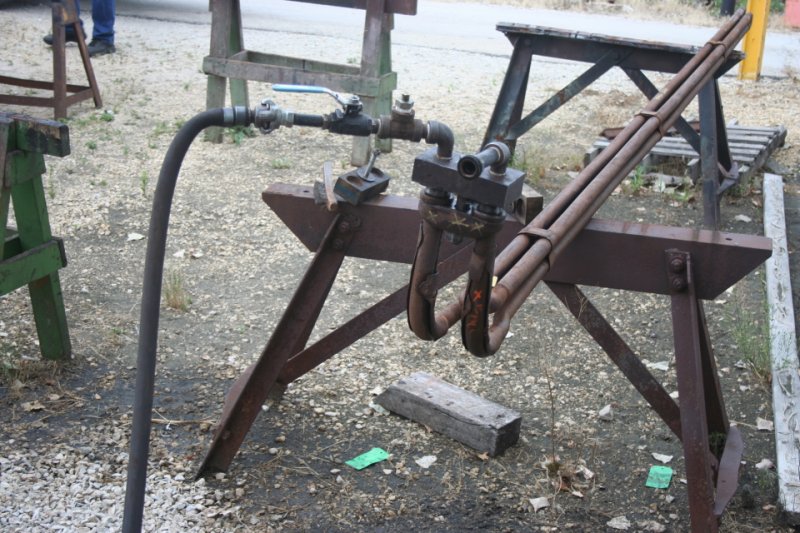
The test rig must then be fitted to the element. The element has balled ends that, in service, are a dry fit into balled sockets in the super heater header. These must be carefully cleaned with emery cloth to remove pitting. A thin rubberized fabric washer is fitted between the test rig and the ends of the element. If this survives the 1000 psi test pressure the balls are in reasonable shape to make a seal with the header when they are refitted.
Once in place the element ready for testing looks something like this. (Actually in this view the element is ready for the final step, after successful testing, when air is blown back thru the tubing to ensure that it is thoroughly dry and ready for storage in the boxcar. For testing the water supply is connected to the right hand side to the test rig).
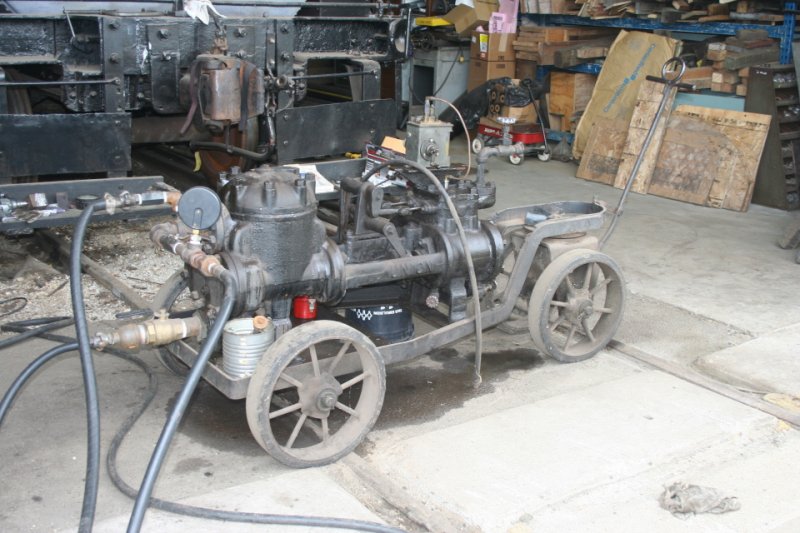
The rig is then connected to our high tech water pump. Joking aside, this may be old but is a very effective and critical piece of equipment that can pressurize the elements to 1000 psi and the whole boiler to more than 200 psi when carrying out a hydro test. The loan of this tank from B&G overcame a significant problem last weekend. The pump operated very unevenly and Tom recognized that the problem was that the pump exerted sufficient suction to close the valve on the well if it is directly connected, even thru 100 ft of hose. Provided with an unrestricted supply the pump builds pressure evenly. The pressure is raised to 1000 psi and the pump valve closed. If the pressure holds we have success. The most common problem is that a leak develops around the ball joints necessitating more work with the emery cloth and/or refitting of the test rig. Once an element has passed the pressure test, high pressure air is blown back thru it to make sure it is free of water. The rings that hold it to the header are carefully cleaned and sprayed with WD-40 to protect them and the element is then ready to go back to storage with confidence that it ready to fit into the header, hopefully during this winter. Nigel Sunday, July 15. 2012Steam Department Update 07-14-2012Despite the heat work progressed well in the steam shop this week. A number of important tasks on 1630 were moved forward: · During the week, Kevin has made good progress on needle chipping the mountings under the boiler in preparation for painting. · Jason worked with Bob Hunter on the form 4 submission which is now well under way. · Glenn and Richard (welcome Richard on his first day) reassembled the McCabe which we urgently need to produce the firebox patch. An extremely awkward set screw fitting was achieved and the piston refitted. Now we are close to being able to test the machine.
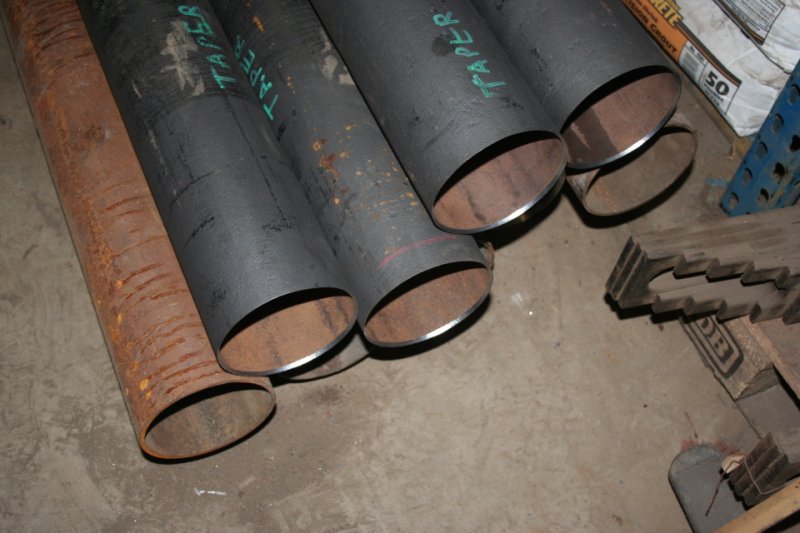
· Phil and Bob continued tapering the super heater flues. A welding contractor is due in next Saturday and we should then be able to start building up the flues ready for refitting.
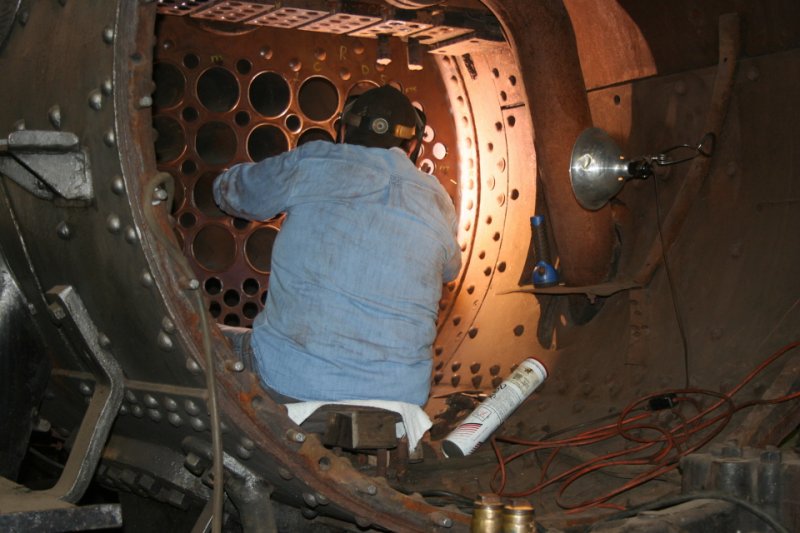
· Dennis welded the marks on the front tube sheet that need to be filled ready for tube fitting and also repaired the crack in the smoke box. We can now finish the front tube sheet ready for the inspection. That was the good news !!. The bad news was that Dennis proved that he is too big to reach the rear tube sheet either from the firebox or from inside the boiler. (Despite all the jokes, it is not your gut but your rib cage that determines this. I can just barely fit between the arch tubes and usually bruise my ribs when I do so, Dennis is just that little bit bigger in the chest). Hopefully the contractor coming in next Saturday is smaller and can do the work on the rear tube sheet.
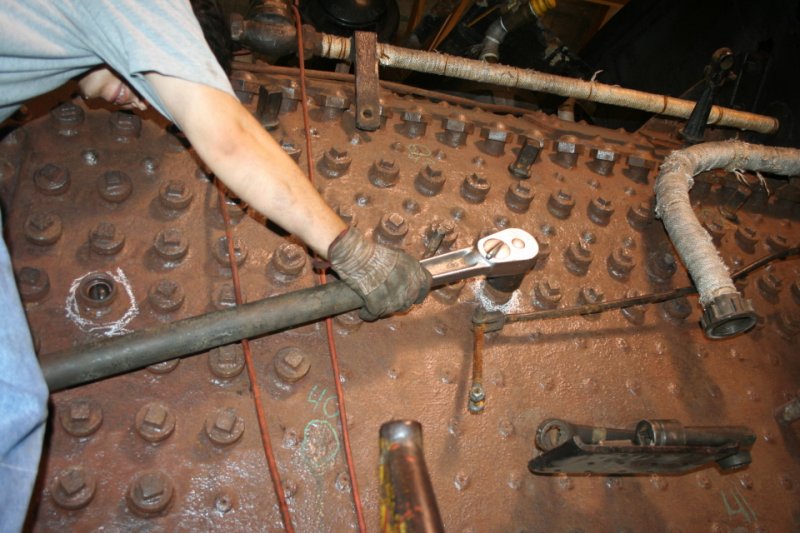
· Collin, Sean and Jason removed flexible stay caps that we need to inspect and Jason refitted a number that we have already done.
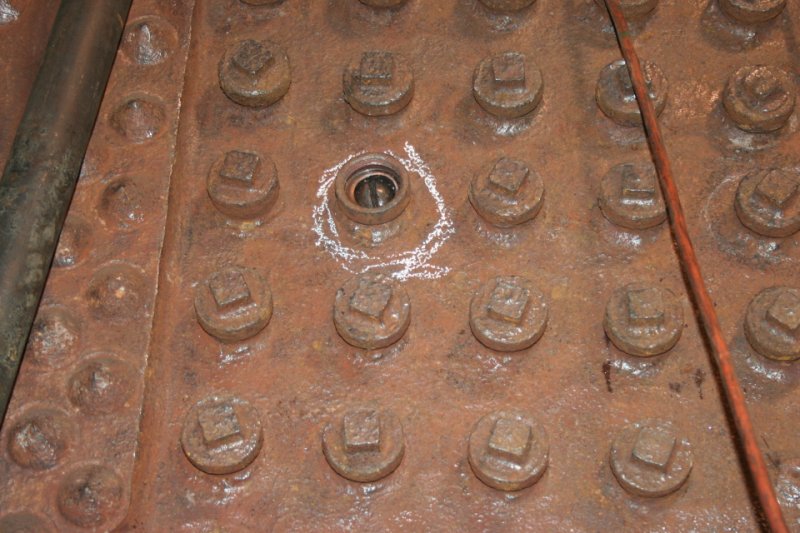
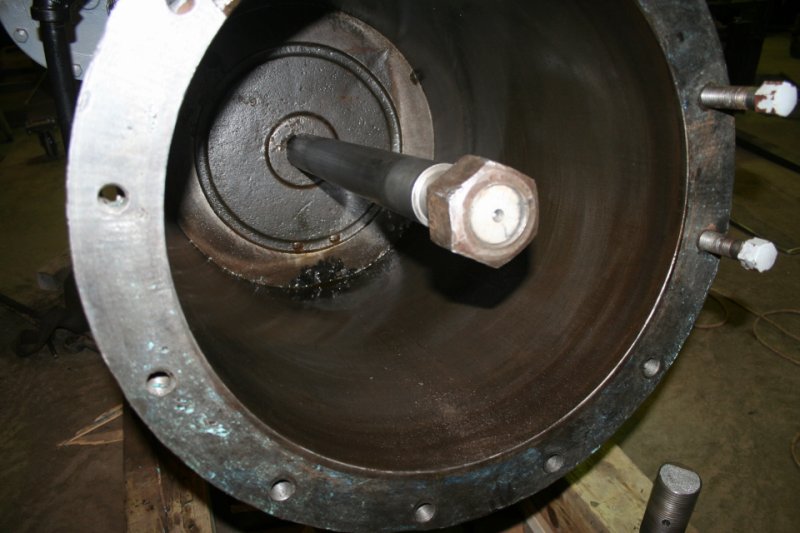
Here you can see the inside of a flexible stay after cleaning and inspection. The slot is in the ball head of the stay surrounded by the hex headed sleeve. The stay is a long threaded rod with the ball head at one end, When fitting a new stay it is inserted from the outside thru the sleeve and screwed into the inner firebox. So far we have not found any bad ones, which is good news as replacing these is a slow job.
· The big new task started, which kept a lot of us busy, was the cleaning and testing of the super heater elements. There are 16 of these and each must be wire brushed clean, the ball ends that fit into the header thoroughly cleaned and polished and then hydro tested to 1000 psi. While it will be months before we are ready to fit these, we wanted to start early so that we can schedule any repairs if required. It was a good thing we did. The first one failed the pressure test and will need to be rebuilt. Two then passed and the fourth proved to have a good deal of corrosion on one of the ball ends which will require significant work to reshape or replace.
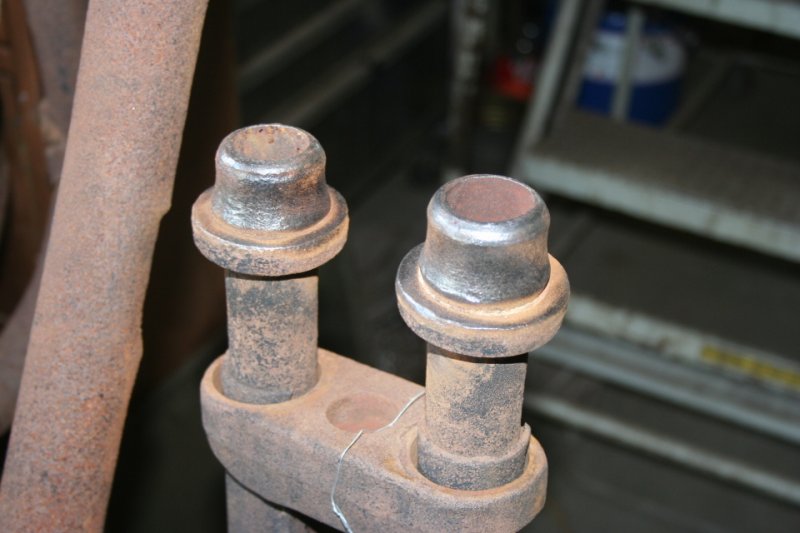
This shows the critical ball end of an element. The two rounded ends fit into rounded recesses in the header. It is essential that these provide a smooth, polished and rounded surface that mates tightly to the header.
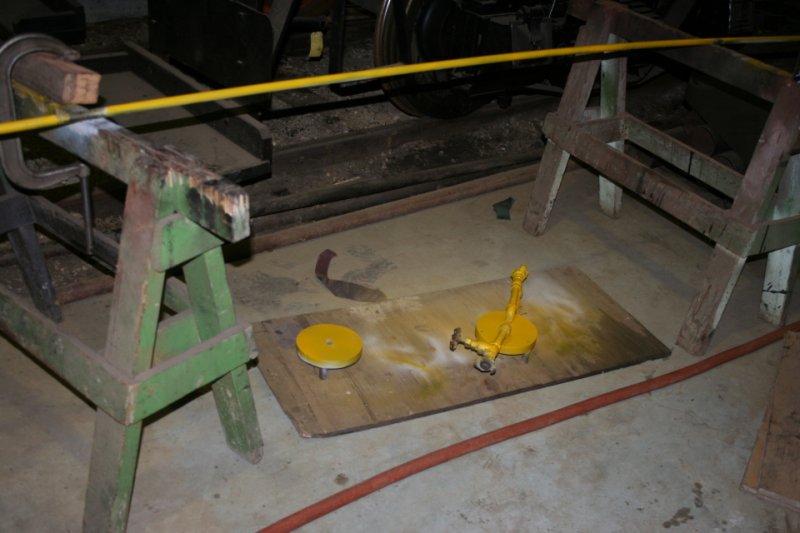
· We also welcomed a number of groups of visitors to the shop. It was encouraging that a couple of groups expressed surprise at the number of volunteers and amount of work being progressed. In other areas: · Jeff put together an outline plan for positioning machines in the new machine shop. Once this is agreed we will be able to position all the large equipment and free up a good deal of space in other parts of the shop. · Bob cut the steel slugs that Tom will now machine to make the spring retainers for the Shay and also continued work on the planer. Nigel Sunday, July 8. 2012Steam Department Update 07-07-2012Another day with temperatures reaching 100 degrees certainly slowed work in the shop. However, we plugged along with frequent "cooling breaks" and made good progress on the key tasks. Alex and I completed tapering the safe ends for the super heater flues. So we are now ready for the welder to attach these to the flues. Paul cleaned up the pressure testing rig, that we need to test the flues once they have been welded. As shown below it consists of blanking plates that are tightened from each end of a rod so that will tightly seal the ends of the flue. One has the connections to allow water to be pumped in and air allowed out. Once free of air, the flue is pressurized to ensure that the welds attaching the safe ends withstand boiler pressure.
Glenn, Phil and Jeff spent the day refitting the piston rod to the McCabe flanger. The rod is now in place.
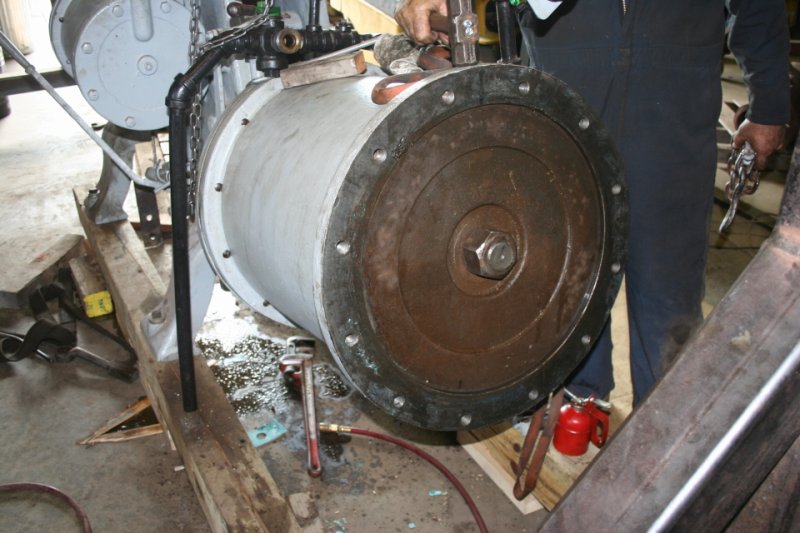
This view gives some idea of the power of this machine. The main cylinder shown here is approximately 3 feet in diameter. Operating at 90 psi this creates a force of more than 40 tons on a few square inches of plate in the jaws. In this way it can smoothly bend 3/4 inch steel plate with no apparent effort. The downside is that minor errors in adjustment or operation can cause this force to fall onto the machine itself causing issues such as the broken piston rod. There is some tricky drilling to be done to place a set screw but once that is done, we can hope to refit the piston and get the machine back into operation to start work on the firebox patch. Kevin has been working most of the week on preparing and then priming the tender tank top. This is a massive improvement. Unfortunately I failed to take a "before" picture but this area was in really bad condition, probably due to water lying on the tank top at some stage.
Stu and Bob worked on reassembling the planer. A new bearing has arrived and the shaft has been machined so it is beginning to come together. Nigel |
Blog AdministrationCalendar
QuicksearchSyndicate This Blog |
|||||||||||||||||||||||||||||||||||||||||||||||||


Comments
Mon, 09-08-2025 08:22
Good job on the Burlington Nortern 9976. OK.
Tue, 08-12-2025 12:56
No new news that I have heard of thus far.
Tue, 08-12-2025 12:53
I'll also be doing another update on it soon. Keep en eye out for that.
Tue, 08-12-2025 12:47
A little work was done to it for Diesel Days this year. You'll see photos floating around for the temporary short term job that was done to make it [...]
Wed, 08-06-2025 13:01
Is steam car CN 15444 going to be coming to museum several times it was to be moved to muesum
Sat, 07-19-2025 18:56
Yeah, sadly it's still there as of 7/19/2025
Thu, 06-12-2025 19:14
Its been 14 years guys, where is the unit? Like really? Did you guys misplace it? Or are repairs taking that long? At this point be might we will have [...]
Wed, 04-09-2025 17:40
Jamie Thanks for the update. She's gonna shine like every thing else you guys do! Smeds
Thu, 03-06-2025 16:28
Yes, there is a wye. Those two have been MU'ed on diesel days a year or two ago.
Wed, 03-05-2025 14:04
7009 number boards look good. Is there a way to turn a locomotive around at IRM? In case you ever had a mind to connect 7009 and 6847?
Fri, 03-29-2024 21:26
We're slackers and spend more time working on the equipment in the shop than keeping all you readers updated. We'll work on it, but I'm sure updates [...]
Thu, 03-14-2024 08:02
What happened to the Department Blog? It's been over 2 years and I still regularly check for updates, but nothing comes...