|
|
|
< Previous
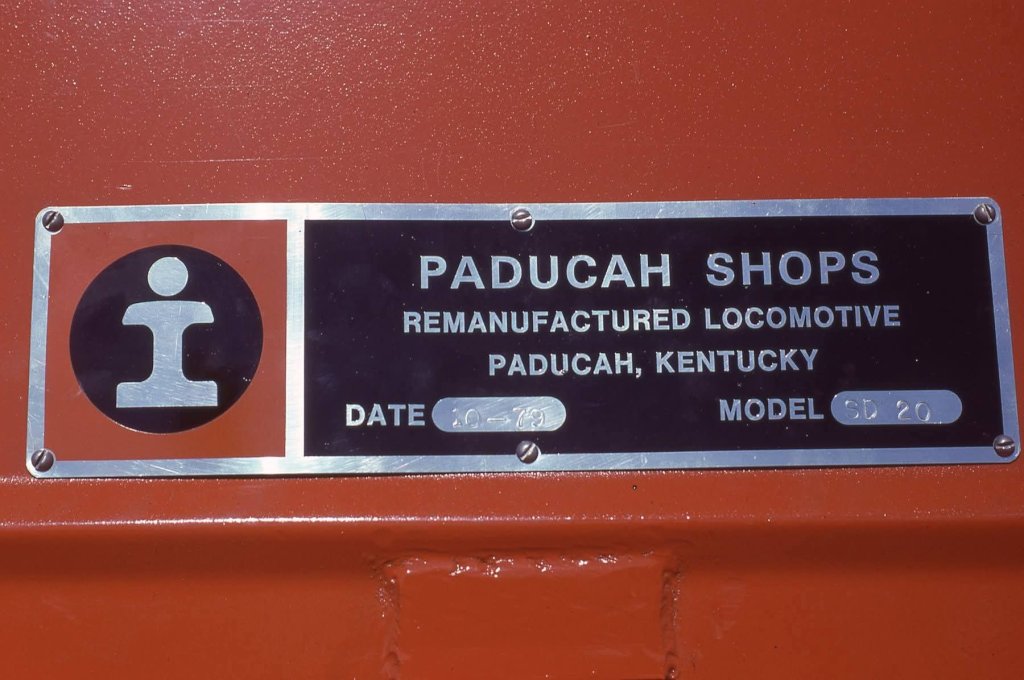
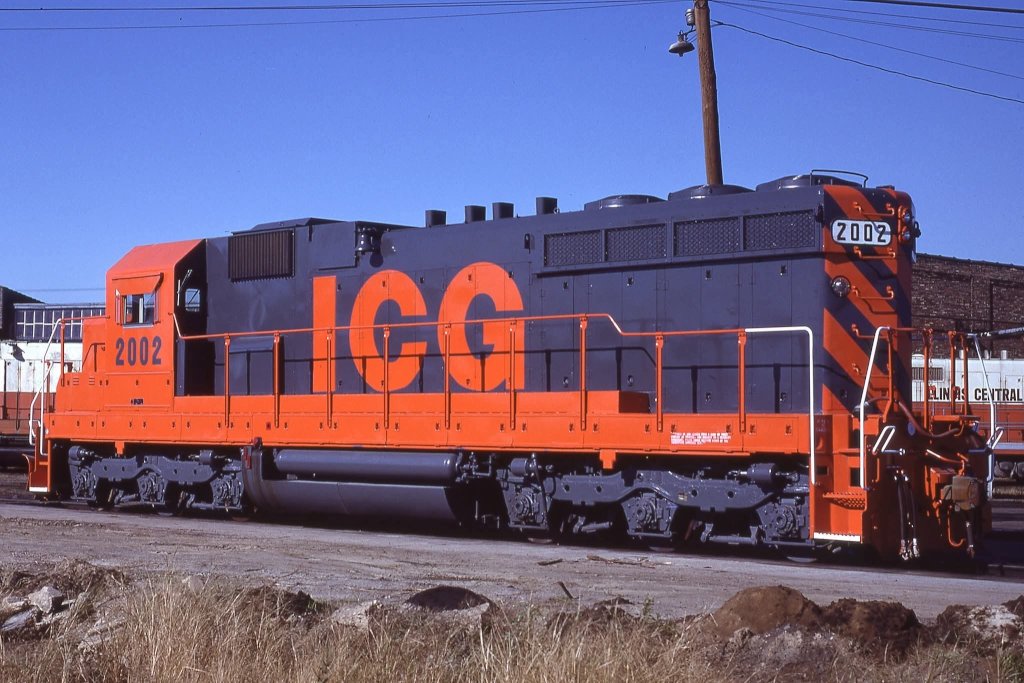
Tuesday, June 2. 2026Illinois Central Gulf 2002, a Paducah SD20The Illinois Central’s Paducah Shops became one of the most important locomotive rebuilding shops in North America during the 1970s and 1980s. Rather than purchasing large numbers of new locomotives, the railroad rebuilt older units into upgraded models, like the SD20. These rebuild programs modernized aging locomotives with improved electrical systems, rebuilt engines, upgraded cabs, all while costing far less than buying new power. This strategy extended the service lives of reliable first-generation diesel locomotives, reduced capital expenses during a financially challenging era, and maintained a versatile fleet for both road and switching service. The success of the Paducah rebuilds became so well known that locomotives rebuilt there continued operating on railroads across North America for decades after their original construction.
The SD20 remanufacturing program sourced SD7, SD24, SD24B and SD35 locomotives. 42 of them were completed between 1979 and 1982. ICG 2002 was the third SD20, released on October 24th, 1979, and was originally a Union Pacific SD24B, numbered 427B. Some of the features on the SD20 included upgraded 16-567CE roots blown engines, clean air inertial blower cabinets, and cabs similar to EMD’s second generation spartan cab design.
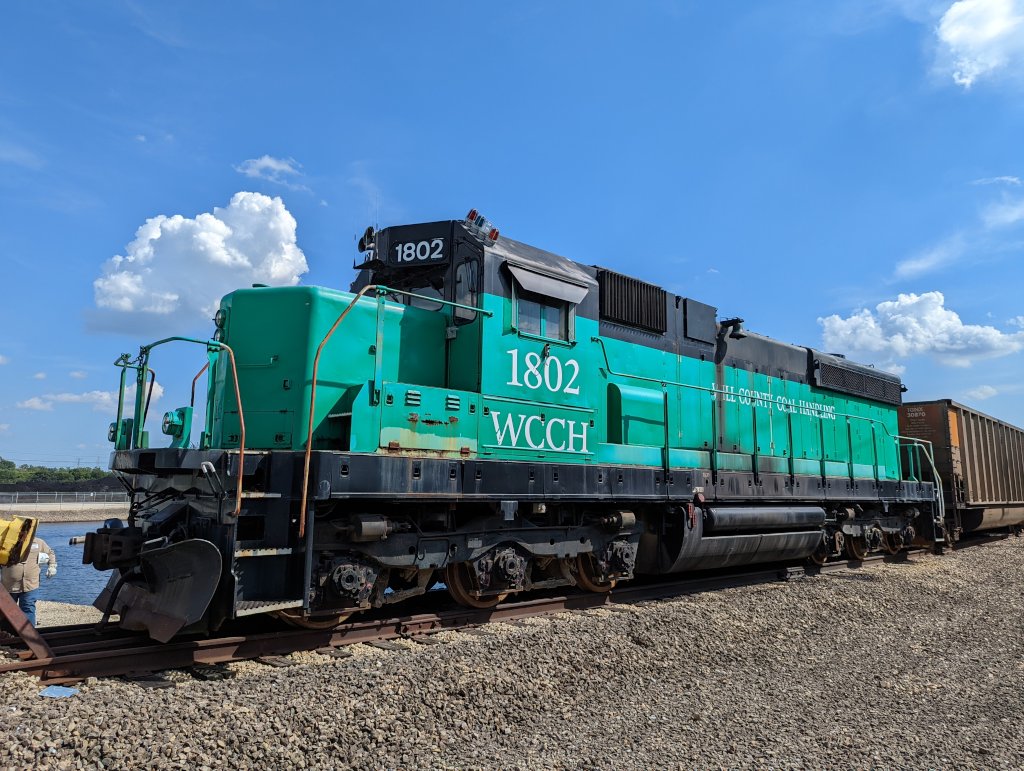
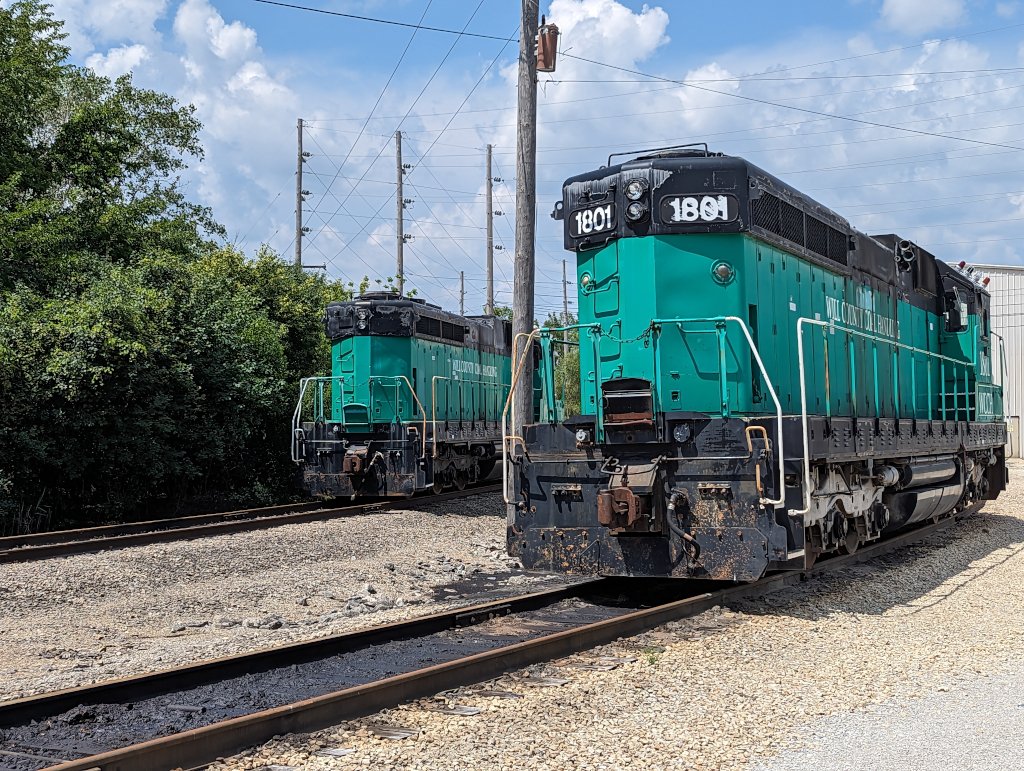
As mentioned above, ICG 2002 was built as UP 427B, a SD24B (cabless booster) built in 1959 and retired in 1977 and sold to Precision National. Illinois Central Gulf’s Paducah Shops acquired and remanufactured many SD24B’s, including 2002, into the SD20. 2002 survived on the ICG over a decade and was sold to NRE. After NRE, it went to Twin Cities & Western as number 600. In 1997 it was sold to Commonwealth Edison and later became Will County Coal Handling 1802. It and another SD20, numbered 1801, serviced the NRG Will County Generating Station in Romeoville, Illinois unloading coal trains for nearly 25 years.
Mid 2022, I was contacted by the Plant Manager at Will County Station asking if IRM was interested in the two machines they used for moving the coal trains. It just happened to be the same guy that arranged the donation of ComEd 15, an EMD SW1, from the Bryon Nuclear Plant back in 2000. We arranged a visit to inspect the locomotives and started working on the agreements over the next couple months. The Romeoville Fire Academy had requested donation of one locomotive prior to both of them being offered to IRM. They did not have funding or a location to store the locomotive at the time, which is why they were both offered to IRM. During the process, NRG also needed to keep one locomotive to load out unused coal and send cars out. The Fire Academy eventually worked out a deal with the quarry to store the 1801. The donation of 1802 was completed in October of 2022.
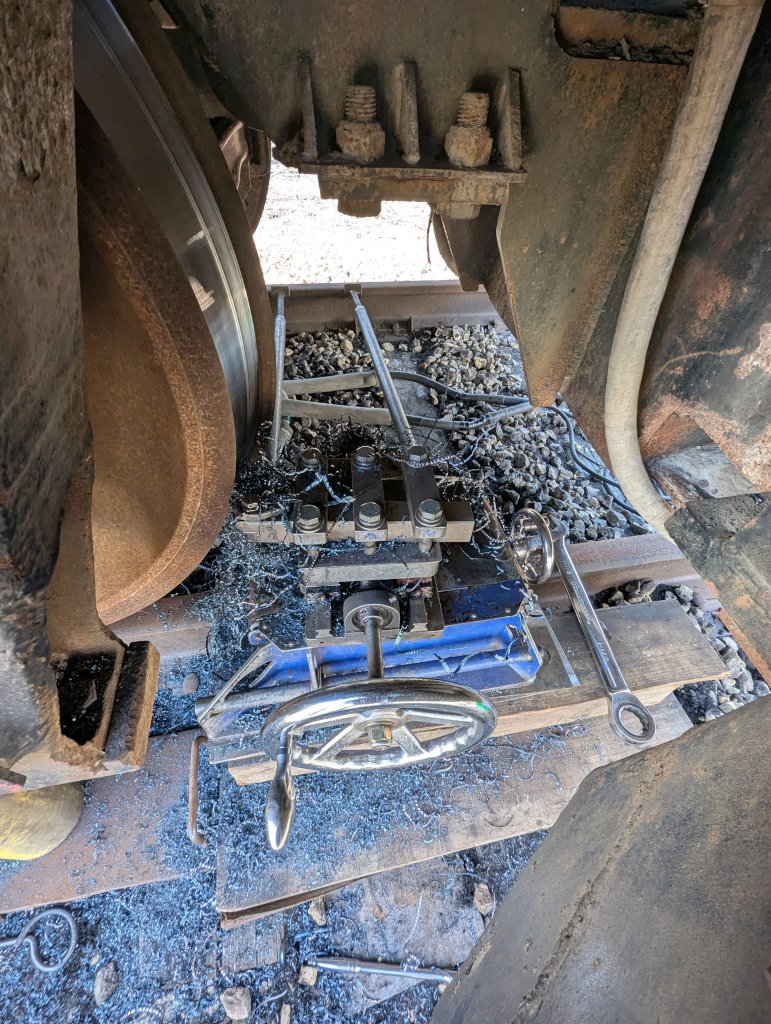
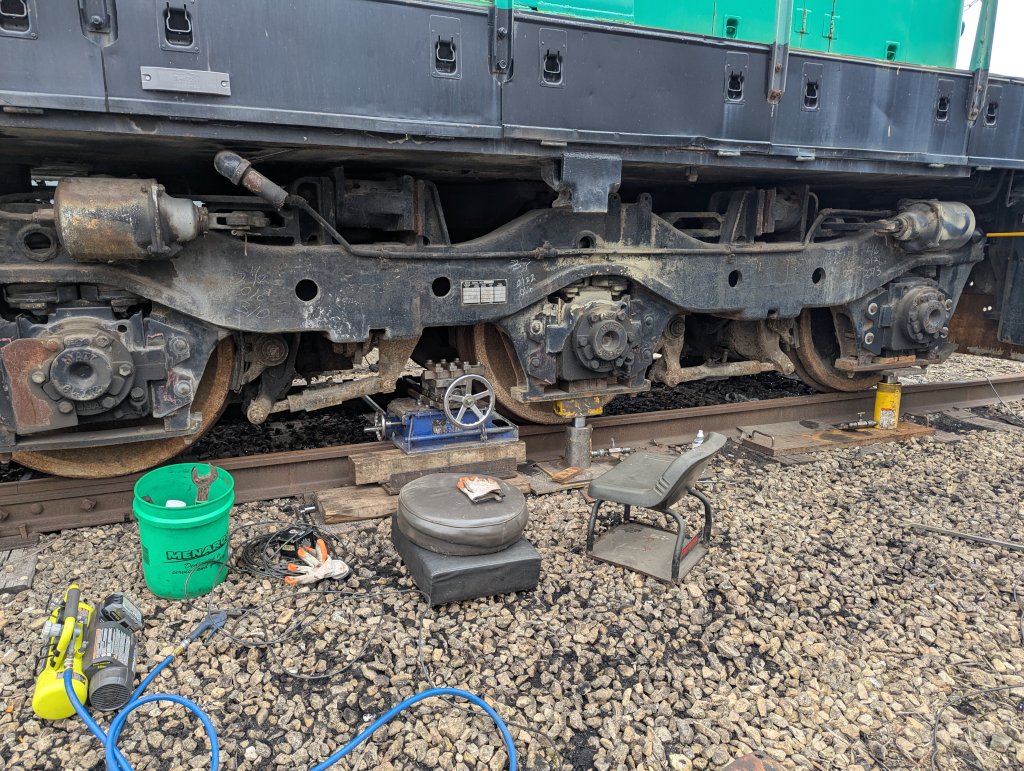
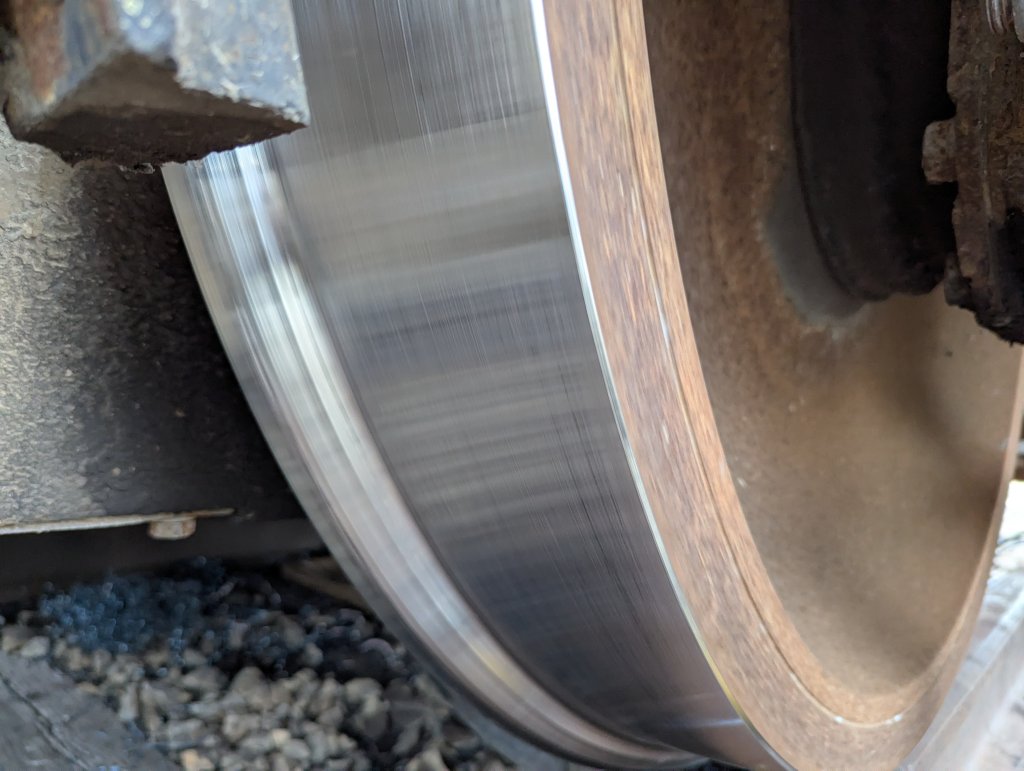
Both locomotives were stored at the plant for another year. 1801 was moved to the quarry late in 2023. 1802 had a number of defects that needed repairs, including multiple FRA wheels. During 2024, a few companies came to quote turning the wheels on 1802. Ultimately, PLS, who had been maintaining the locomotives for NRG, was hired to reprofile all 12 wheels. The wheel truing, along with the other defects were completed and repaired in the spring of 2025.
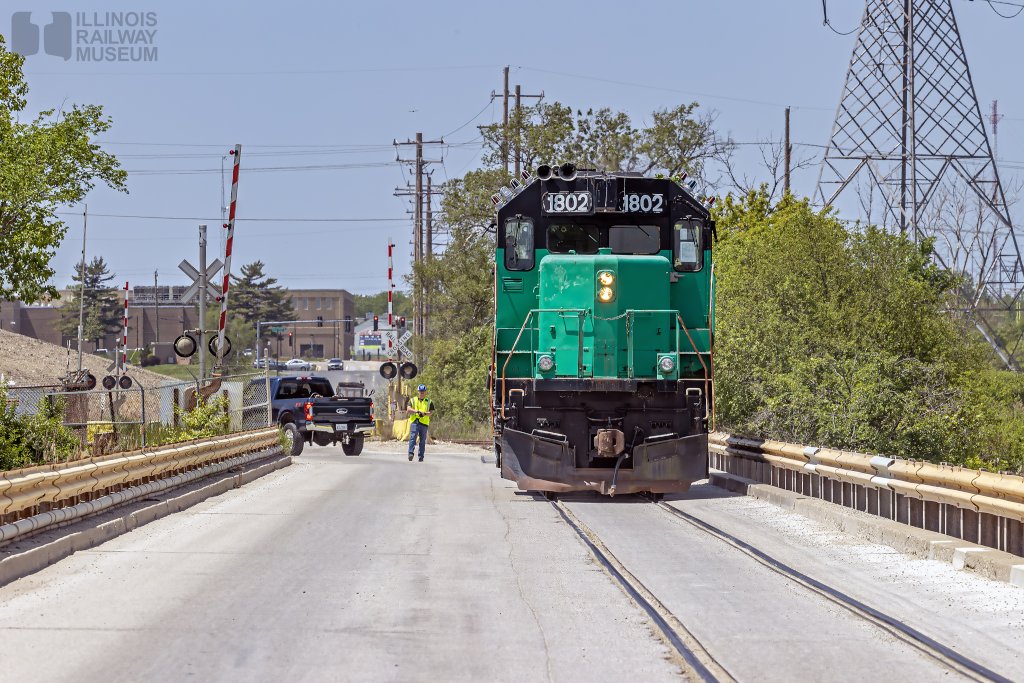
In March 2026 we began working with CN again for a special rate for transportation and to inspect the locomotive. CN’s mechanical department inspected and passed the locomotive on May 5th. Arrangements were made to move 1802 from the power plant to CN’s interchange point on the 15th and it was picked up and moved to Joliet on the 24th. Over the next few days IRMX 1802 made its way from Joliet to Kirk yard in Indiana, then to Homewood, and finally to UP Yard Center. Over the next week, 1802 made its way from Yard Center to Global 3 in Rochelle, then to West Chicago, then to Belvidere where it waits to be delivered to IRM.
The museum’s short term plans are to make a few additional repairs to 1802, remove the remote control equipment from it, and run it on the mainline. Long term plans are to restore the remanufactured look of ICG 2002 in gray and orange. Funding is needed to accomplish these plans, and donations can be made to the Diesel Department Equipment Restoration fund. Comments
Display comments as
(Linear | Threaded)
Add Comment
|
Blog AdministrationCalendarQuicksearchComments about Indoor storage after Barn 15 completion Wed, 03-25-2026 18:21 Exciting to see a new barn going up! What's next, after the RAIL project is complete? about New Acquisation: What is CN 15444? Tue, 08-12-2025 12:56 No new news that I have heard of thus far. about Burlington Northern 9908 body work Tue, 08-12-2025 12:53 I'll also be doing another update on it soon. Keep en eye out for that. about Burlington Northern 9908 body work Tue, 08-12-2025 12:47 A little work was done to it for Diesel Days this year. You'll see photos floating around for the temporary short term job that was done to make it [...] about New Acquisation: What is CN 15444? Wed, 08-06-2025 13:01 Is steam car CN 15444 going to be coming to museum several times it was to be moved to muesum about New Acquisation: What is CN 15444? Sat, 07-19-2025 18:56 Yeah, sadly it's still there as of 7/19/2025 about Burlington Northern 9908 body work Thu, 06-12-2025 19:14 Its been 14 years guys, where is the unit? Like really? Did you guys misplace it? Or are repairs taking that long? At this point be might we will have [...] about Milwaukee Road 33C update 3/23/2020 Wed, 04-09-2025 17:40 Jamie Thanks for the update. She's gonna shine like every thing else you guys do! Smeds about Diesel Shop update 3/5/2025 Thu, 03-06-2025 16:28 Yes, there is a wye. Those two have been MU'ed on diesel days a year or two ago. about Diesel Shop update 3/5/2025 Wed, 03-05-2025 14:04 7009 number boards look good. Is there a way to turn a locomotive around at IRM? In case you ever had a mind to connect 7009 and 6847? ArchivesSyndicate This Blog |