

|
|
Sunday, December 15. 2013Steam Department Update 12-14-2013
The weather this weekend certainly had a major impact. Steady snow in the morning made me very doubtful about the long drive out of Chicago but, after a rather slow and slushy drive, it became apparent that the forecast was correct and the snow was less to the West, around Union, than it was in the city.
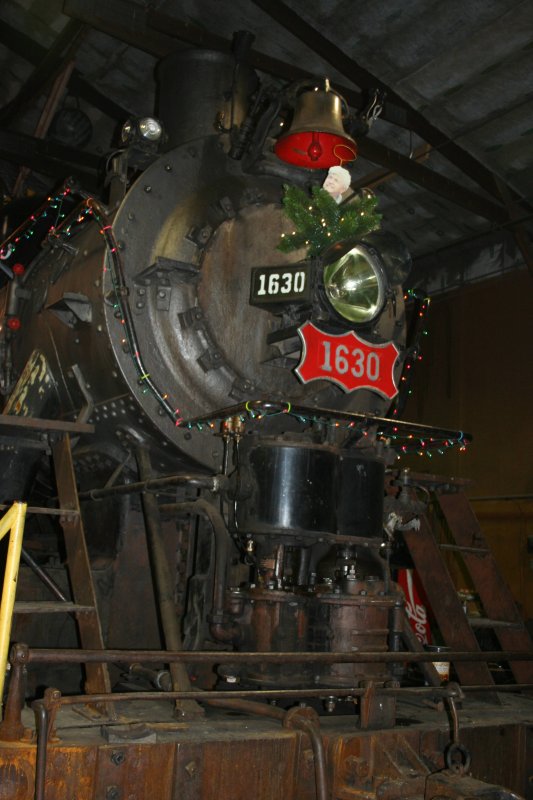
It was a very select crew, aside from myself, only Phil, Jane, Ed and Jerry made it to the shop. However, we managed to get a number of jobs done on 1630. But first, Phil made sure that the traditional Steam Department decorations were in place.
Merry Christmas from all at the Steam Department
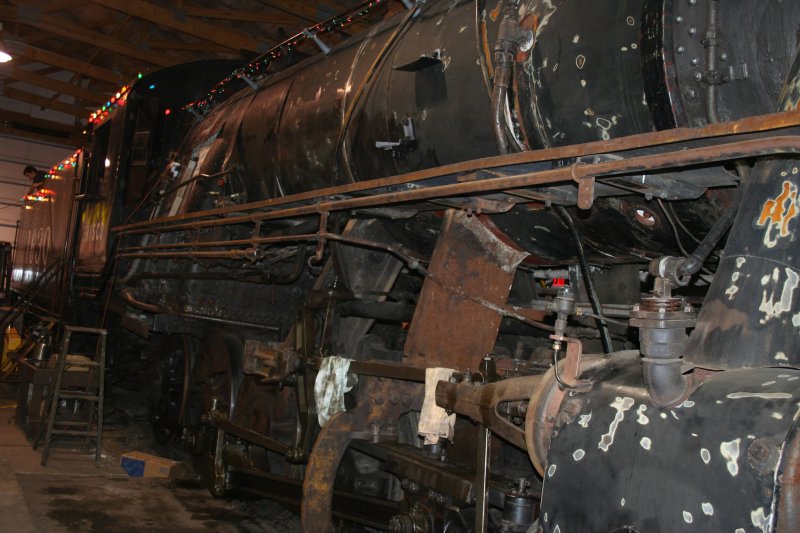
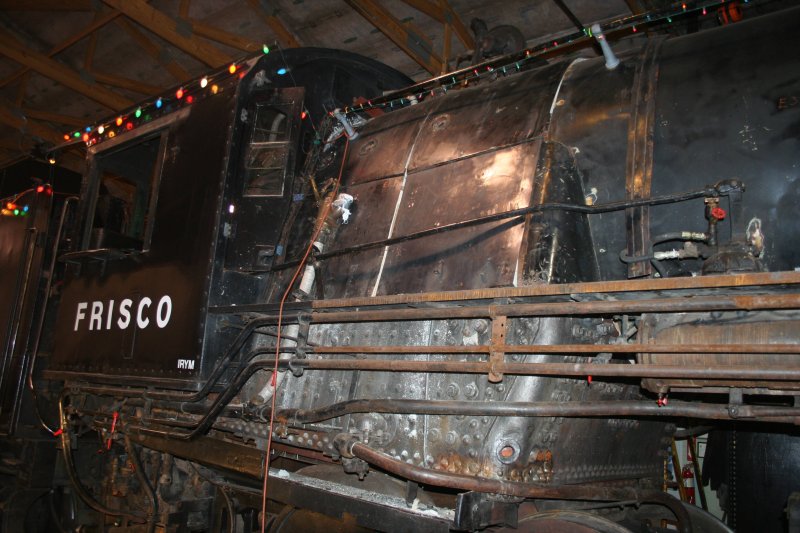
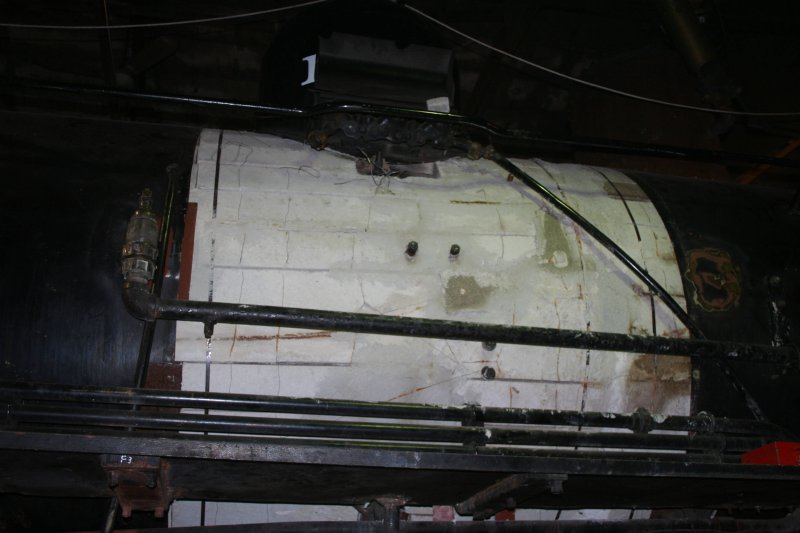
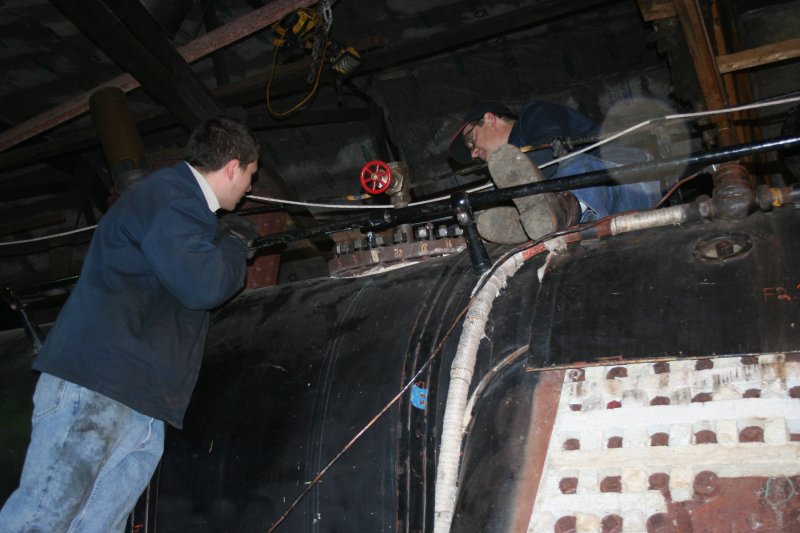
Jerry has been working steadily on the insulation during the week and continued Saturday. The sheet metal is now re-installed along the boiler, after the work that was done to fix the steam leak, and the steps and pipework are back in place. This area is now ready for painting before the banding can be reinstalled. In addition he has now largely completed the firebox sides. The engineer’s side is complete and in place. The fireman’s side is complete aside from one piece of sheet metal that is set aside to serve as a test piece for the painting.
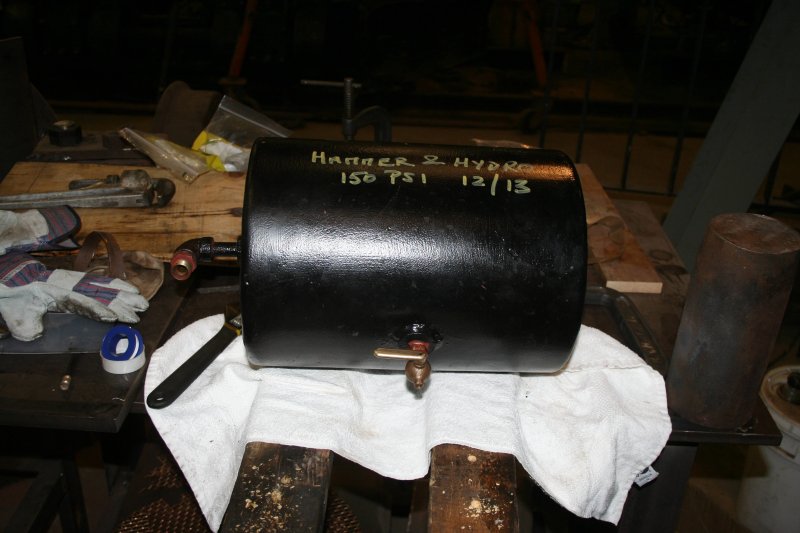
I hydro tested the equalizer tank, which tested at 150 psi with no issue aside from slight leakage from the small brass water drain cock. That was lapped and re-installed so the tank is now complete.
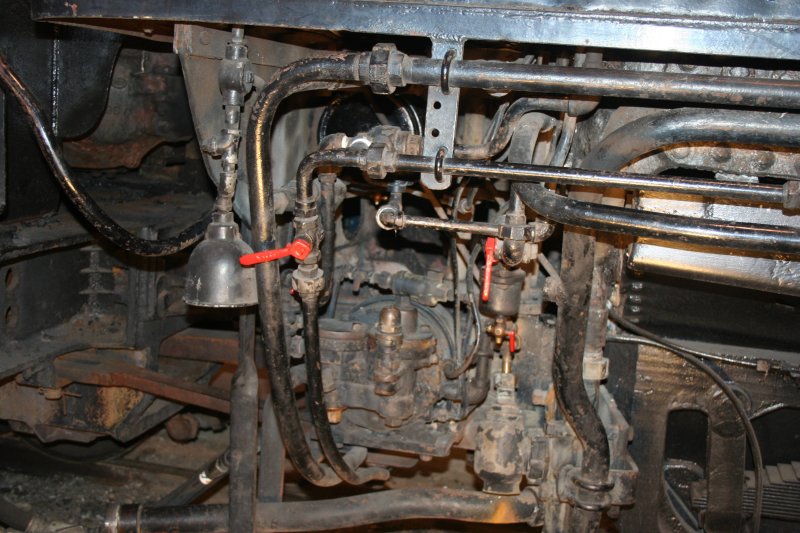
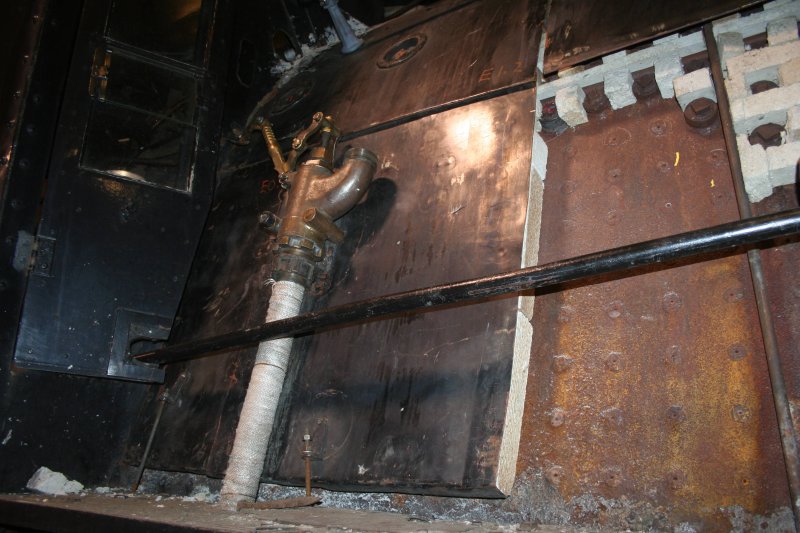
Feeling like suckers for punishment, Phil, Jerry and I then set about re-installing it !. After a couple of hours of crawling under and into the loco and much cursing it was back in place. The parentage of whoever thought of locating this tank in among all the pipework under the cab floor was questioned many times !. The tank is not particularly heavy – maybe 40 pounds. However it has to be squeezed thru a hole on the back of the frame on the fireman’s side, turned thru 90 degrees and then moved over to its location on the engineer’s side by reaching thru holes in the plate work of the frame. Having done that, you then use timbers and hands, at considerable risk of getting squeezed, to lift and position it so that the threaded ends of the ½ inch securing rods can be coaxed into holes in the frame plate and nuts attached. The end result of all that effort would not be noticeable to the average person standing by the locomotive. But it is there!. (The small shiny object the end of which you can just see hidden behind all the pipework).
Jane made considerable progress on painting. The cylinder and valve end covers are now primed on the inside and ready to refit. The area around the reservoir for the reverser was cleaned and primed. The objective is to get this painted so that the tank, which needs to be refitted urgently so that the valves can be moved, will not need to be removed again.
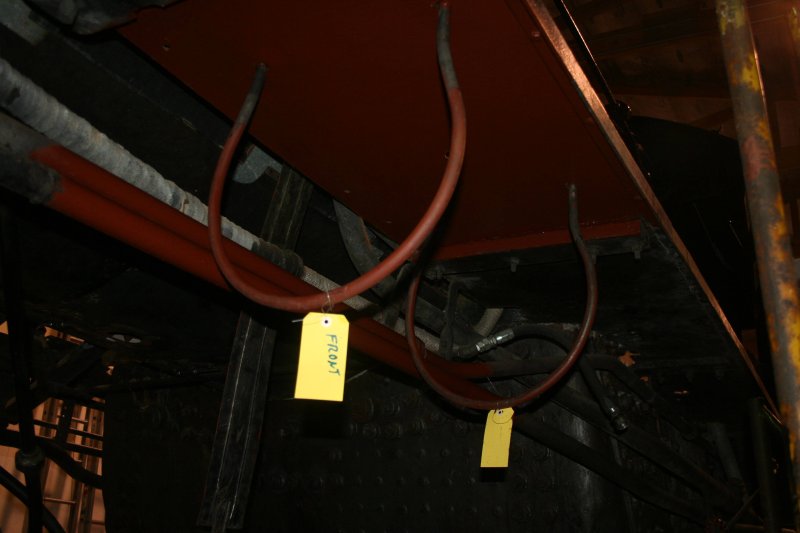
Ed started work on removing the pipe leading to the water column. This is the last of the large copper pipes that needs to be annealed and re-lagged.
So steady progress despite the weather.
Nigel
Sunday, December 8. 2013Steam Department Update 12-07-2013It was a good day for working inside the shop !. Temperatures outside discouraged anything but
limited activity. On 1630 steady progress was made on the work list: ·
Rick completed screwing the sheet metal section
around the radius of the backhead. He
has now moved on to making and fitting some additional sheet metal against the
front sheet of the cab, where there was a gap that exposed some insulation; ·
I removed the injector overflow (coal and
footplate spray hose), which was leaking dangerously during test running. The fittings have all been cleaned and
refitted. All we now need is a length of
new hose; ·
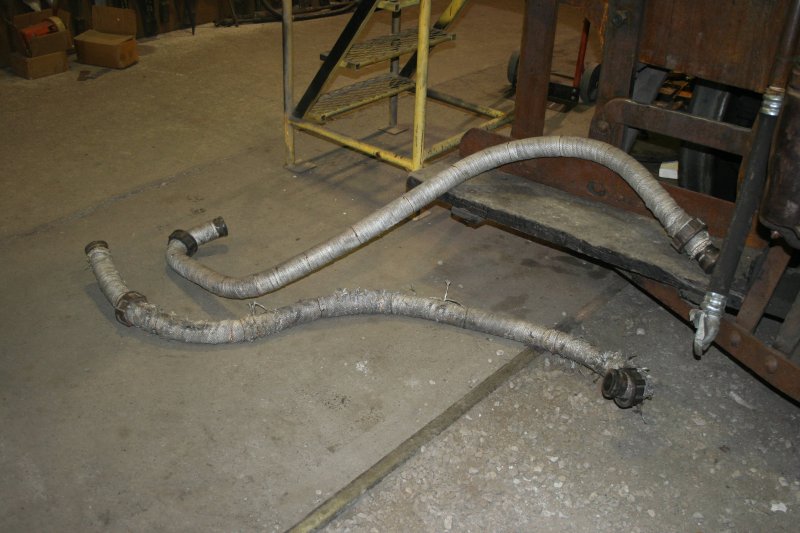
Ralph managed to remove the steam line to the blower,
remade the joint that was noted as leaking under steam pressure, then refitted
the whole assembly. So that issue should
now be fixed; ·
Collin and Ralph then removed the two injector
steam lines. These are large copper
pipes that need to be annealed periodically.
So we will do this and then renew the insulation that is wrapped around
them;
·
Jerry worked on the insulation along the
boiler. This is a slow and tricky job as
we need to close all the small gaps in the sheet metal that could allow water
to get in when the loco is outside in heavy rain. He has made good progress on making the
firebox sided cladding sheets, where the insulation is attached to the sheet
metal. In this shot you can also see
where the injector steam pipes were removed.
This also clearly shows the reason for different way of lagging this
area. The exposed heads, that can be
seen where the cladding is still missing, are rigid stays with tell-tale
holes. These must be checked annually,
hence the need to remove the sheet metal and lagging frequently.
He also located and test fitted some
special strips of banding that close the gap against the front sheet of the
cab. We had wondered why we had such a
large gap there until he found the missing strips !!; ·
Phil, with Evelina and Eddie, spent a dirty and
unpleasant morning in the firebox. They
managed to match the fire bricks to the gaps between the arch tubes, where they
form the brick arch, and produce a diagram that tells us exactly how many
bricks of each of the 5 types we need to build the arch;
·
We then made a cold trip to the service box car
and found the spares we needed to have a complete set in the firebox ready to
build the arch. Phil and I then checked
the Milwaukee box car out in yard 13.
This confirmed that we have large stocks of 4 types of brick (which came
from Eagle Pitcher in the 1970’s) but need to make a pattern for the smallest
ones which fit over the arch tubes against the tube sheet; ·
Jane painted the straps that secure the air
tanks. Phil and I set up the cylinder
front covers ready for her to paint so that these will be ready for fitting
once Tom has completed measurement of the valve chambers; ·
Evelina worked with Dennis on wire brushing the
tender coal space so that he can weld some strengthening steel in weak spots around
the stoker motor;
·
I reassembled the hydro test pump with the new high
pressure hose so that the equalizing reservoir can be tested next weekend.. On the Shay ·
Phil worked with Dennis on fitting the last of
the spring locating plugs into the bolster; ·
Ralph and I relocated all the components of the drive
shaft onto a pallet under the locomotive and I started to degrease these ready
for refitting; On 428 ·
Cameron completed machining the wedges; ·
One of the axles was hoisted so that accurate
measurements of diameter could be obtained.
This proved very satisfactory.
The tires have ample thickness to allow them to be re-profiled. Around the shop ·
Jane made good progress in stripping old paint
from the large press in preparation for painting; ·
Bob continued testing the planer. So a typical and productive Winter workday in the steam
shop. Sunday, December 1. 2013Steam Department Update 11-30-2013A sharp but, if the forecast is to be believed, brief improvement
in the weather allowed us to do a series of moves of material in and out of the
shop this weekend. Spare tubes and flues
were moved out of the shop into the boxcar and the fire bricks that make up the
arch in 1630’s firebox were brought in from the water supply car. This gives us more room in the shop and jobs
that we can continue if we have to hunker down in the shop for a few weeks!. ·
Cameron had finished and fitted the stud during
the week and we were able to ensure that it is leak free. This enables the boiler to be opened up and
thoroughly dried for the Winter and also means that the insulation can be
refitted; ·
Jane was hard at work much of the day painting
many different things including mounting brackets for the equalizing reservoir
and a lot of infill sections for the sheet metal. This is one of the jobs that will require
quite a bit of work over Winter. Wherever
a pipe or bracket projects thru the lagging there must be a hole in the sheet
metal. It is rarely possible to simply
have a hole in the big sheet metal section to tightly fit around the projection
(as the sheets must be moved around to fit them). So smaller sections of sheet metal must be
fitted around the projection under the main sheets to stop water getting in and
damaging the insulation. The tests
indicated a lot of areas where we need to seal small holes; ·
Jerry put in a solid day on the insulation. He has refitted all the insulation that was
removed to trace the steam leak from the lubricator line and has made
substantial progress on the panels each side of the firebox.
These are an absolute pain as they
must be removed annually to inspect the ends of the rigid stays. So there are areas where the insulation blocks
are secured to the sheet metal rather than the boiler. To add to the challenge, some of the sheets
cover areas where part of the insulation is fixed to the boiler and part to the
panel so the insulation must be cut so that the insulation must interlock when
the sheet is fitted ………. while maneuvering it around and behind various
fittings. My guess is that this is a
modern problem. From memory of working
with asbestos matting in the early 1970’s (yes I did that that apparently
survived !) is that it had much more strength than the modern “safe”
insulation, which tends to fall apart very easily; ·
Ed worked on cleaning the water glasses which
were noted as not showing clearly during the test. (The glasses have a reflective surface that
provides a clear indication at night under limited illumination and so need
occasional “deep cleaning”); ·
Jason and Trevor removed some wash out plugs and
the inspection hatch.
The air blower was then fitted so
that a constant air flow will be maintained thru the boiler for a week or so to
ensure that it is thoroughly dry for the Winter; ·
Cameron had painted the equalizing reservoir during
the week so Phil and I set out to hydro test this ready for refitting. Set up for pressure testing is always slow as
you have to find / make a suitable combination of fittings to link from the pump
to whatever fitting happens to be on the tank that you want to test. Having done this and connected the air and
water it became clear that the main pressure hose from the pump has developed a
leak !!. Ho hum !. That is now a job for next week once the hose
has been professionally repaired; ·
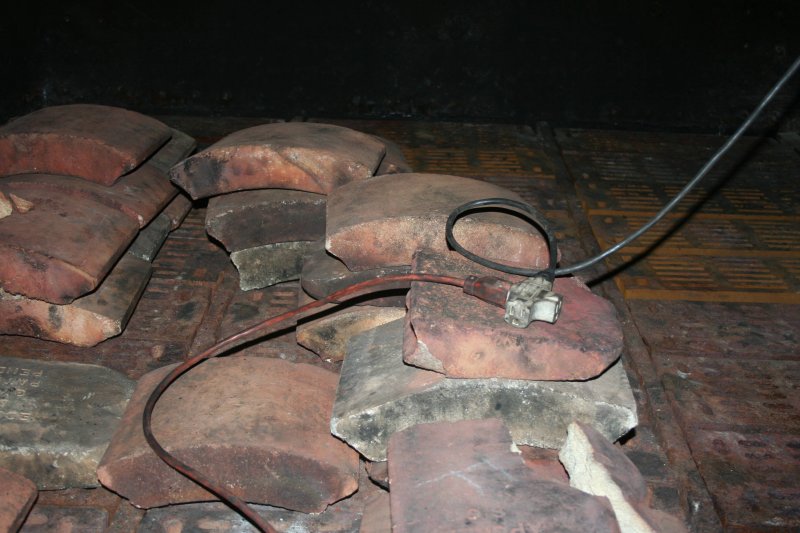
The fire bricks were moved into the fire box in
preparation for another fun task. The
arch is built from a number (I currently think 4) differently shaped bricks
that fit between arch tubes, from arch tubes to firebox wall etc. We need to plan out exactly how many of each
are required and identify any that we are short of so that we can have a
suitable supply on hand for next season.
It is likely that we do not even have a pattern for one type so will
need to make the wooden pattern from which the bricks are cast using one of the
existing bricks as a model; ·
Jason started removing the blower line in the cab. This had a small leak detected during the
test run so is one of a number of the pipes in the cab that we plan to adjust
and refit during the Winter. With 1630 in reasonable shape, Brian, Cameron and Phil did
quite a lot of work on #428, where much of the current focus is on the brake
gear: ·
Brian and Cameron have been working steadily
thru the brake shoe holders. These have
now all been drilled out for fitting of the mounting pins. As with much of this locomotive, years of
wear and limited maintenance meant that holes had become substantially oval. The repair has required filling the hole, by
welding in new material, and then re-cutting the holes to the original size. In this case 8 brake shoes , two hole per
holder so 16 substantial holes to be filled and re-cut;
·
With this done, focus is now moving to other
components of the brake rigging. The
second of the main shafts was removed (from the engineer’s side) so that both
can be worked on together. This sounds
easy but the things weigh more than 100 pounds and had to be extracted from its
mounting under the locomotive then rolled / man handled over the track between the
wheels to get to the fork lift (no pictures as I was operating the fork lift !); ·
Trevor was working on the frame that is required
to support the pistons so that the heads can be built up with braze metal. On the Shay, Jason and Trevor finally managed to remove a
wash out plug from the belly of the boiler that we have been fighting with for
a long time. We do not know when it was last
removed. It is above the front truck and
not easy to reach. History suggests
that, when the loco was last running, it was impossible to remove as it was far
too tight to extract in the confined space above the truck. Having finally extracted it using heat, lots
of penetrating oil and very long cheater bars !, we can now understand
why. Someone long ago must have put it
in wrongly threaded and solved the problem of leakage by tightening with great
force. Absolutely what you should not do
with a brass wash out plug!. Oh well, it
will now be remade and fitted gently. Bob, Ed and Jane continued work on the planer. This is now just about fully painted and
looks really great.
Much of the effort was directed to pumping degreaser thru
the various oil passages to remove as much debris as possible before filling
with oil. Much of the effort was
directed to trying to see as much as possible of the interior passages to
determine how effectively the debris had been removed!. The same oil is used to lubricate the machine
and provide the hydraulic power that moves the bed back and forth so removing
debris and placing filters is rather important.
Most of the shop are now waiting with great anticipation to see the machine
work. The team seem to be non- committal
about when they will bite the bullet, fill it with oil and see what happens !!. So a day of steady progress in a number of areas. Nigel |
Blog AdministrationCalendar
QuicksearchArchivesSyndicate This Blog |
|||||||||||||||||||||||||||||||||||||||||||||||||


Comments
Mon, 09-08-2025 08:22
Good job on the Burlington Nortern 9976. OK.
Tue, 08-12-2025 12:56
No new news that I have heard of thus far.
Tue, 08-12-2025 12:53
I'll also be doing another update on it soon. Keep en eye out for that.
Tue, 08-12-2025 12:47
A little work was done to it for Diesel Days this year. You'll see photos floating around for the temporary short term job that was done to make it [...]
Wed, 08-06-2025 13:01
Is steam car CN 15444 going to be coming to museum several times it was to be moved to muesum
Sat, 07-19-2025 18:56
Yeah, sadly it's still there as of 7/19/2025
Thu, 06-12-2025 19:14
Its been 14 years guys, where is the unit? Like really? Did you guys misplace it? Or are repairs taking that long? At this point be might we will have [...]
Wed, 04-09-2025 17:40
Jamie Thanks for the update. She's gonna shine like every thing else you guys do! Smeds
Thu, 03-06-2025 16:28
Yes, there is a wye. Those two have been MU'ed on diesel days a year or two ago.
Wed, 03-05-2025 14:04
7009 number boards look good. Is there a way to turn a locomotive around at IRM? In case you ever had a mind to connect 7009 and 6847?
Fri, 03-29-2024 21:26
We're slackers and spend more time working on the equipment in the shop than keeping all you readers updated. We'll work on it, but I'm sure updates [...]
Thu, 03-14-2024 08:02
What happened to the Department Blog? It's been over 2 years and I still regularly check for updates, but nothing comes...