

|
|
Monday, July 1. 2013Steam Department Update 06-29-2013
A bit of a delay in posting the blog this week as we are
busy with my son Michael over from the UK this week. However he is keen to work in the shop while he
is here. It has been another week of
intense activity focused on 1630 and getting to the point where we can carry
out the first test of the tubes with water in the boiler.
We keep pushing
forward on 1630.
·
The replacement
valves had arrived and Richard, Michael and others fitted them to the milk car.
By lunchtime it had been filled with
water and it was then moved back to the shop by the operating crew at end of
day. So we have the water supply in
place;
·
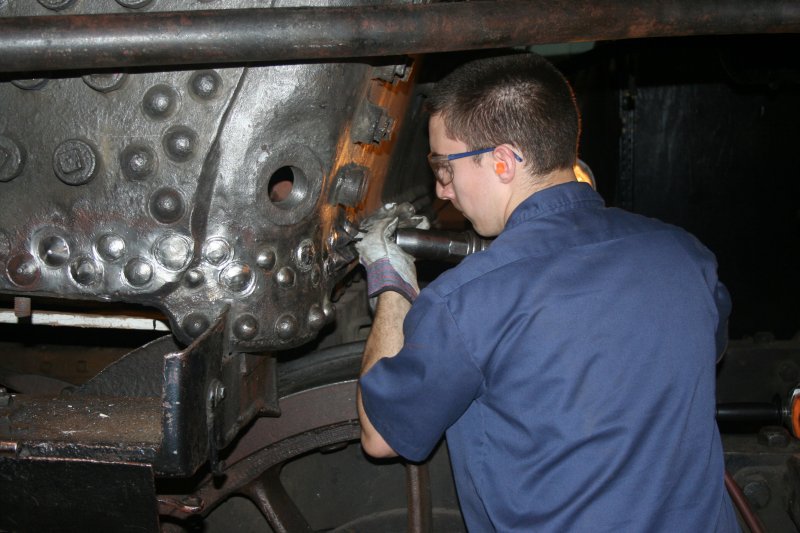
Phil had worked
during the week on caulking the rivets.
This is a tough job with the air hammer carefully sealing the edges of the
rivets into the sheet of the boiler. He
had worked on this during the week and finished the outside on Saturday.
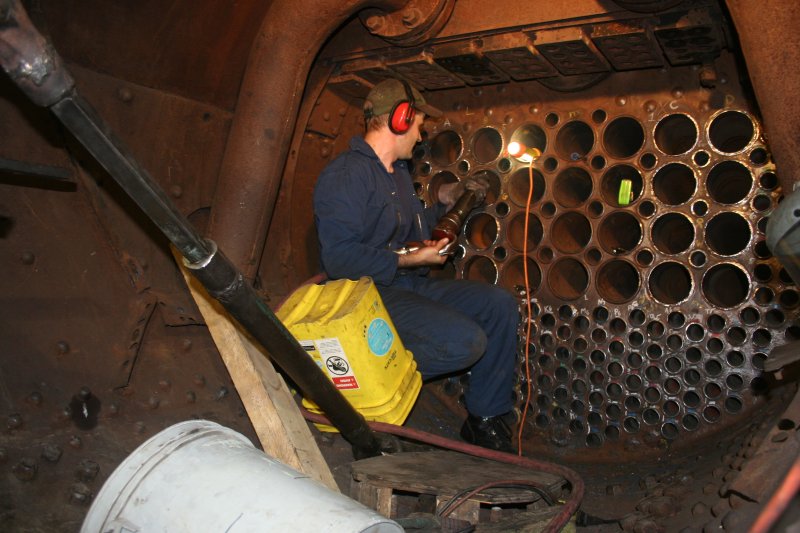
By
evening he was working on the rivet ends inside the firebox. Access to the area around the patch remains
the limiting factor in getting the boiler water tight. Two stays have to be fitted to complete the
repair. The holes are drilled and the
stays ready. We must now cut the threads
into the inner firebox sheet, screw then
into place and then caulk the projecting end.
However, this is not possible at the same time as the rivet caulking;
·
Eric worked all day
on the smokebox ends of the super heater flues.
Having trimmed these to exact length, the ends need to be slightly
flared to improve the seal ahead of the water test and in preparation for
beading. By end of day, after a lot of hard
work, these were all done;
·
During the week, Tom
had measured the throttle seat in the boiler and ordered the steel to make a
blanking plate to seal this during hydro testing. The blanking plate should make a better seal
than the throttle valve itself during hydro testing and should make inspection
a great deal easier. After the hydro
test the braces must be inspected. It
will be easier to get thru the dome and onto the top of the tubes without the
large body of the throttle to crawl around.
Hopefully the plate will be available for the Wednesday working session;
·
The gauge plates in
the cab were given a final coat of black paint so that gauges can be
permanently fitted as soon as they have been tested, which we hope to do next
Saturday;
·
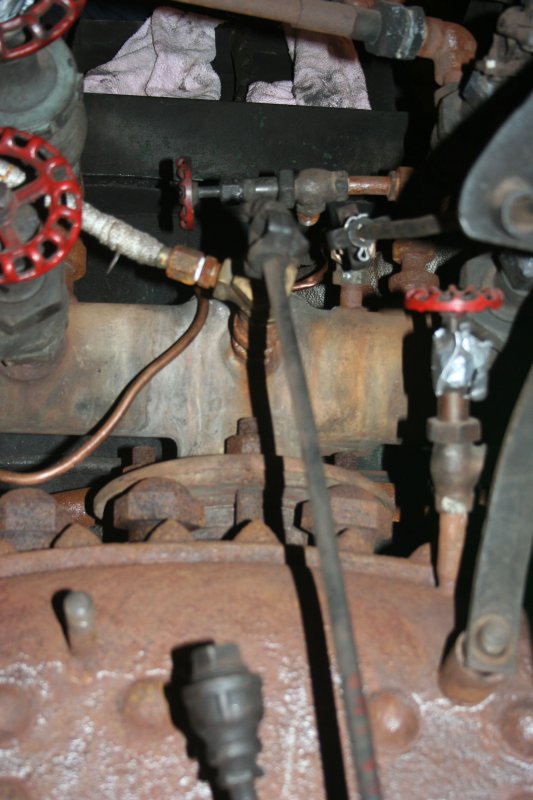
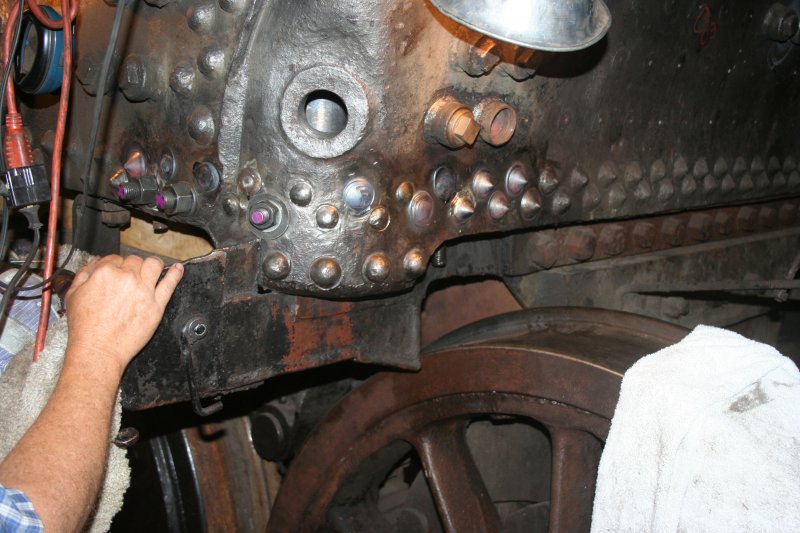
One very awkward job
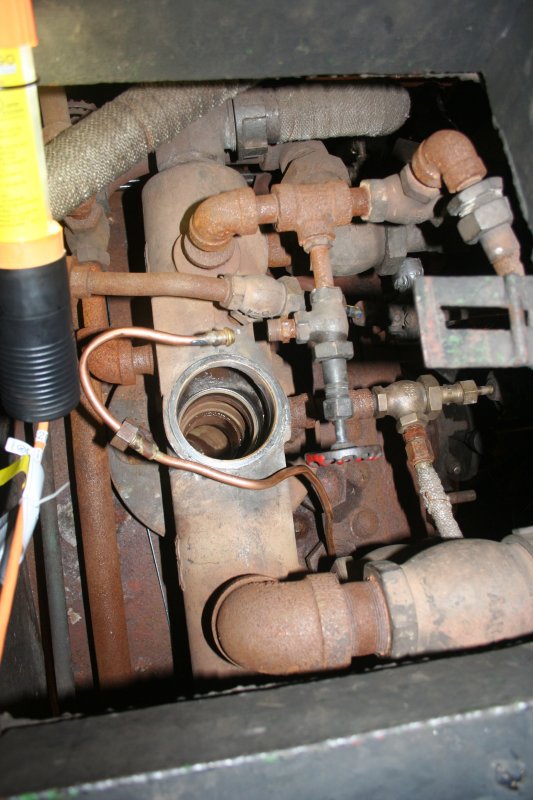
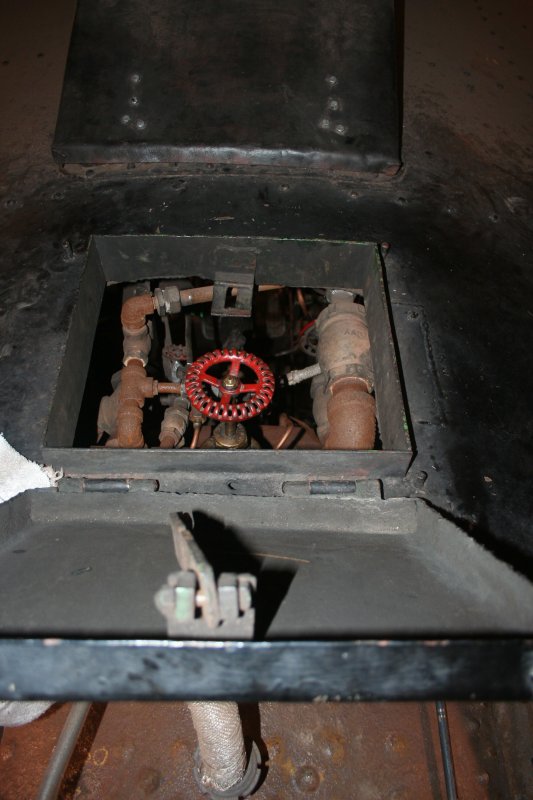
was lapping the seat of the main turret shut off valve. This critical valve is located at the very
top of the turret at the highest point of the firebox in the cab. It can only be accessed thru a hatch in the
cab roof and by threading wrenches in between other fittings on top of the
firebox in the cab. This shows the
location with the valve body removed.
Its
purpose is to enable the turret, from which all auxiliary devices are supplied
with steam, to be isolated from the boiler in an emergency. While it is seldom closed when the locomotive
is complete, it will be important as the intent is that the first tests will be
done without letting water into the turret.
It is also important that the valve should shut correctly when required.
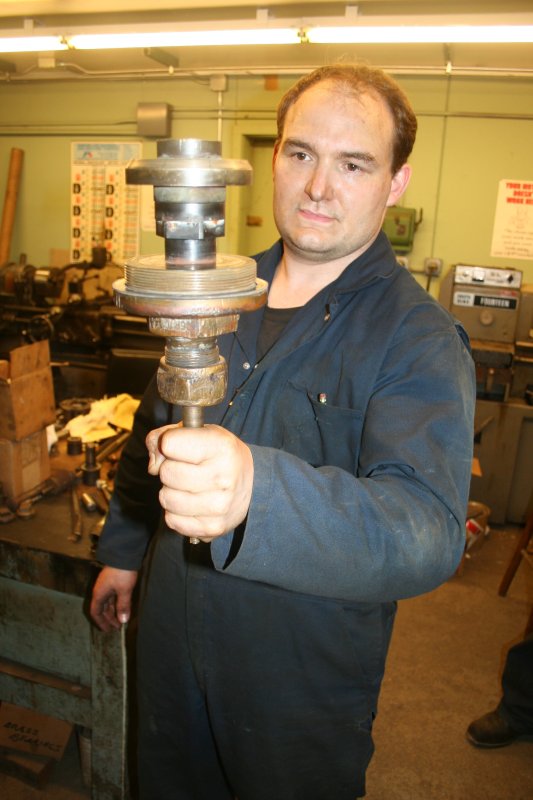
Michael
and Brian had great fun with this. However,
with a good deal of hard work the objective was achieved. The valve body was removed from its seat in the
turret and rigidly attached to a shaft that would guide it accurately onto the
seat and allow it to be turned repeatedly against the seat. The guys worked for several hours working the
valve head against the seat with increasingly fine grades of abrasive lapping
compound until an even seal was achieved all around. Here Michael displays the end result !.
Then
everything was reassembled. At the end
of the day everything looks as it did before.
Only those involved know that a lot of work was put in and we now have
confidence that this key valve is in good shape.
Aside from work to
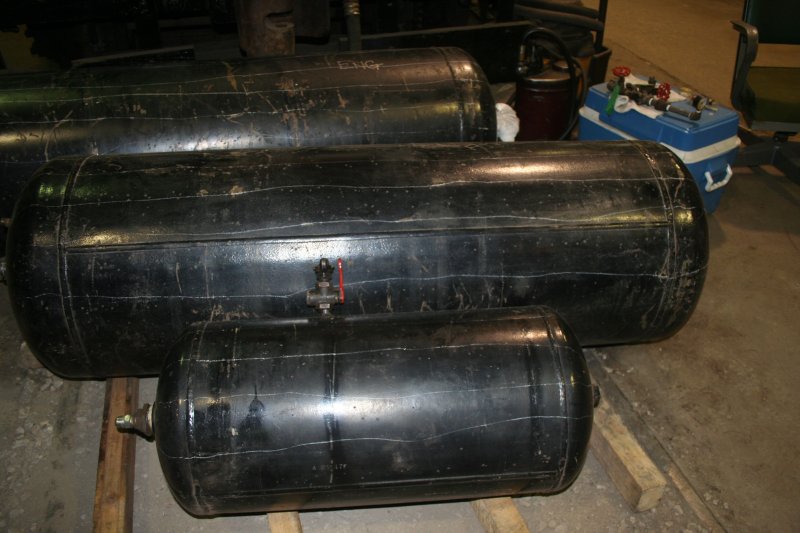
seal the boiler for first testing, one very visible achievement was the removal
of the fireman's side air tanks. These
are now with the engineer's side tank on the floor of the shop and have been
marked up for hammer testing. If no
issues are apparent from hammer testing, they will be hydro tested then cleaned
and painted ready for service.
On other areas:
· Bob made good progress on setting up the power supply for the planer;
· The mounting brackets for the air pump were test fitted to 428. This was a revealing exercise. When she was stripped many years ago the additional brackets were found mounted between the casting that secures the pump to the boiler and the pump itself. With some measurement it is now clear that this was an essential modification at some stage in the life of 428. Absent these extensions, which set the pump out and lower than if it were directly mounted to the bracket, the top of the pump would foul the feed from the injector to the boiler.
So continuing progress. The plan is now for quite a few people to work on Wednesday.
Nigel
Sunday, June 23. 2013Steam Department Update 06-22-2013It was a day of downs and ups in the steam shop. The order is significant, despite a couple of early set-backs it became a very successful day. I had to leave mid-afternoon for an evening event downtown. The major progress was achieved in the evening ..... hmm, there may be a connection there !!. We keep pushing
forward on 1630. ·
When we arrived in the
morning, Dennis had completed the required welding during the week but no more
rivets had been placed. It turned out
that a couple of the mid-week team had been sick or unavailable so no riveting
was possible on Wednesday. ·
In addition Kevin
had been in during the week and made great progress on needle chipping the
front of the locomotive ready for repainting.
In addition he had done a lot of cleaning in the shop. This is a major part of work in the steam shop. A lot of what we do creates dust and, without
periodic cleaning, the place gets into a real mess. ·
We are now getting
close to the first tests with water in the boiler to check the sealing of all
the tubes that we have fitted. So
various jobs were scheduled to prepare for this. One big requirement is obviously water, which
we need to supply from the treatment plant in the steam lead and have available
for use in the shop. For this we use the
tankage of our milk car. Jim
West, who was conductor of the day, managed to schedule things so that the car
was switched over to the steam lead by the service locomotive before the first
train. Thanks Jim. Thereafter
things went downhill !. We initially had
problems with leakage from the inspection cover of the pump in the boxcar. Good thing it was near 90 degrees as a number
of us had unexpected showers. Then,
having overcome this and linked the milk car to the supply, we discovered that
two key valves in the milk car were split.
It seems that the car was not completely drained last Fall and the
valves froze. Good thing we started this
a little ahead of when we absolutely need the water for testing. During
the day Jeff removed the damaged valves from the car so that replacements can
be ordered for fitting next weekend. Stu
and Jeff worked on the water treatment plant so that the softener, which was
out of commission due to a leak, is now working again and properly sealed the
inspection cover on the pump to avoid further showers. ·
Rick, Paul and
others worked on the smokebox front, cleaning this up and preparing the gasket.
·
Eric continued work
on the super heater flues in the front tube sheet. He is ensuring that any excess ferrule is
removed and starting to flare the tube ends in preparation for beading the ends
once we have ensured that they are water tight. ·
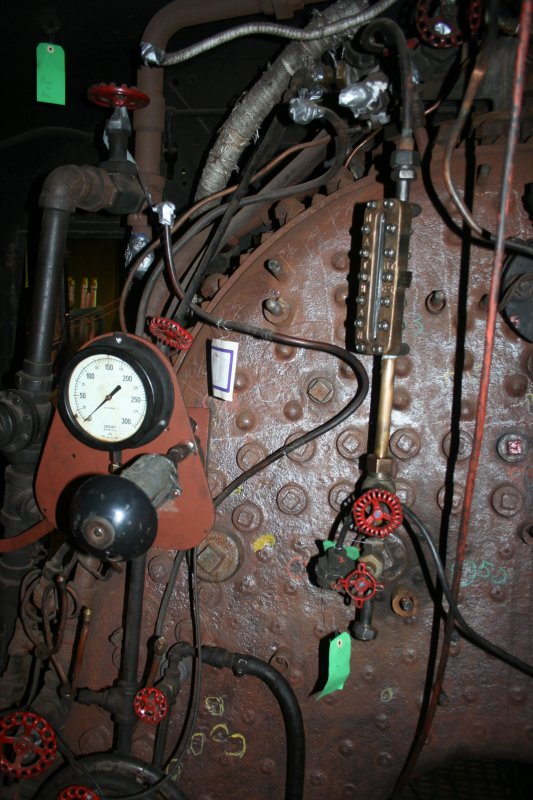
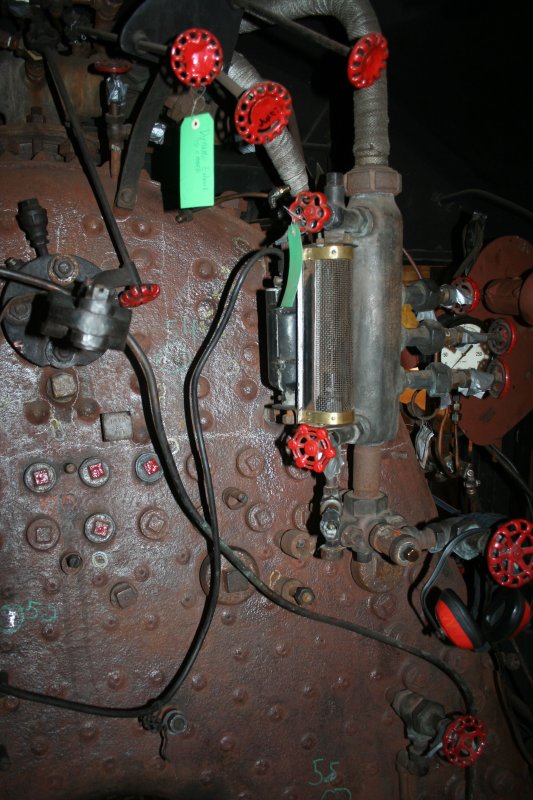
Several of us worked
on fitting the plates in the cab, on which the gauges are mounted, and then
fitting the boiler pressure gauges to these.
The water level gauges were also fitted.
All of these are needed for the initial hydro testing. It is really nice to see fittings coming back
into place on the back head, which has been bare for more than a year. The pressure and
water gauges are now back on the fireman's side
and on the
engineer's side as well.
·
Then, after I left,
the main event started. The three
remaining rivets were placed. THE
RIVETING IS COMPLETE. Some of them still
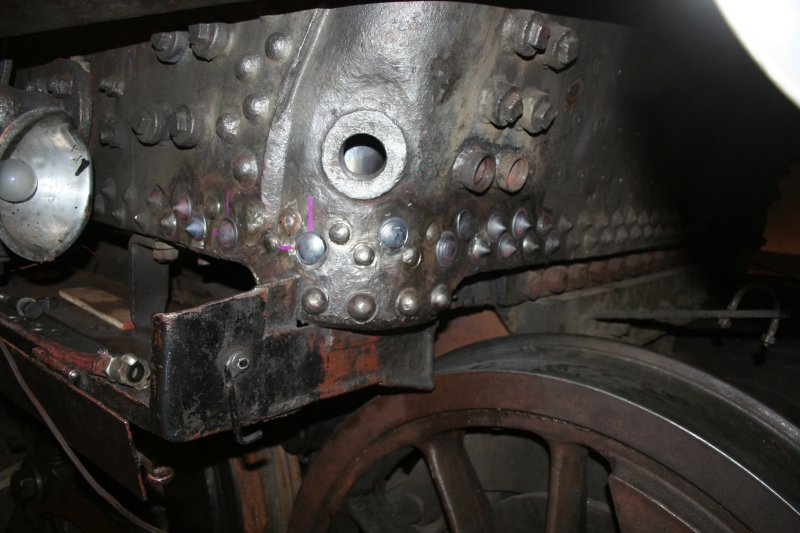
need to be caulked but the riveting itself is done. The next key job is to fit the two flexible
stays. The stays fit into the two open
sleeves that can be seen just above the rivets in the front face of the firebox
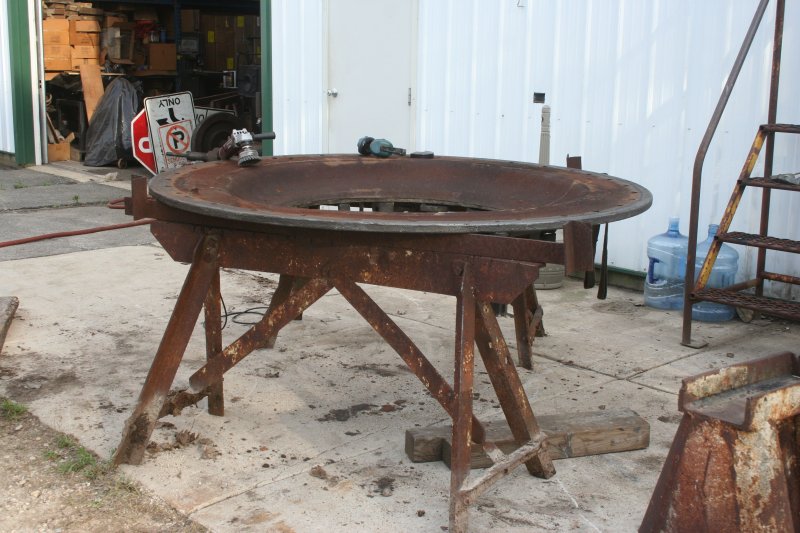
wrapper. So another major milestone is achieved. The patch is now fully installed and we can move forward to testing and reassembly. Nigel Sunday, June 16. 2013Steam Department Update 06-15-2013We are moving away from the traditional pattern that my jottings on Sunday are a simple summary of what happened the previous day !. Increasingly work is taking place several days a week whenever people are available. Since last Saturday one or more people have been in the shop on several days. The focus is on 1630 and particularly on completing the riveting. Progress on the riveting has been steady. It may be slower than we might have hoped but it has to be correctly done and we are now well on our way to completion. · On Tuesday Dennis made good around the hole for the rivet that had to be removed after last Saturday. · On Wednesday a team including Tom, Mike, Phil, Rod and Jerry worked most of the day and set three more rivets including the first two countersunk rivets in the corner itself. · Yesterday Ralph took over from Rod in the critical role of forming the rivet head and three more rivets were placed. This took us into the worst area of all, the apex of the corner. These should be far the worst ones we have to place and they are now in and good. The reason that this area is nasty is not apparent from the outside. Externally the rivet heads appear well spaced (and actually have patch screws between them). However, the geometry of a tight bend means that, on the inner sheet, the rivet head are as close as they can be. So in some cases, once one rivet has been installed, it must be caulked and any excess material removed to ensure that the bucker can be placed to drive the adjacent rivet. According to Tom's reading of some railroad maintenance standards this is not a new problem. This suggests that, in later years, some (the Santa Fe was likely one) did not use rivets thru the apex of the bend but welded the corner to the mud ring. This would probably be logical when thinking of the forces involved. The strength of the sheet when bent into a tight radius curve will be such that there is probably little force on the rivets in the corner as the boiler is pressurized. However, this is academic in our case as welding the corner would require the mud ring to be solid in that area, not thru drilled for rivets as it is on 1630 ..... and we are surely not in the business of replacing a section of the mud ring which is in perfectly good condition !. · So, after these efforts we have 3 more rivets to fit. These are ones that require some additional forming of the holes for the countersink before they can be placed and this will hopefully continue during the coming week.
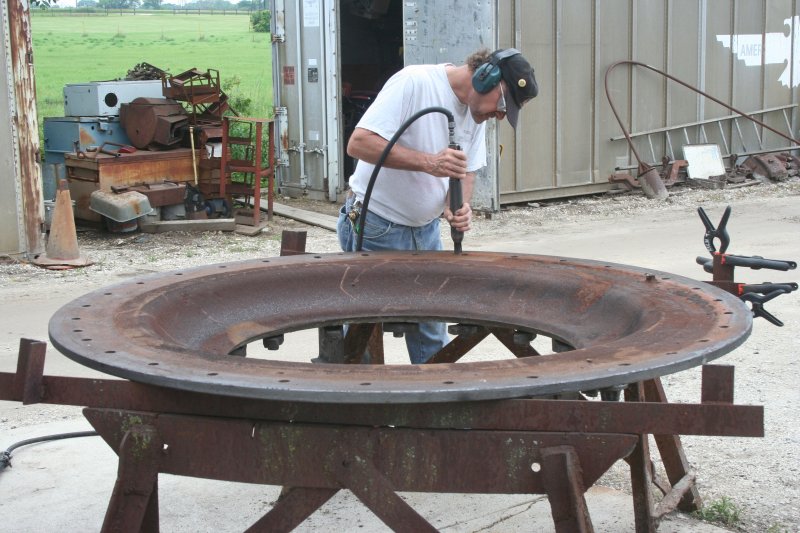
Around the critical riveting we continued to progress other jobs in preparation for the testing and reassembly that will kick off once the rivets and stays are in place. · Paul and Cameron continued the installation of wires to hold the insulation. The firebox is now well on its way to completion. Nigel spent quite a while wondering how on earth to wire the sides of the firebox where there is no apparent way to secure the wires to the firebox. After a bit of cussing about the lack of any photographs of the old wiring before we took it off .... Tom pointed out that there is no wiring because the insulation in this area is attached to the cladding sheets so that it can be easily removed to check the stays that are behind the cladding in this area. · With Vince's help I installed all the wash out plugs aside from the one in the immediate area of the riveting. This is a job that requires care. The plugs are brass and have a tapered thread to seal into the steel boiler sheets. They must be cleaned, lubricated with the graphite sealing compound and carefully run into the threads before being finally tightened with a wrench. While the final tightening requires significant torque, it is critical that the plug is smoothly in its thread before force is applied. The results of forcing a cross threaded brass plug is pretty devastating to the brass threads !. · Jeff is setting up to cut insulation blocks ready for installation. (If you visualize rectangular blocks of insulation that are to be fitted around the outside of the circular boiler barrel, we will need a whole lot of blocks with the long edges cut to a standard angle to fit closely with the adjacent blocks). Hopefully we will have these precut and ready for when we are able to fit them. · The smokebox front ring was retrieved from storage and set up on stands in front of the shop where it will be used to cut the pattern for the gasket that will be required to seal it to the front of the smokebox. Alex made good progress in wire brushing the surface ready to start work on the gasket. So work continues steadily. Once the last three rivets are in place we will be close to the next big step of testing the tubes for leakage. Nigel |
Blog AdministrationCalendar
QuicksearchSyndicate This Blog |
|||||||||||||||||||||||||||||||||||||||||||||||||


Comments
Mon, 09-08-2025 08:22
Good job on the Burlington Nortern 9976. OK.
Tue, 08-12-2025 12:56
No new news that I have heard of thus far.
Tue, 08-12-2025 12:53
I'll also be doing another update on it soon. Keep en eye out for that.
Tue, 08-12-2025 12:47
A little work was done to it for Diesel Days this year. You'll see photos floating around for the temporary short term job that was done to make it [...]
Wed, 08-06-2025 13:01
Is steam car CN 15444 going to be coming to museum several times it was to be moved to muesum
Sat, 07-19-2025 18:56
Yeah, sadly it's still there as of 7/19/2025
Thu, 06-12-2025 19:14
Its been 14 years guys, where is the unit? Like really? Did you guys misplace it? Or are repairs taking that long? At this point be might we will have [...]
Wed, 04-09-2025 17:40
Jamie Thanks for the update. She's gonna shine like every thing else you guys do! Smeds
Thu, 03-06-2025 16:28
Yes, there is a wye. Those two have been MU'ed on diesel days a year or two ago.
Wed, 03-05-2025 14:04
7009 number boards look good. Is there a way to turn a locomotive around at IRM? In case you ever had a mind to connect 7009 and 6847?
Fri, 03-29-2024 21:26
We're slackers and spend more time working on the equipment in the shop than keeping all you readers updated. We'll work on it, but I'm sure updates [...]
Thu, 03-14-2024 08:02
What happened to the Department Blog? It's been over 2 years and I still regularly check for updates, but nothing comes...