| BLOG | DIRECTIONS | SCHEDULE | STORE | |
Sunday, July 29. 2012
Steam Department Update 07-28-2012 Posted by Nigel Bennett
in Steam Department at
16:26
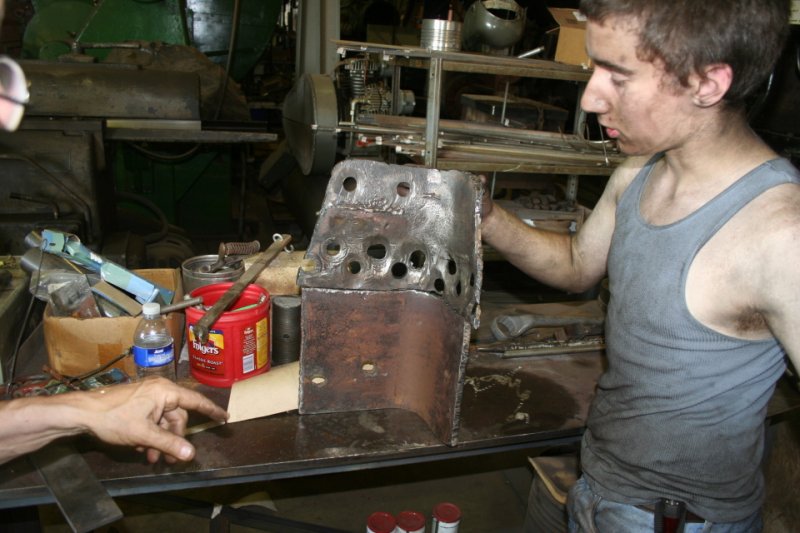
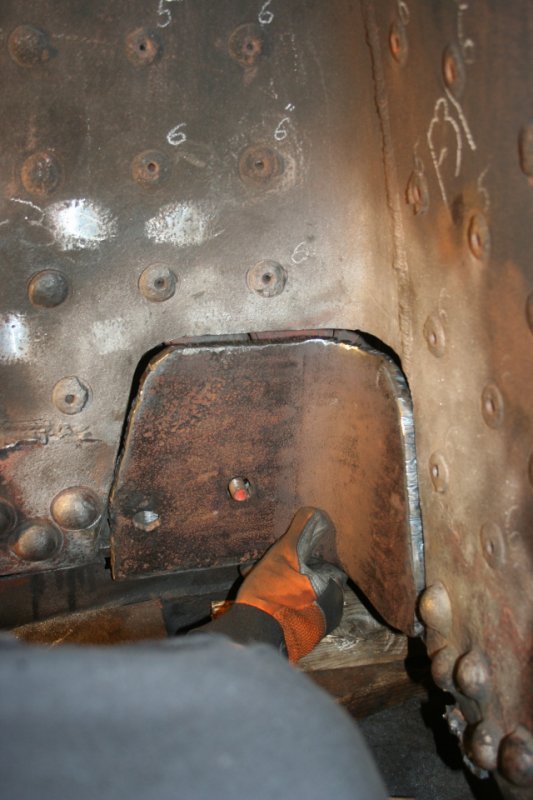
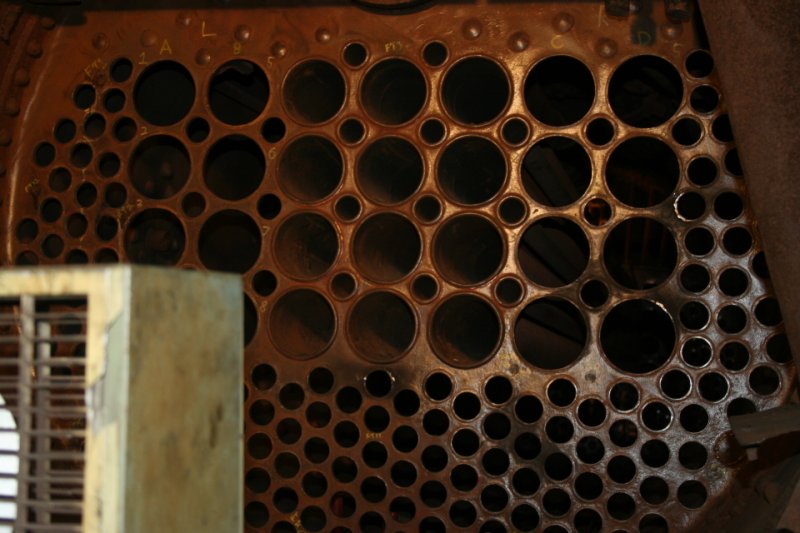
Comments (10) Steam Department Update 07-28-2012Another good week in which we were able to move a lot forward on 1630. Various tasks support the overall work plan. First we must finalize preparation for the inspection of the boiler shell. Not much remains to be done to enable this so the next focus is on the tasks that will enable us to make the boiler water tight again. For this, we are preparing all the flues and materials that we need to refit the tubes and also to complete the patching of the firebox. Finally, whenever possible, we work on ensuring that parts that can be fitted once the boiler is watertight and passes its first hydro test are cleaned and ready to be fitted quickly when required. · During the week Jeff and Jerry managed to complete the cleaning and hydro testing of the super heater elements. The conclusions were good. 24 passed the pressure test at 1000 psi with no issues and are back in the box car ready for refitting when the boiler is ready. 1 passed the pressure test but has some minor damage to the protective shield (a simple sheet metal construction that is wrapped around the element to protect the most exposed areas from erosion by cinders flying thru the flue) and only 2 failed. The last 2 will require the attention of the boiler welding specialist when he comes in to safe end the flues. · Phil and Collin cleaned up the front tube sheet in preparation for re-tubing. · Eric did a great job clearing the medium from around the firebox. This is important so that everything is clear and visible for the upcoming inspection. The blasting medium is deceptive stuff!. We knew that there was some still on top of the firebox. The initial comment in the morning was "don't think there's much there". Having used an air line to blow it off the firebox crown and the stays at the sides of the firebox so that it settled into the bottom of the firebox water legs, Eric sucked it out with long pipes on the vacuum cleaner. By end of day we have a clear view along the bottom of all the water legs .......... and probably 80 lbs of medium extracted !. · After a lot of adjustment to get the settings right the McCabe was used to bend a test sheet for the firebox patch. Past experience with the Shay has demonstrated the importance of proving exactly how the patch will be formed using an old piece of steel before we do it "for real" with an expensive piece of new boiler plate. Considerable progress was made. The McCabe was used to bend the sheet
........... and the radius formed proved to be an excellent match to the critical curve in the mud ring. Having been cut to the template, the piece is a pretty good fit to the firebox and can be used to make minor adjustments to the template for the final patch. The next step is to form the piece to fit the slope of the front tube sheet. · Ed and Jim identified and measured the pipe work to be replaced along the boiler and this can now be ordered. · Phil, Jeff and I started another job that looks like it will be a lot more "fun" than we had hoped!. A number of the bolts that project from the front ring of the smoke box to secure the smoke box door sheet are wasted and need to be replaced. In theory they can be driven out by hammering them back (towards the boiler). In practice the effect of 60+ years of heat and rust on bolts that were a tight push fit to begin with is "interesting". After 90 minutes of effort with a heating torch and air hammer we have one out. Only another 15 or so to go !!. · Bob Hunter has now finished the computations and supporting documentation for the form #4 submission. This is the engineering assessment of the boiler which confirms that, having regard both to original design and subsequent wear as now measured, it is suitable for the intended operating pressure. This is now ready for submission. Nigel Sunday, July 29. 2012
CGW X 38 Update - July 28, 2012 Posted by Robert Kutella
in Chicago Great Western X 38 Russell Snow Plow at
10:20
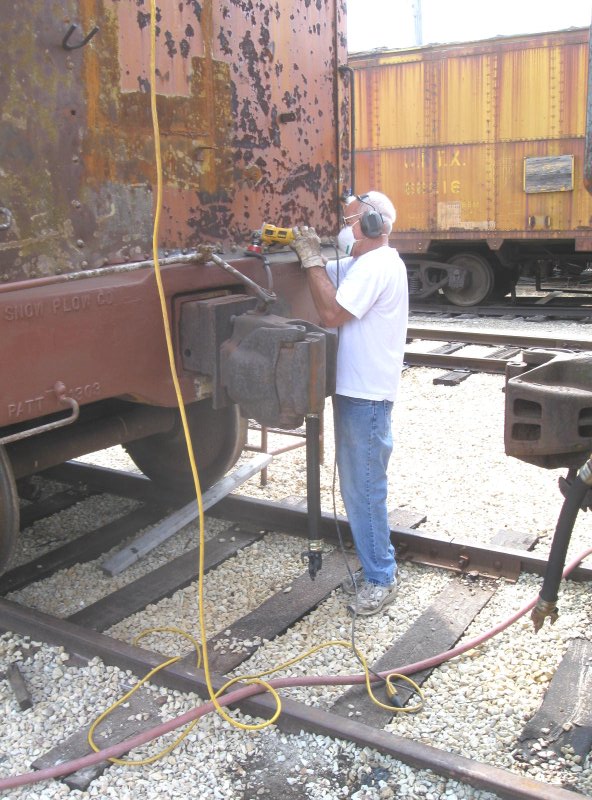
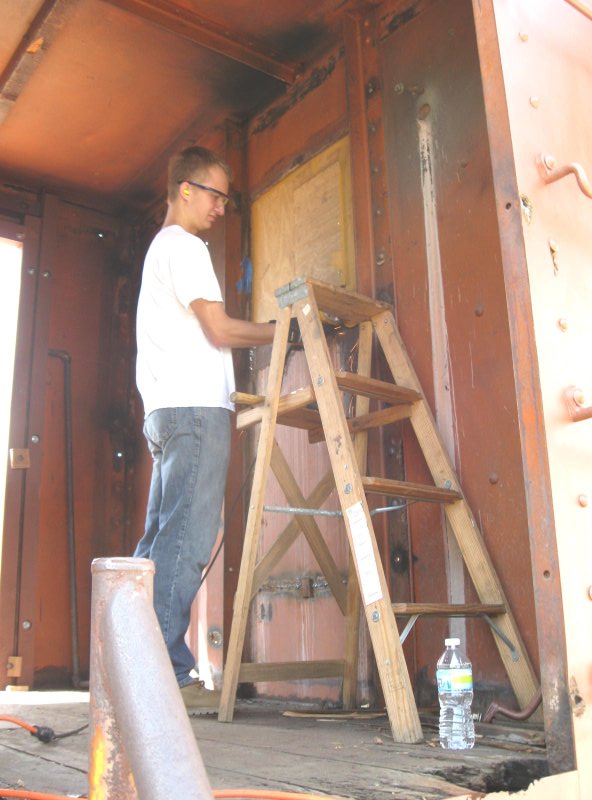
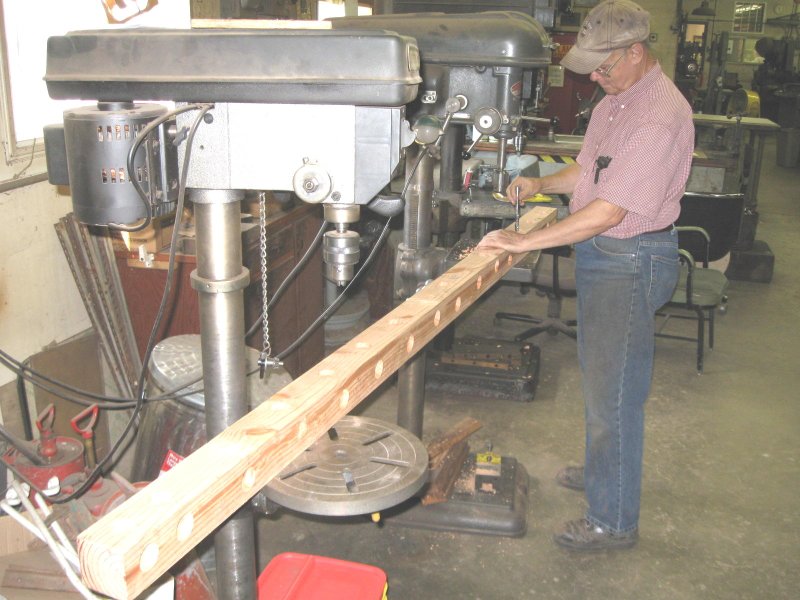
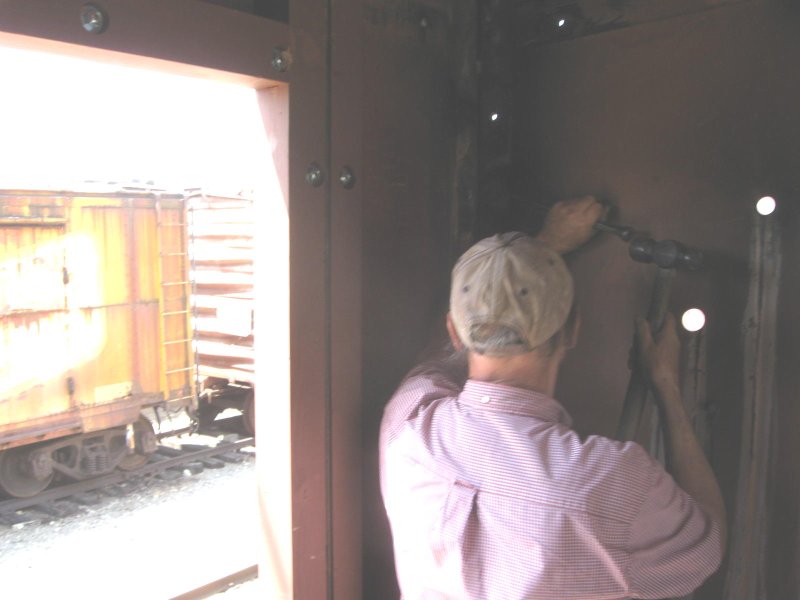
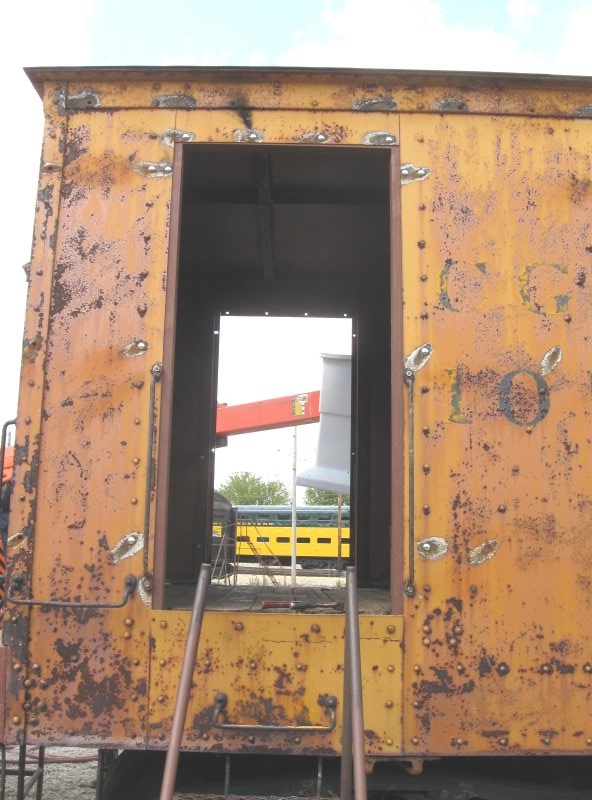
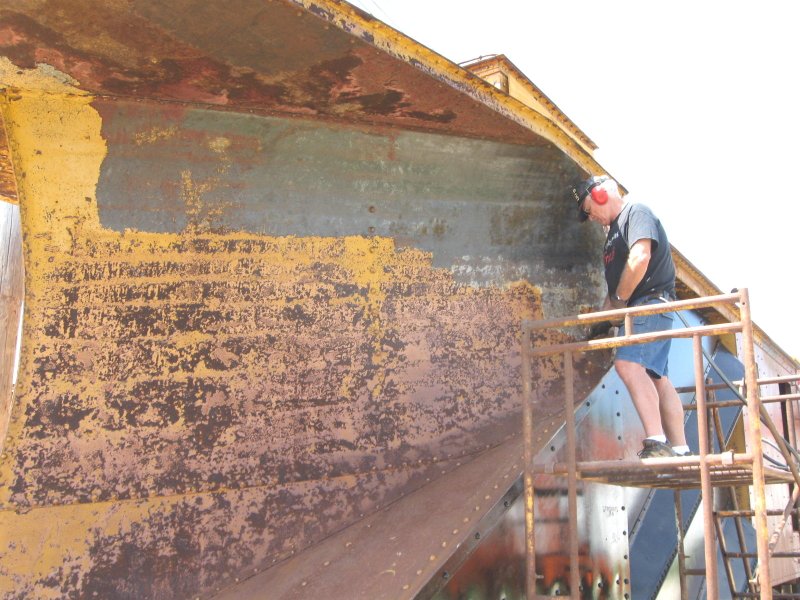
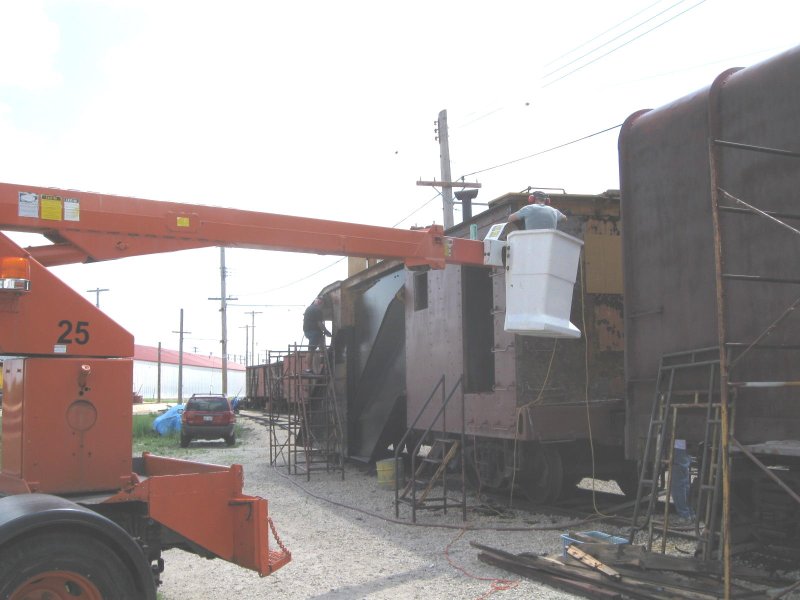
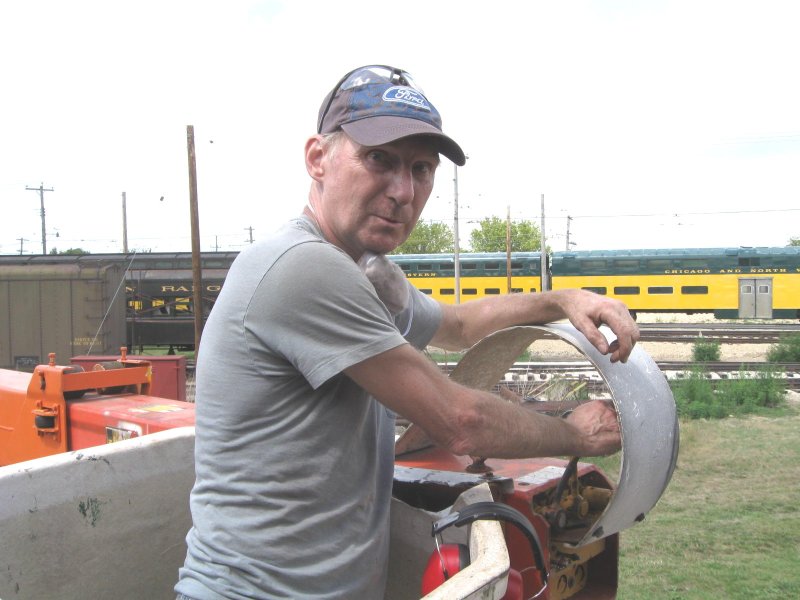
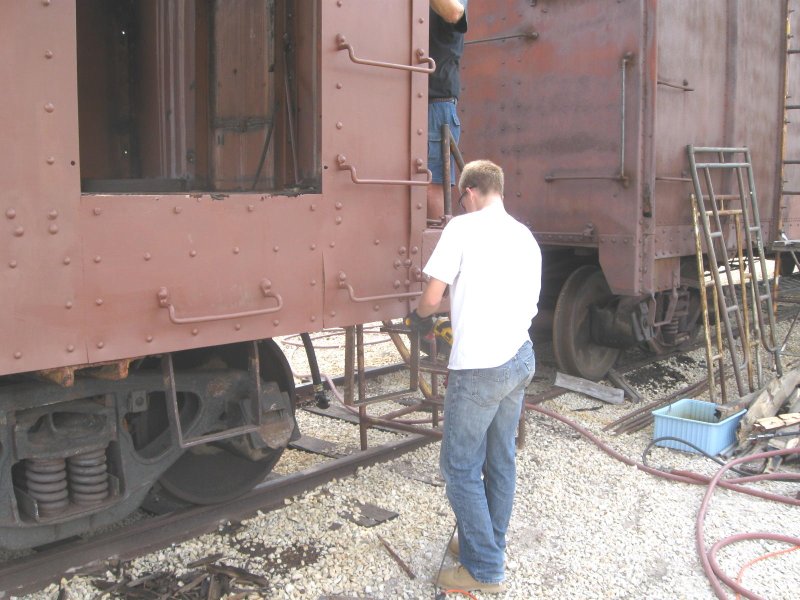
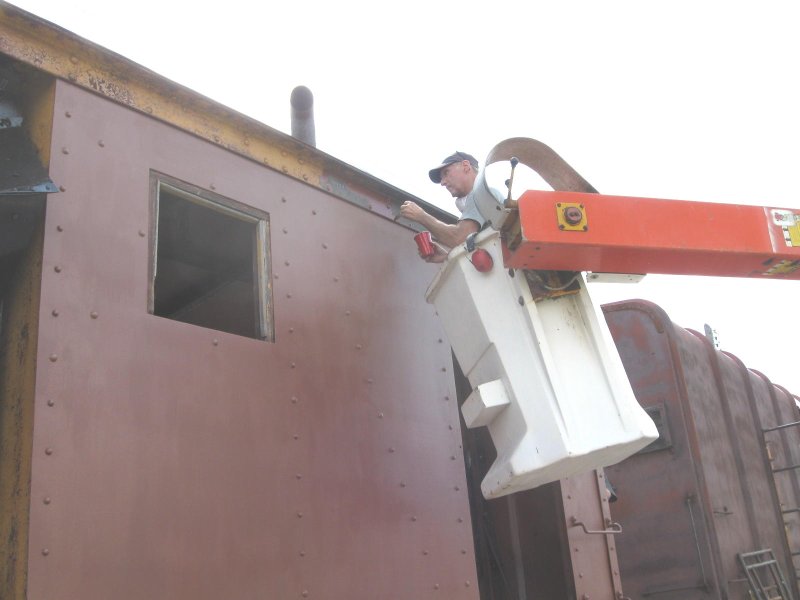
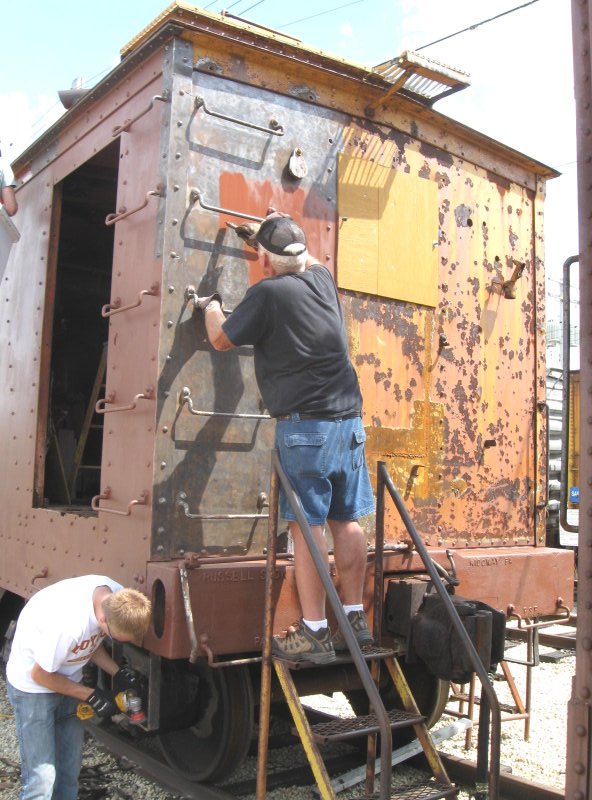
Comments (0) CGW X 38 Update - July 28, 2012This day was HUGE in the work and progress made on the Russell plow. Weather was good and many willing volunteers turned out to lend a hand. This very productive day made up in part for the recent dog days of near 100 F temperatures where neither man nor beast was able to function for long outdoors. BTW the next three days are forecast to return to 90-95 F. Dick Cubbage has moved on to the rear of the plow, seen here working on the rear end sill. Both he and Kirk Warner spent some extra days on the project this week and the progress really shows. Tom Bernacki did many tasks throughout the day, seen here inside the box, grinding welds smooth on the rear wall. Victor Humphreys also spent all day on the plow, seen here inside the shop drilling holes to mount a new left rear corner post. The counterbores were done earlier in the day by John Faulhaber assisted by Tom Bernacki. They provide relief for the many rivet heads inside the box. In the morning this was just a stick of wood, by the end of the day it was fitted, prime painted, and installed. Victor was inside the box here, knocking out old bolts and metal stubs that at one time held the original framing timbers, now gone. To his left you may be able to make out new framing for the right side door, fitted and installed. From the outside here is the door completely framed out - note the shiny fasteners around and above the opening. To help make this possible, earlier Mike Alterio helped by straightening the right grab iron which had been bent up in its earlier life. Tally for the day was five new pieces of framing completed and installed. Kirk Warner spent much of the day needlechipping and here he is working "In the Curl" of the front of the plow. The project has benefited greatly from the loan of a boom truck from Dave Diamond and the B&G Department. Thanks, Dave! Kirk Warner is in the distance on some scaffolding while Jim Leonard is in the bucket. Jim is one of the nicest guys out there, but in this pic, he looks like he really means business! Tom Bernacki here is wire wheeling the last nubs of old paint away on the lower left corner. Jim Leonard was back in the bucket to begin priming some of the cleaned areas by mid afternoon. That truck really improves mobility and safety, AND - there are no wasps living in the boom! Kirk Warner had the primer and was applying it to the end sill and about one third of the back wall. Big report, big crew, big list of completed work! Thanks to one and all for supporting the project.
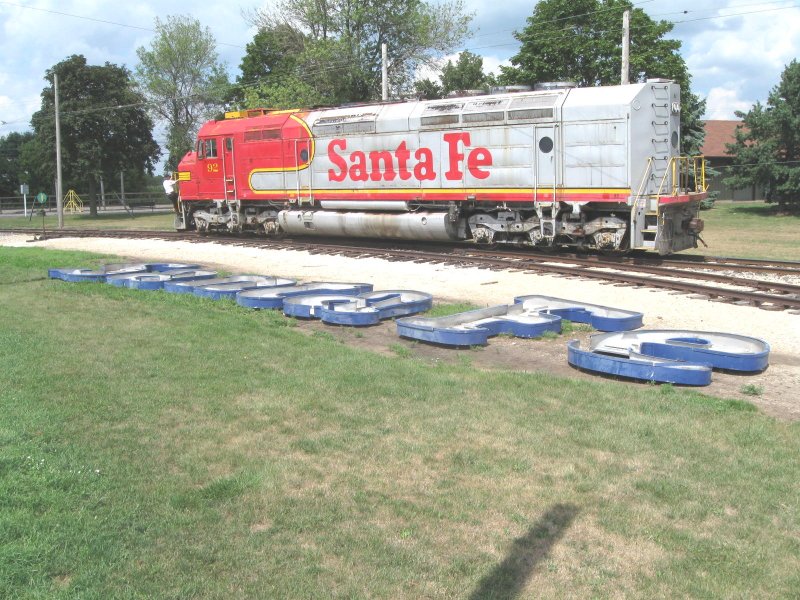
Sunday, July 29. 2012First Look - July 28, 2012For many years the Atchison Topeka and Santa Fe was headquartered in a tall building fronting on Michigan Avenue in Chicago. I can imagine John Reed gazing east over the "Avenue" and across the green expanses of Grant Park to the blue Lake Michigan waters. There was a large SANTA FE sign atop the roof proclaiming to the world that this was the hub of one of the mightiest railroads in the land. Time moves on and Santa Fe relocated those functions to a newer building in Schaumburg IL. And eventually of course, in the merger fever decades, things changed again and we know it now as the BNSF. That sign remained on that building and became a landmark of sorts to railfans, and indeed, to many Chicagoans. Finally the word came down that the sign was to be dismantled and removed. IRM put out feelers, and eventually succeeded in getting that sign donated and it arrived in Union last Friday. The sign is now on the lawn in front of our ATSF 92 locomotive - a suitable and stunning backdrop. Note that the sign is of the same type and font as the SANTA FE on the side of the locomotive in the second coming of the famed warbonnet scheme. Friday, July 27. 2012Wood Shop Update - July 25, 2012I am going to post these under the Wood Shop title rather than create many posts with perhaps only a single image for that topic. The heat was withering again, at or above 100F so breaks were frequent and work moved inside our shops. Jim Leonard is beside the Russel plow and you can see work has progessed on the needlechipping and priming of the car body. Dick Cubbage and Kirk Warner have helped on this. For this project we continued to fabricate new framing timbers to replace those lost or damaged inside the body. Buzz Morisette has taken on assisting those working on the dynamometer car and here is seen trying to lay out some curved wood framing for inside the car. The engineering was successful and here Buzz is bandsawing the new stringers. Work continues 'beneath the radar' on many projects and here John McKelvey has just finished reupholstering a new motorman's seat cushion. The restored frame is beside him on the table. I believe this is destined for Shaker Heights Rapid Transit 63, a relatively recent PCC car arrival. Dave Rogan and Rich Witt are at the table saw creating new white oak parts for a fuse box to be mounted on the roof of this PCC car. Whenever there are a few spare minutes, Al Reinschmidt turns to the task of restoring a door for CA&E 36. From the progress made, he has spent significant 'spare minutes' on the work. Monday, July 23. 2012
CGW X 38 Update - July 21, 2012 Posted by Robert Kutella
in Chicago Great Western X 38 Russell Snow Plow at
05:42
Comments (0) CGW X 38 Update - July 21, 2012Work continues on the snow plow restoration, lately working to replace wood framing and timbers inside the car body. This allows some relief from the withering heat, as the woodworking is done inside the shop. John Faulhaber is working on the table saw with our sled jig to hog out material and result in new tenons on each end of this timber. It is a lintel, for the right hand doorway on the plow, the horizontal piece that helps frame the opening. With the lintel done, Buzz Morisette, John, and myself did a dry fit of all the parts on the workbench. This is an assembly that has to be put together first before installing in the car. Of course it fit perfectly (after two or three trips back and forth to trim up shoulders, etc). Henry Vincent helped start the boring process for the ten holes to mount it. Monday, July 23. 2012News and Views - July 21, 2012Another series of short reports this week, but do not despair, a lot was going on in the restoration shops. Frank Sirinek has been quietly going about the business of working on Shaker Heights 63, a PCC car which was originally built for Minneapolis. New windows have been installed, and preliminary work under the car began recently. Here he is working on a new wooden battery tray. The new parts are in the foreground, the old thoroughly acid destroyed tray is behind that on the bench. Victor Humphreys is inside the B&O wagon top boxcar working to install a new section of flooring. In the weather conditions this summer, it is a case of working short shifts inside the car, which does a good imitation of temps only encountered in a pizza oven. Except the boxcar has less air flow. Henry Vincent is making and hanging a new interpretive sign fo Illinois Terminal 101. I bet we have hundreds of such informative signs already around the property, and each one was the labor of a committed volunteer to improve the visitor experience. Sunday, July 22. 2012
Steam Department Update 07-21-2012 Posted by Nigel Bennett
in Steam Department at
17:36
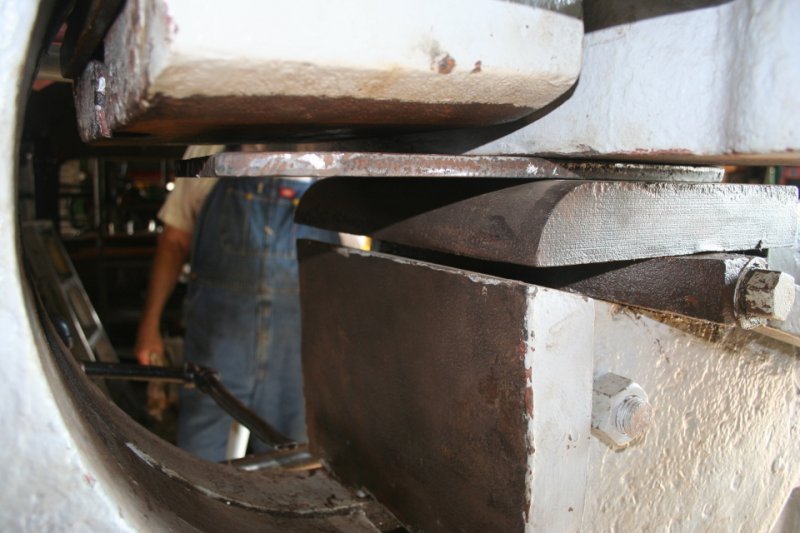
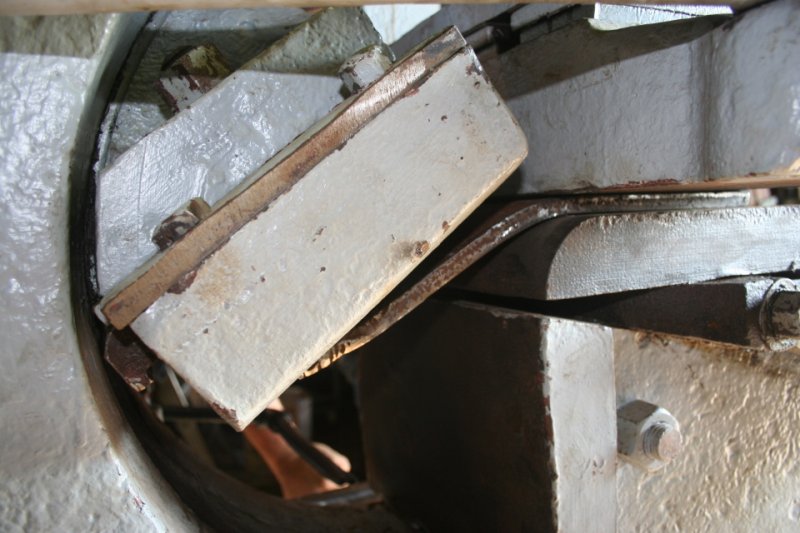
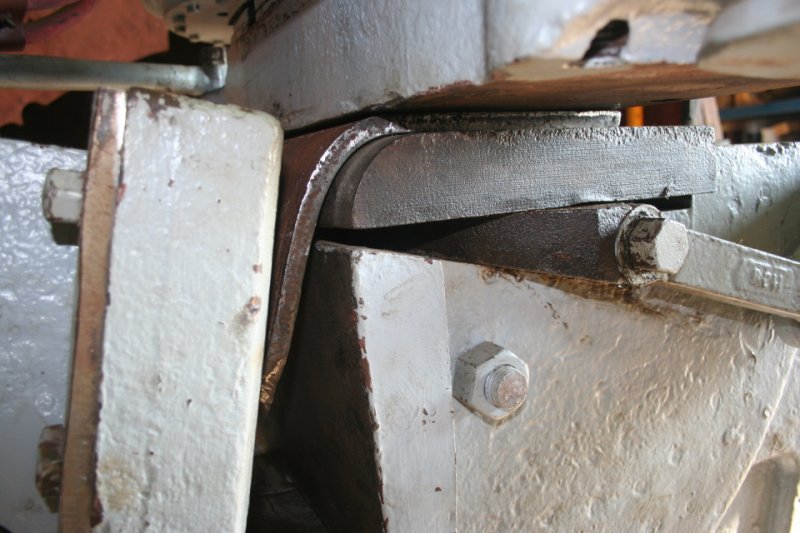
Comments (0) Steam Department Update 07-21-2012I guess we must be becoming more adapted to the heat. There is not much choice this summer !!. A lot was achieved in the steam shop this Saturday and we are now moving toward the key step of the FRA inspection of the interior of the boiler. We have a few more minor tasks to complete inside but are now close enough to schedule the appointment. This is critical to our ongoing schedule. If the inspector is satisfied with the boiler interior we will be able to progress to painting the interior and refitting tubes. If any additional work is required that impacts the timetable. A number of tasks were progressed on 1630 · Chris and George from Curtis Boiler Service came in to scope and quote for the specialized welding of the safe ends on the super heater flues. George has done this work on several of our other locomotives over many years. He will also do the work on the rear tube sheet. · Work progressed well on the super heater elements. After the initial shock last weekend, when the first one failed, we now have 9 that have proved sound at the full 1000 psi pressure, have been cleaned and prepped and are now back in the boxcar where they will stored ready for refitting. Another 9 are outside the shop to be cleaned and tested during the week and next weekend. That leaves 8 more to complete the total of 27. (How does 1630 have an odd number of elements?. Because decades ago one position on the header was damaged and plugged so at IRM she has always had one less super heater than she was built with.) The process of cleaning and testing the elements is quite complex so I have made some notes below. · Mike has recovered and was back at the shop. He is in process of grinding the mud ring to ensure a smooth fit for the patch. · Glenn finished the McCabe and we took the first steps toward getting comfortable with using it and setting up to produce a test sheet that we can use to prove we have the correct radius to accurately fit the mud ring before we bend the rather expensive boiler plate. It looks as if Ralph has some doubts about what that lever does ! Phil working to set the test sheet in the jaws of the flanger. This provides a good view of the way in which the McCabe operates. The sheet slides between the flat surface on which Phil is setting it and the clamping head above it. It projects back toward the machine and extends over the curved die (the dark grey curved surface that can be seen below the light grey clamping head) into the space below the press head. The press head is at about 25 degrees to the horizontal in this view but would be drawn up to the horizontal to allow the sheet to be pushed into place. With the sheet clamped, the press head is driven down by stages bending the sheet to the radius of the curved die. The machine is hugely powerful, well able to bend 3/4 inch steel plate, and has few "fail safes". Only care by the operator ensures that it does not apply the force incorrectly and severely damage the machine itself.
· Ed thoroughly brushed off the various small pipes that run along the boiler feeding the lubricators and accessories such as the bell. The object was to determine if they should be replaced and the conclusion was that we should do this. Based upon examples such as this it seems safer to replace the pipes now. None were actually leaking but the objective is wherever possible to aim for a long spell of incident free operation and these have the potential to be a real nuisance. Once the locomotive is complete, these will be buried under insulation and lagging sheets. If one failed then it would probably damage the insulation and a lot of sheet metal would need to be removed to get to it. In other areas: · Tom has machined the spring retainers for the Shay so we can get those welded into place on the bolster fitted next time Dennis is in the shop. · Stu and Bob continued the assembly of the planer. Jeff had arranged for the department's BrownHoist crane to run in the Diesel Days parade and here it is running thru the depot road.
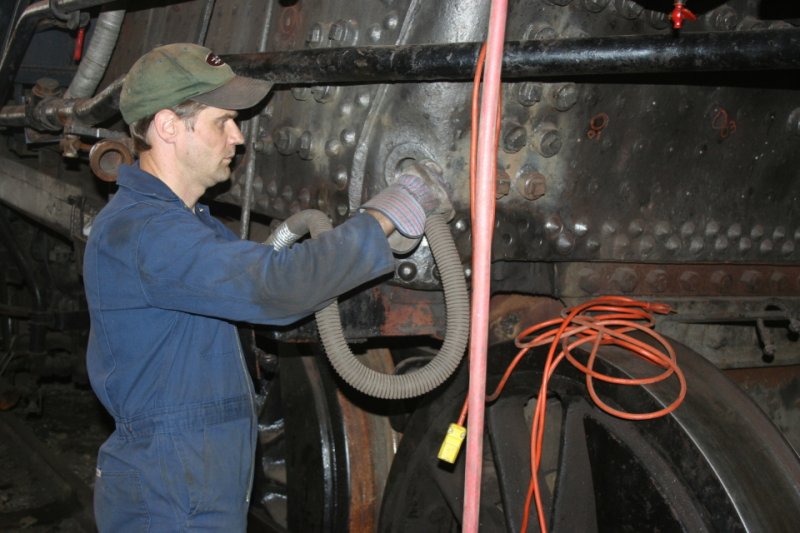
and comes to rest in the depot to be described. It must be a long time since she has been out of the shop and barn area. Cleaning and testing super heater elements Each element has been located in a flue thru which pass heat and debris from the fire. So they are thoroughly covered in soot and rust that must be removed before it can be inspected and tested. What Phil is doing here can be referred to as cleaning but most of us who have done it see it rather more as transferring the dusty muck from the tube to the operator !! The test rig must then be fitted to the element. The element has balled ends that, in service, are a dry fit into balled sockets in the super heater header. These must be carefully cleaned with emery cloth to remove pitting. A thin rubberized fabric washer is fitted between the test rig and the ends of the element. If this survives the 1000 psi test pressure the balls are in reasonable shape to make a seal with the header when they are refitted. Once in place the element ready for testing looks something like this. (Actually in this view the element is ready for the final step, after successful testing, when air is blown back thru the tubing to ensure that it is thoroughly dry and ready for storage in the boxcar. For testing the water supply is connected to the right hand side to the test rig). The rig is then connected to our high tech water pump. Joking aside, this may be old but is a very effective and critical piece of equipment that can pressurize the elements to 1000 psi and the whole boiler to more than 200 psi when carrying out a hydro test.
The loan of this tank from B&G overcame a significant problem last weekend. The pump operated very unevenly and Tom recognized that the problem was that the pump exerted sufficient suction to close the valve on the well if it is directly connected, even thru 100 ft of hose. Provided with an unrestricted supply the pump builds pressure evenly.
The pressure is raised to 1000 psi and the pump valve closed. If the pressure holds we have success. The most common problem is that a leak develops around the ball joints necessitating more work with the emery cloth and/or refitting of the test rig. Once an element has passed the pressure test, high pressure air is blown back thru it to make sure it is free of water. The rings that hold it to the header are carefully cleaned and sprayed with WD-40 to protect them and the element is then ready to go back to storage with confidence that it ready to fit into the header, hopefully during this winter. Nigel |
Blog AdministrationFind us on FacebookCategory TreeCalendarQuicksearchArchivesSyndicate This Blog |
Powered by s9y.
Comments
Sun, 05-19-2013 22:13
Hello again. I had an idea that was (somewhat rudely, mid-sentence) dismissed in talking to a museum volunteer a few years back, but here it goes [...]
Thu, 05-16-2013 21:52
Looking good Bob! I hope to come out soon once I'm done with school.
Wed, 05-15-2013 21:28
I was not around at the time. General discussion suggests that it was "pretty marginal" in a number of areas. Nigel
Mon, 05-13-2013 11:08
"THUMBS UP!"
Fri, 05-10-2013 02:15
No, it will not be necessary to hold any of the work waiting for the plow to be turned, end for end. Weather will be the major factor, but there will [...]
Thu, 05-09-2013 19:54
The CGW X-38 plow is really coming to life. Bob Kutella and Vic and crew need to be very proud of your collective efforts. I am very appreciative of [...]
Thu, 05-09-2013 15:20
The snowplow looks great! Are you going to apply the door and upper windows befor it is turned to continue work?
Thu, 05-09-2013 09:09
Max, Is there any progress to report yet, in regards to the installation of the poles and overhead wires? Have a good day, sir.
Wed, 05-08-2013 18:40
Thanks for the update! I still don't understand why Commonwealth #5 was removed from service. Do you know why?
Tue, 05-07-2013 09:28
Mr. Kolanowski.....I was just wondering if the Spaulding webcam will be up and running soon for us stay-at-homes. Thanks!2FP
Mon, 05-06-2013 23:04
Max, Has work begun yet on the construction phase of erecting the poles and putting up the wire? Wish I could be there to watch it happen.
Mon, 05-06-2013 23:02
Keep up the good work, Bob. Wish I could be there to help!!!!!!!